Loading subject page…


1,159 views


Video Summary: What Is Cash Dividend Payments
Corporate dividend policy directly impacts investor relations and share price performance, making cash dividend payments a critical component of equity valuation and portfolio strategy. Cash dividend payments represent a company's commitment to returning capital to shareholders through regular cash distributions, typically paid quarterly based on per-share amounts. Microsoft, for example, has consistently increased its quarterly dividend for nearly two decades, signaling strong cash flow generation and shareholder-focused capital allocation. Watch the full video on JoVE Coach to master this concept with expert-led visuals and step-by-step explanations.
When Apple's board approved a $0.24 per share quarterly dividend in 2023, shareholders with 1,000 shares received $240 in direct cash returns-illustrating how cash dividend payments function as a tangible reward mechanism for equity ownership. This fundamental concept represents one of the most direct ways companies return value to shareholders while signaling financial strength and management confidence in future earnings.
Cash dividend payments serve multiple strategic purposes beyond simple profit sharing. They attract income-focused institutional investors like pension funds and insurance companies, who require steady cash flows to meet obligations. Companies like Procter & Gamble and Coca-Cola have built reputations as "Dividend Aristocrats"-S&P 500 companies with 25+ years of consecutive dividend increases-creating investor loyalty and stock price stability even during market volatility.
The decision to initiate or increase dividends signals management's confidence in sustainable earnings growth. Conversely, dividend cuts often trigger significant sell-offs, as investors interpret reduced payments as warnings of operational challenges or cash flow constraints.
The dividend payment process involves specific dates that impact trading strategies and financial planning. The ex-dividend date determines eligibility-investors must own shares before this date to receive the payment. Record dates establish the official shareholder list, while payment dates represent actual cash distribution.
From a corporate perspective, dividend payments reduce retained earnings and available cash for reinvestment. This creates a natural tension between rewarding current shareholders and funding growth initiatives. Technology companies like Meta historically avoided dividends to preserve capital for R&D and acquisitions, though this strategy has evolved as these firms matured.
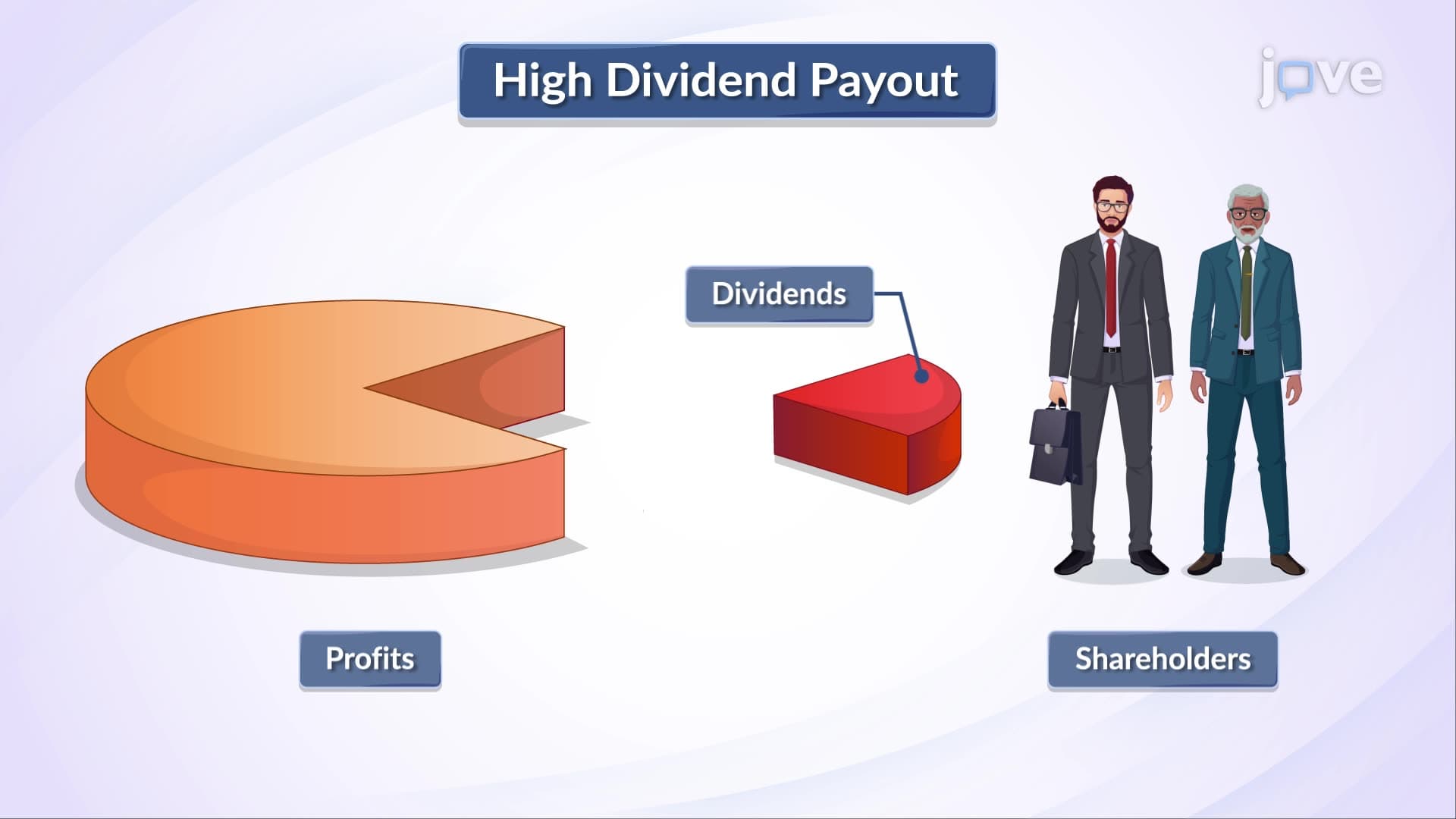
Investment professionals evaluate dividend sustainability through multiple metrics. The payout ratio (dividends per share divided by earnings per share) indicates what percentage of profits companies distribute. Conservative payout ratios below 60% suggest sustainable policies with room for growth, while ratios exceeding 80% may signal unsustainable commitments.
Free cash flow coverage provides another critical lens-dividends funded by actual cash generation rather than borrowing indicate healthier financial foundations. Johnson & Johnson's consistent dividend growth over six decades demonstrates this principle, supported by diversified revenue streams and strong cash conversion cycles.
Related Micro-courses