Loading subject page…

- Finance
- Dividend and Payout Policy
- Stock Dividend
Micro-course: Dividend and Payout Policy
1,159 views
Learn key concepts and earn your certificate.


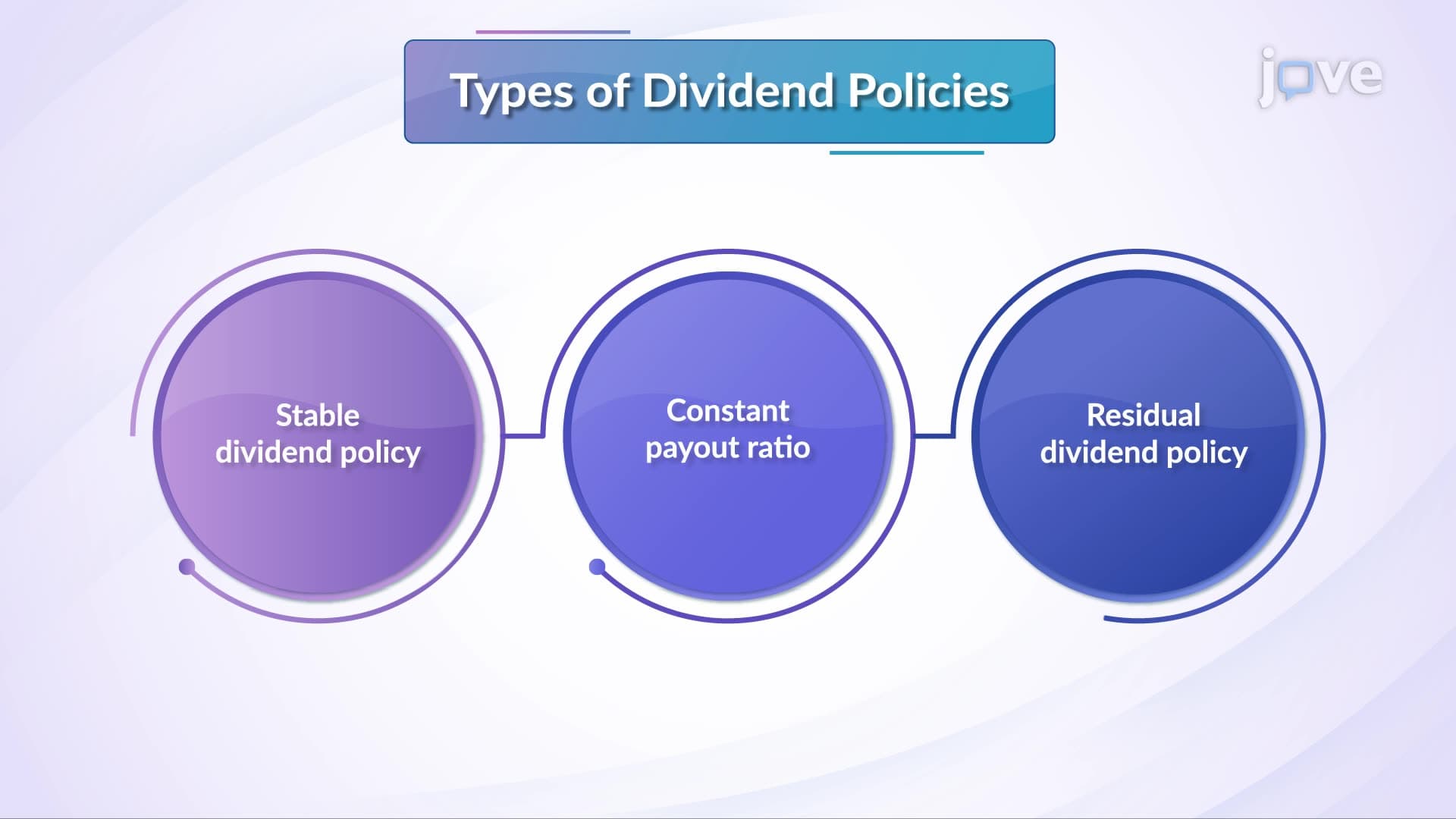
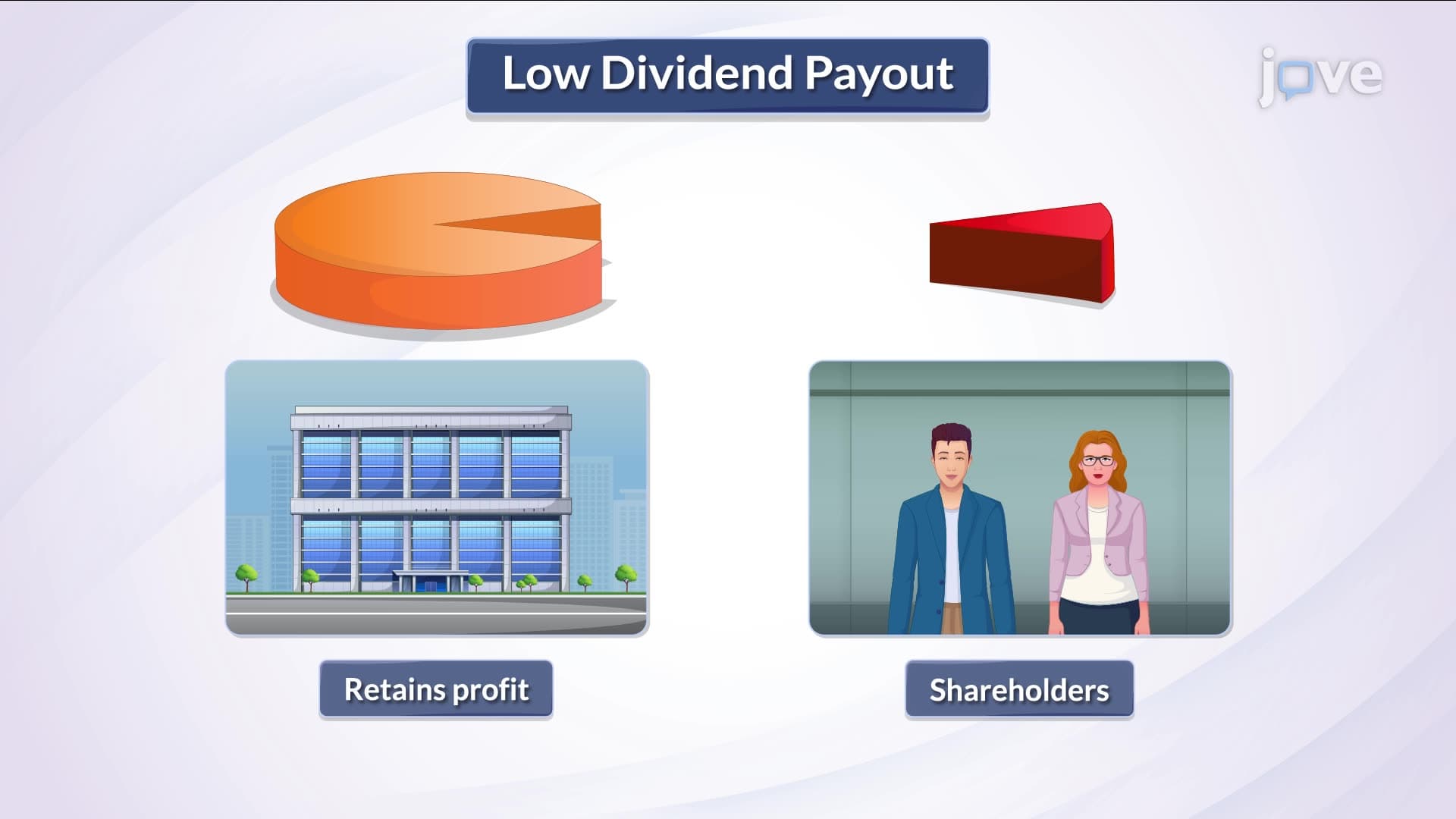
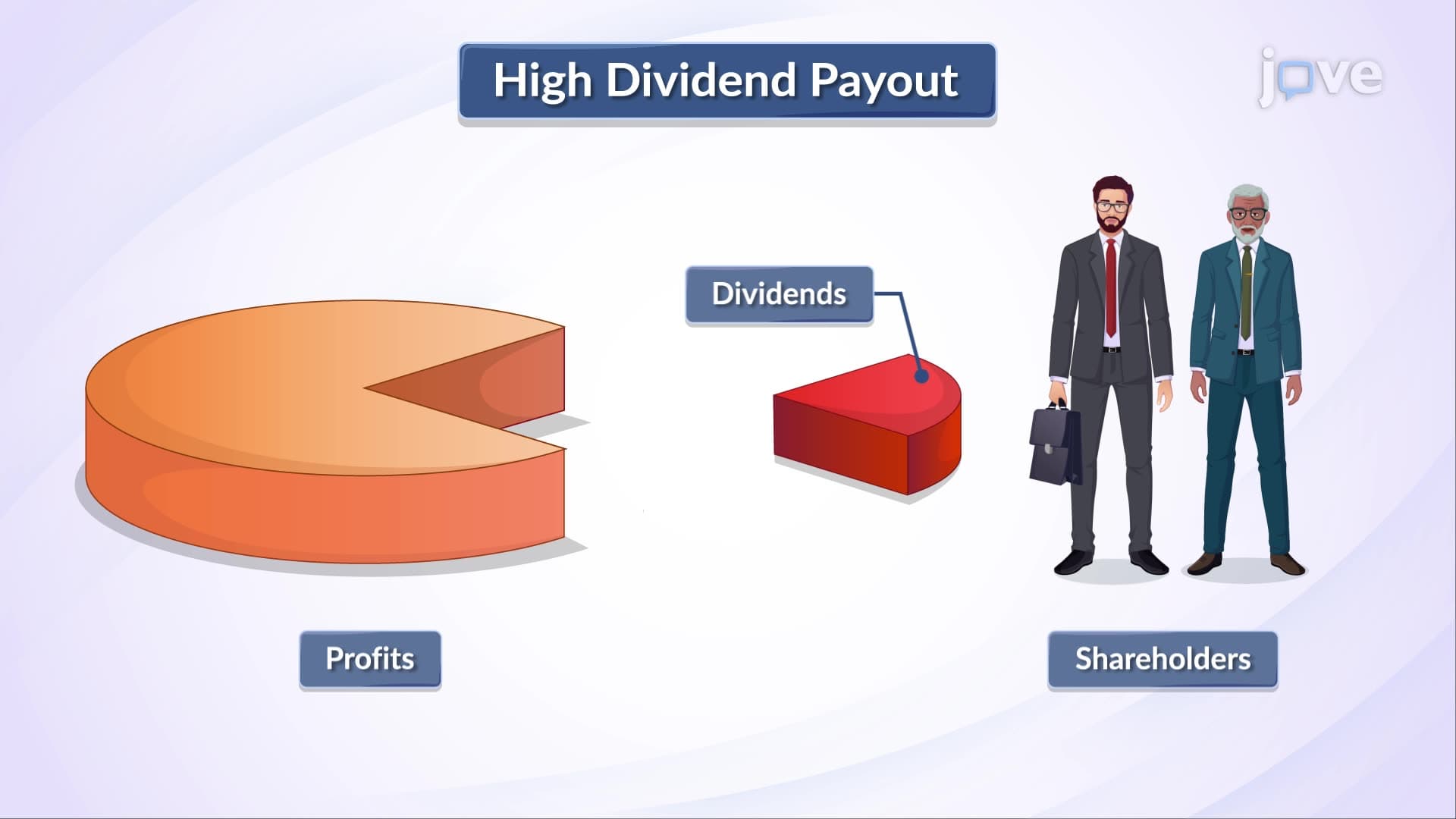


Stock Dividend


00:00
01:20
Video Summary: What Is Stock Dividend
Stock dividend strategies are reshaping how companies like Apple and Microsoft balance shareholder returns with growth capital preservation. A stock dividend represents additional shares distributed to existing shareholders rather than cash payouts, maintaining total portfolio value while increasing share quantity. Companies such as Walmart have historically used stock dividends to signal long-term confidence while preserving operational liquidity for strategic investments and acquisitions. Watch the full video on JoVE Coach to master this concept with expert-led visuals and step-by-step explanations.
- Apply stock dividend analysis to evaluate company cash flow management strategies and capital allocation priorities during board presentations
- Assess the impact of stock dividends on earnings per share calculations and portfolio valuation metrics for investment committee decisions
- Identify optimal timing for stock dividend declarations based on market conditions, growth opportunities, and shareholder expectations
- Analyze competitor stock dividend policies to benchmark corporate dividend strategies and shareholder communication approaches
- Evaluate tax implications of stock dividends versus cash dividends for corporate treasury management and shareholder value optimization
- Leverage stock dividend announcements as market signals to assess management confidence and future growth trajectory expectations
- Compare stock dividend effects on share liquidity, trading volume, and institutional investor positioning within equity portfolios
- Implement stock dividend considerations into merger and acquisition due diligence processes and valuation modeling frameworks
Understanding Stock Dividend Mechanics in Corporate Finance
When Berkshire Hathaway's Warren Buffett discusses capital allocation strategies, stock dividends often emerge as a sophisticated tool for balancing shareholder rewards with operational flexibility. Unlike cash dividends that deplete company reserves, stock dividends redistribute ownership proportionally while preserving critical growth capital for strategic initiatives.
Strategic Rationale Behind Stock Dividend Declarations
Fortune 500 companies implement stock dividends for multiple strategic reasons beyond simple shareholder appeasement. Technology giants like Google's parent company Alphabet have historically favored stock splits and stock dividends to maintain share affordability while signaling robust future prospects. These decisions reflect management's confidence in sustainable earnings growth and long-term competitive positioning.
The mathematical precision of stock dividends ensures shareholder equity remains unchanged while increasing share liquidity. When Johnson & Johnson declares a 5% stock dividend, shareholders receive additional shares proportional to their holdings, while the per-share price adjusts downward to maintain market capitalization equilibrium.
Corporate Governance and Market Psychology Implications
Stock dividend declarations carry significant psychological weight in institutional investment circles. Portfolio managers at firms like BlackRock and Vanguard interpret these announcements as management's commitment to growth-oriented capital deployment rather than short-term cash extraction. This positioning can enhance company valuation multiples and attract long-term institutional capital.
The timing of stock dividend announcements often coincides with earnings releases or strategic plan communications, amplifying positive market sentiment. Companies like Procter & Gamble leverage stock dividends to demonstrate shareholder value creation while maintaining flexibility for acquisitions, research and development investments, or debt reduction initiatives.
Operational Considerations for Financial Leadership
Chief financial officers must carefully balance stock dividend benefits against potential drawbacks, including increased administrative costs, diluted earnings per share metrics, and potential confusion among retail investors. Successful implementation requires clear communication strategies, robust investor relations frameworks, and coordination with transfer agents to ensure seamless execution across thousands or millions of shareholder accounts.
Frequently Asked Questions
A stock dividend distributes additional shares to existing shareholders rather than cash payments, preserving company liquidity while maintaining proportional ownership. Unlike cash dividends that reduce corporate cash reserves, stock dividends increase share count while decreasing per-share value proportionally, keeping total shareholder value unchanged.
Consider stock dividends when preserving cash for growth initiatives, acquisitions, or debt reduction while still rewarding shareholders. They're particularly effective when share prices have appreciated significantly, management wants to signal growth confidence, or the company operates in capital-intensive industries requiring substantial reinvestment.
Stock dividends increase outstanding share count, which dilutes earnings per share calculations for future reporting periods. However, this dilution is typically offset by proportional increases in total earnings if the retained cash generates adequate returns through business growth or strategic investments.
Home Depot regularly utilizes stock dividends alongside share buyback programs to optimize capital structure and shareholder returns. Their stock dividend declarations often coincide with strong earnings announcements, reinforcing management's confidence in sustained growth while maintaining cash flexibility for store expansion and supply chain investments.
Basic understanding of corporate finance principles helps, but stock dividend concepts are accessible to most business professionals. The key is grasping how these decisions affect shareholder value, cash flow management, and strategic positioning rather than complex mathematical calculations.
Understanding stock dividend mechanics positions you for treasury management, investor relations, and strategic planning roles. This knowledge demonstrates sophisticated capital allocation thinking essential for CFO track positions and board-level financial strategy discussions.
Stock splits, dividend reinvestment plans (DRIPs), and special dividend policies represent natural progressions. Additionally, exploring total shareholder return calculations and dividend yield optimization strategies will enhance your comprehensive understanding of shareholder value creation mechanisms.
Related Micro-courses

9 Concepts

11 Concepts

11 Concepts