Loading subject page…

- Marketing
- B2b Marketing
- Classification of Industrial Products and Services
Micro-course: B2B Marketing
5,083 views
Learn key concepts and earn your certificate.



















Classification of Industrial Products and Services

00:00
01:24
Video Summary: What Is Industrial Products and Classification
Supply chain disruptions and procurement challenges make understanding industrial products classification crucial for effective resource allocation decisions. Industrial products classification provides a strategic framework for categorizing business-to-business goods based on their role in production processes and operational functions. Companies like Boeing utilize this classification system to distinguish between raw materials for aircraft construction, capital equipment for manufacturing facilities, and operational supplies that support daily production activities. This systematic approach enables procurement managers and operations leaders to optimize vendor relationships, budget allocations, and inventory management strategies. Watch the full video on JoVE Coach to master this concept with expert-led visuals and step-by-step explanations.
- Apply industrial products classification frameworks to streamline procurement processes and vendor selection strategies across your organization
- Evaluate capital expenditure decisions by distinguishing between installations, accessory equipment, and operational supplies in budget planning
- Analyze supplier relationships more effectively by categorizing industrial goods based on their strategic importance to core business operations
- Implement cost management strategies by understanding how different product classifications impact pricing negotiations and contract terms
- Compare competitive sourcing options by leveraging classification systems to identify alternative suppliers and substitute products
- Assess operational efficiency improvements through strategic classification of materials, parts, and services in your supply chain
- Identify opportunities for inventory optimization by applying classification principles to reduce carrying costs and improve cash flow
- Leverage classification insights to make informed build-versus-buy decisions for capital equipment and manufacturing components
Understanding Industrial Products Classification in Strategic Context
When Caterpillar's procurement team evaluates suppliers for heavy machinery components, they rely on a sophisticated classification system that goes far beyond simple product categories. Industrial products classification represents a strategic framework that enables businesses to categorize goods and services based on their functional role in production processes, their impact on operational efficiency, and their influence on competitive positioning.
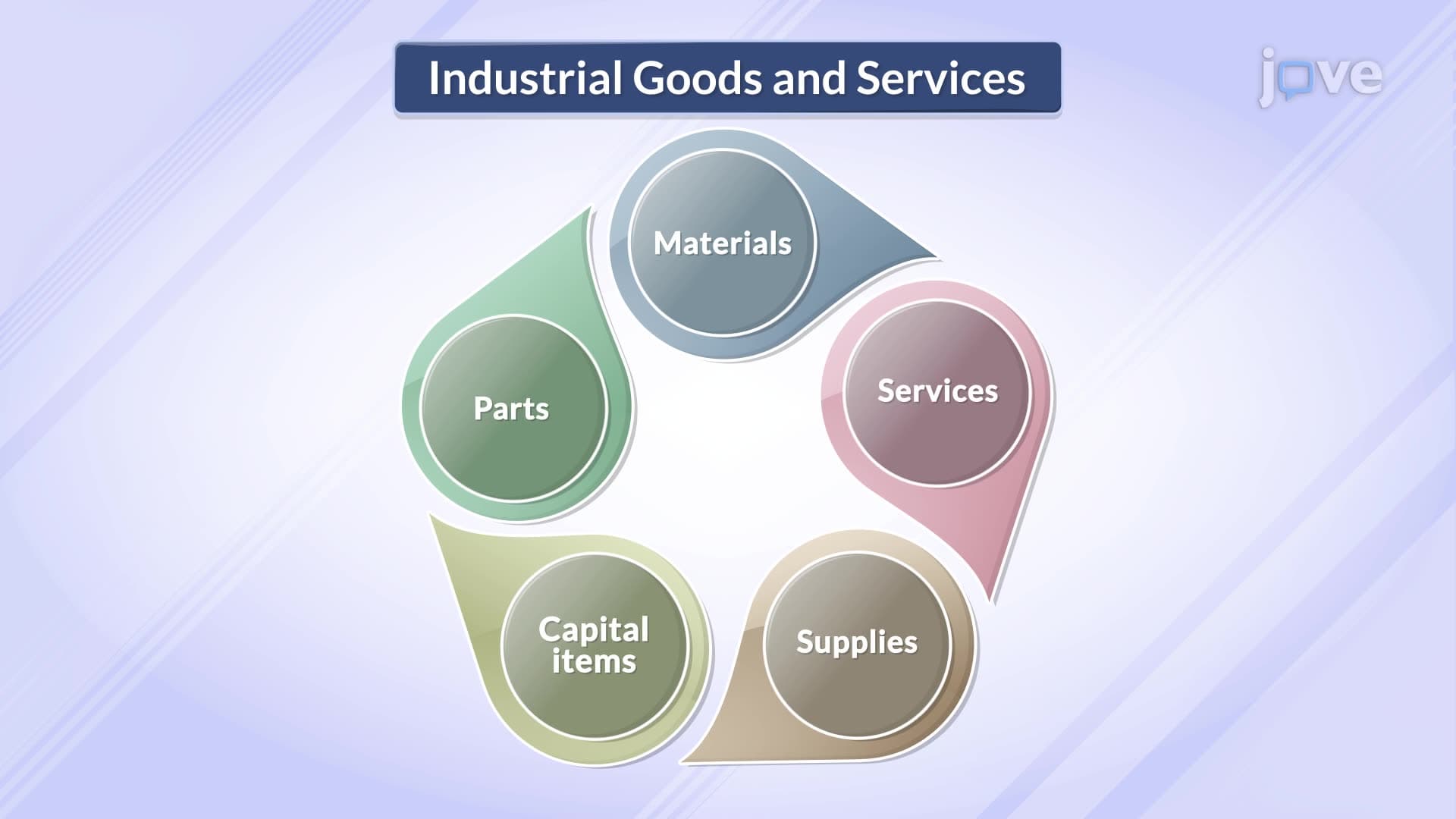
Materials and Parts: The Foundation of Manufacturing Excellence
The first tier of classification encompasses materials and parts that directly integrate into finished products. Raw materials like specialized steel alloys for automotive manufacturing represent high-volume, commodity-driven purchases where price negotiations and supplier reliability become paramount. General Electric's aircraft engine division, for instance, sources titanium and nickel-based superalloys through long-term contracts that balance cost stability with quality assurance.
Manufactured parts present different strategic considerations. When Apple sources semiconductor components for iPhones, they're managing complex supplier relationships that involve intellectual property protection, capacity allocation, and technology roadmap alignment. These components directly impact product performance and differentiation, making supplier selection a critical competitive decision.
Capital Items: Investment Strategy and Operational Capability
Capital items classification divides into installations and accessory equipment, each requiring distinct financial and operational evaluation criteria. Major installations like Tesla's Gigafactory production lines represent transformational investments that define manufacturing capability for decades. These decisions involve board-level approval, multi-year ROI projections, and strategic alignment with long-term business objectives.
Accessory equipment purchases, such as industrial robots for Ford's assembly operations, offer more tactical flexibility while still requiring substantial capital allocation. These investments typically focus on productivity improvements, quality enhancement, and operational efficiency gains that directly impact unit economics and competitive positioning.
Supplies and Services: Operational Excellence Through Strategic Procurement
Operating supplies and business services, while not directly incorporated into finished products, significantly impact organizational effectiveness and cost structure. Microsoft's procurement of office supplies, IT infrastructure, and professional services represents millions in annual spending that requires systematic classification for optimal vendor management and cost control.
The strategic value of proper classification becomes evident in contract negotiations, where understanding whether you're purchasing a commodity supply or a specialized service determines negotiation leverage, contract terms, and performance metrics.
Frequently Asked Questions
Industrial products classification is a systematic framework for categorizing business-to-business goods and services based on their role in production processes and operational functions. It enables strategic procurement decisions, optimizes supplier relationships, and improves cost management by treating different product categories with appropriate sourcing strategies and contract terms.
Use classification frameworks to structure supplier evaluations, with different criteria for raw materials (focus on price and reliability), capital equipment (emphasize ROI and strategic fit), and services (prioritize expertise and performance metrics). This approach helps teams make consistent, data-driven sourcing decisions that align with business objectives.
Commodity supplies like office materials require cost-focused procurement with standardized specifications and competitive bidding. Strategic purchases like specialized manufacturing equipment demand relationship-based sourcing with emphasis on technical capability, service support, and long-term partnership value that supports competitive differentiation.
Amazon classifies warehouse automation equipment as capital items requiring strategic evaluation, packaging materials as operating supplies managed through cost optimization, and logistics software as services evaluated on performance and scalability. This classification drives distinct procurement approaches, from competitive bidding for supplies to strategic partnerships for technology services.
No specialized background is required, as the classification framework applies across industries and business functions. Finance professionals use it for budget planning, marketing teams apply it for B2B customer segmentation, and general managers leverage it for strategic decision-making about resource allocation and vendor relationships.
Understanding classification principles enhances your ability to make strategic sourcing decisions, manage vendor relationships effectively, and optimize operational costs. These skills are valuable for roles in procurement, operations, general management, and business development, particularly as companies increasingly focus on supply chain resilience and cost management.
Consider studying supplier relationship management and strategic sourcing methodologies, as these build directly on classification principles to create competitive advantages through procurement excellence. Understanding total cost of ownership calculations also complements classification knowledge for making optimal purchasing decisions.
Related Micro-courses

15 Concepts

10 Concepts
12 Concepts