Loading subject page…


2,230 views

Video Summary: Industry 5 0 and Its Explained
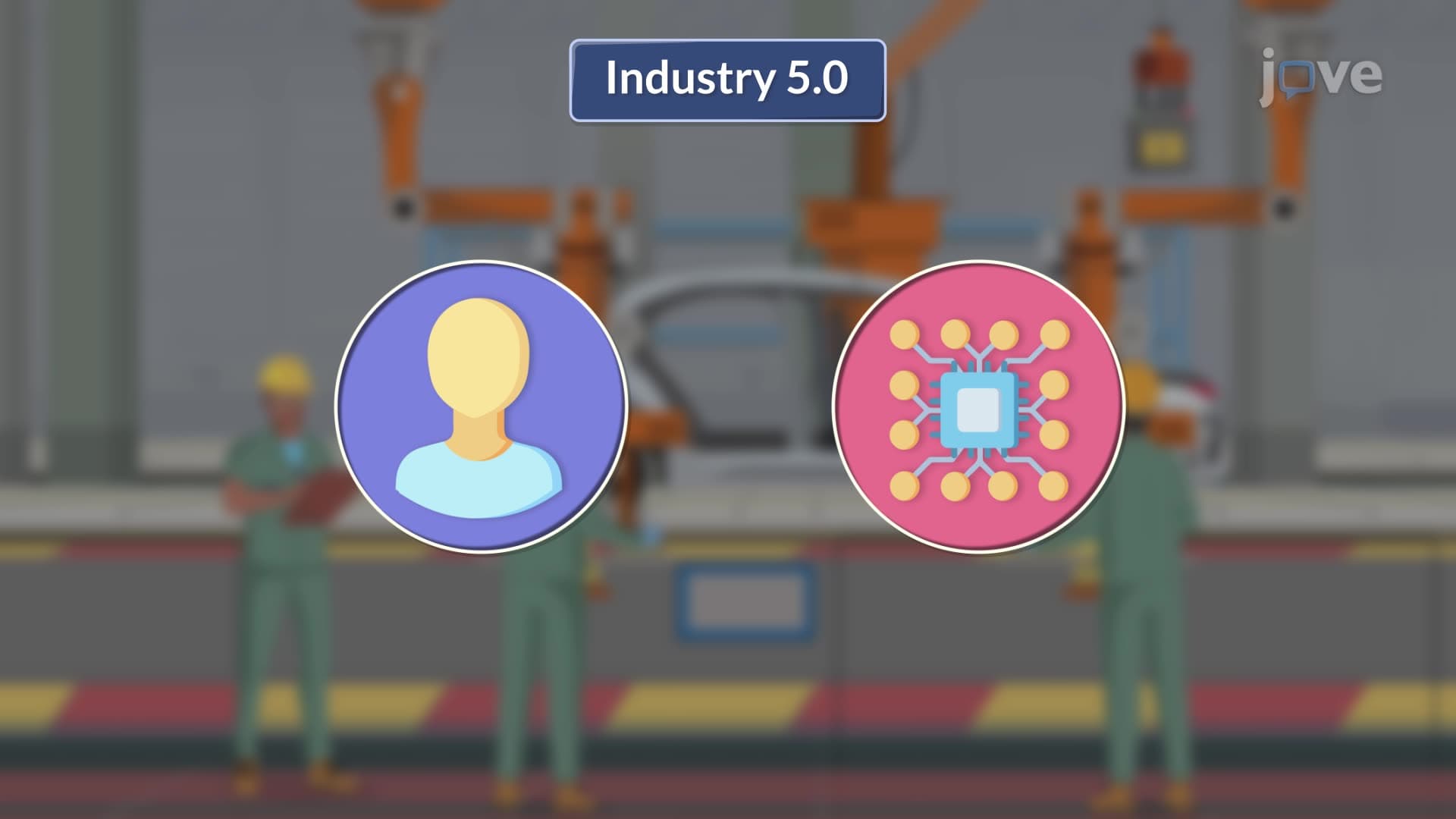
As businesses navigate the post-pandemic economy, Industry 5.0 emerges as a critical framework for competitive advantage, emphasizing human-AI collaboration over pure automation. This evolution prioritizes human-centric design, operational resilience, and sustainability-transforming how companies like Tesla revolutionize customer experience through autonomous driving technology and over-the-air updates. Industry 5.0 And Its Explained shifts focus from economic efficiency alone to societal impact and employee well-being. Watch the full video on JoVE Coach to master this concept with expert-led visuals and step-by-step explanations.
When General Motors announced a $35 billion investment in electric and autonomous vehicles by 2025, they weren't just following Tesla's lead-they were embracing Industry 5.0 principles that fundamentally reshape how businesses operate. Unlike previous industrial revolutions focused solely on efficiency and cost reduction, Industry 5.0 represents a paradigm shift toward human-centric innovation that balances technological advancement with societal well-being.
Industry 5.0 operates on three interconnected pillars that directly impact corporate strategy and competitive positioning. Human-centric design places employee experience and customer needs at the center of technological implementation, moving beyond mere automation to create collaborative ecosystems. Resilience focuses on building adaptive systems that can withstand supply chain disruptions, economic volatility, and unexpected market shifts-lessons learned from the COVID-19 pandemic. Sustainability integrates environmental and social responsibility into core business operations, addressing investor demands for ESG compliance and long-term value creation.
Tesla exemplifies Industry 5.0 principles through its integrated approach to autonomous driving technology. Rather than replacing human drivers entirely, Tesla's AI-driven software enhances human capabilities while collecting real-time data to improve safety and convenience. Their over-the-air update system demonstrates operational resilience, allowing continuous improvement without physical service visits. This approach has generated over $1 billion in software revenue annually while reducing carbon emissions through electric vehicle adoption.
Similarly, companies like Microsoft are implementing Industry 5.0 frameworks through their AI Copilot systems, which augment human productivity rather than replacing workers. This strategy has contributed to Microsoft's 20% year-over-year revenue growth in their productivity segment while maintaining high employee satisfaction scores.
Organizations adopting Industry 5.0 principles gain measurable competitive advantages through enhanced customer loyalty, improved employee retention, and stronger ESG ratings that attract institutional investors. The framework enables companies to differentiate through purpose-driven innovation while maintaining operational efficiency. Forward-thinking leaders recognize that Industry 5.0 isn't just about technology adoption-it's about creating sustainable business models that drive long-term shareholder value while addressing societal challenges.
Related Micro-courses