Loading subject page…


2,794 views


Video Summary: The Global Marketing Mix I Product Explained
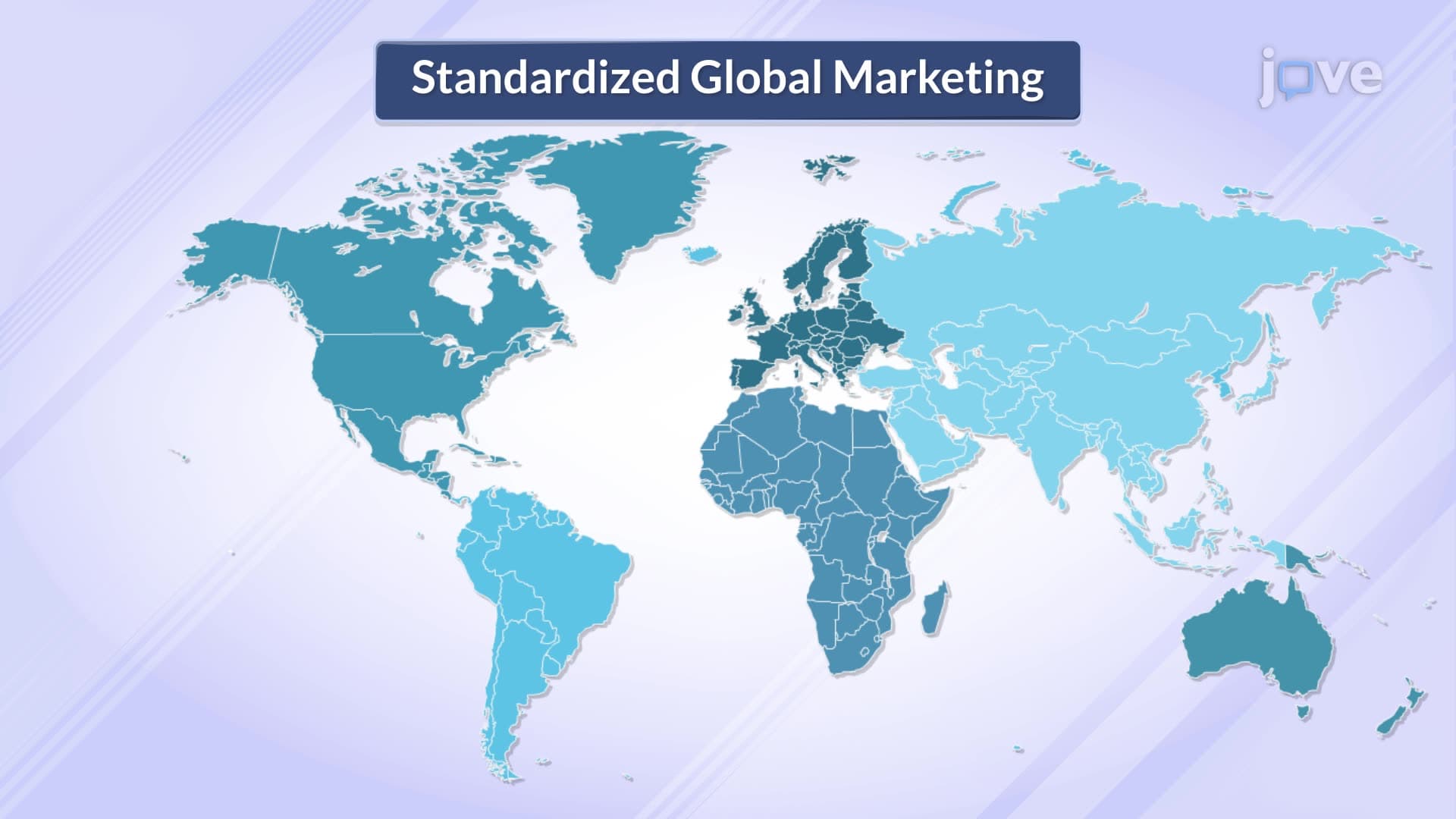
Global companies face critical decisions when expanding internationally: should they standardize products worldwide or adapt for local markets? The global marketing mix I product component determines competitive positioning across diverse consumer segments. Apple exemplifies straight product extension, maintaining iPhone consistency globally, while Starbucks demonstrates product adaptation with region-specific beverages like Masala Chai. Understanding The Global Marketing Mix I Product Explained framework enables executives to optimize international portfolio strategies and maximize market penetration. Watch the full video on JoVE Coach to master this concept with expert-led visuals and step-by-step explanations.
When Coca-Cola's CEO faces quarterly earnings calls, investors scrutinize one critical metric: international revenue growth. This pressure exemplifies why mastering the global marketing mix I product strategy separates successful multinational corporations from those struggling with overseas expansion. The product component represents the cornerstone of international marketing strategy, determining whether companies achieve scalable growth or encounter costly market failures.
Straight product extension offers compelling economics for companies with strong brand equity and universal appeal. Apple's iPhone strategy demonstrates this approach's power-maintaining identical hardware specifications across 175+ countries while achieving 65% gross margins. This standardization enables massive economies of scale in manufacturing, R&D amortization across larger volumes, and simplified supply chain management.
However, extension strategies require careful market analysis. Companies must verify that consumer needs, usage patterns, and competitive landscapes align across target markets. Microsoft's Xbox gaming console succeeds globally through standardization because gaming preferences and technical specifications remain consistent internationally.
Smart adaptation strategies acknowledge cultural nuances while preserving core brand positioning. McDonald's operates 40,000+ restaurants worldwide by adapting menu offerings-serving Maharaja Mac in India and McRice in the Philippines-while maintaining consistent service standards and brand experience. This approach requires sophisticated market research capabilities and flexible manufacturing systems.
The adaptation decision matrix involves evaluating regulatory requirements, cultural preferences, competitive positioning, and incremental costs. Successful adaptation generates higher local market share but demands ongoing investment in market-specific R&D and potentially complex supply chain modifications.
Product invention addresses entirely new market opportunities, particularly in developing economies with unique constraints. General Electric's MAC 400 ECG machine, designed specifically for rural Indian healthcare markets, costs 60% less than traditional models while maintaining diagnostic accuracy. This innovation opened massive market segments previously inaccessible to GE's premium product portfolio.
Invention strategies require deep local market expertise, patient capital investment, and willingness to cannibalize existing product lines. However, successful invention often creates defensible competitive advantages and establishes market leadership in high-growth regions.
Effective global product strategy requires systematic evaluation frameworks. Leading companies establish cross-functional teams combining market research, R&D, manufacturing, and finance perspectives. They develop stage-gate processes for international product decisions, incorporating consumer testing, competitive analysis, and financial modeling.
Portfolio optimization becomes critical as companies scale internationally. Best-practice organizations regularly review product performance across markets, eliminating underperforming variants while investing in successful adaptations or inventions.
Related Micro-courses