Loading subject page…


2,794 views

Video Summary: What Is Global Entry Strategies I
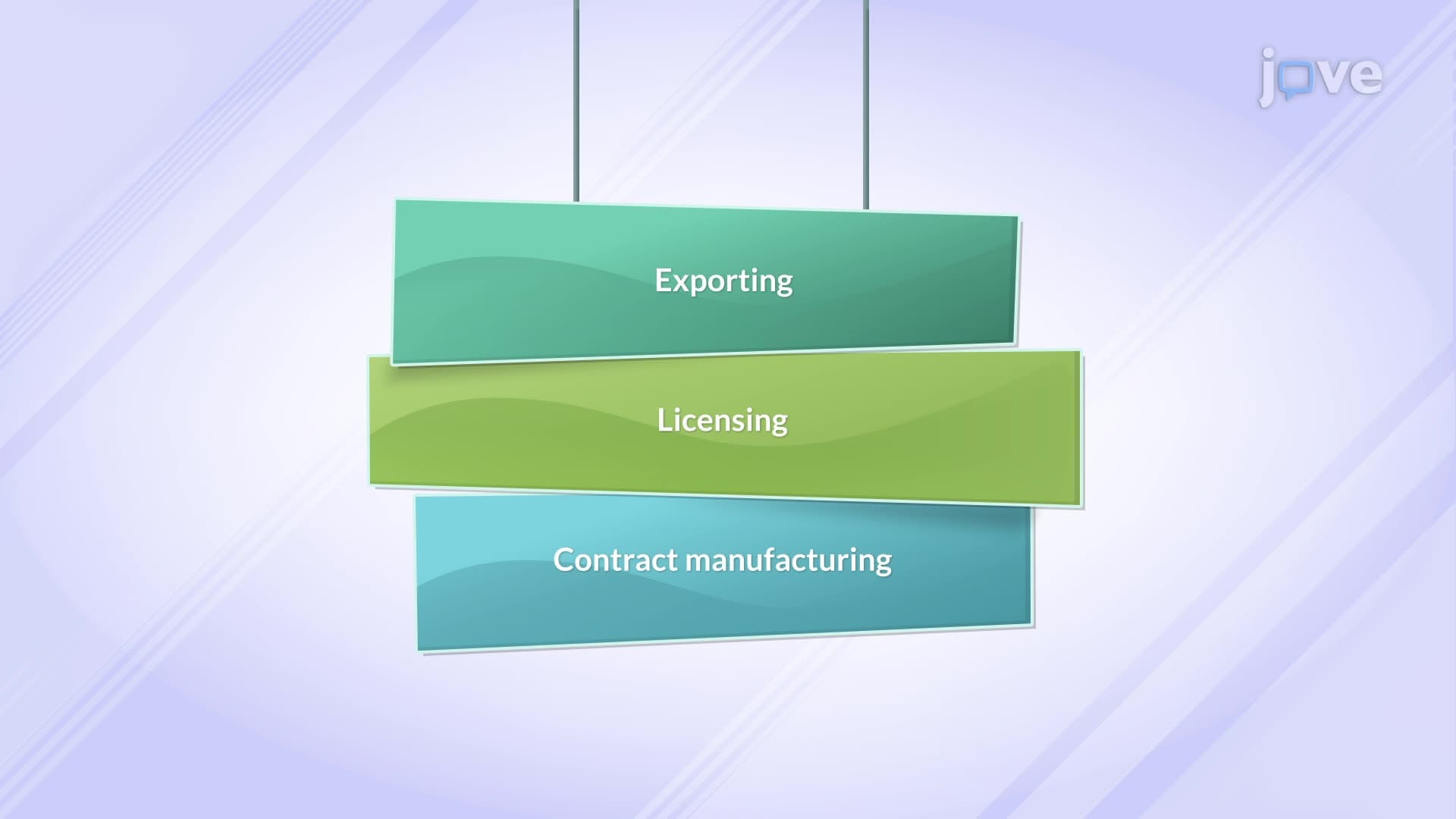
When Fortune 500 companies like Nike expand internationally, choosing the right global entry strategies can make or break their market penetration success. Global entry strategies definition encompasses three core approaches: exporting (direct or indirect), licensing partnerships, and contract manufacturing arrangements. Each strategy offers distinct risk-reward profiles that impact operational control, investment requirements, and profit margins. Understanding What is Global Entry Strategies I becomes critical for executives evaluating international expansion opportunities and resource allocation decisions. Watch the full video on JoVE Coach to master this concept with expert-led visuals and step-by-step explanations.
When Walmart executives decided to enter international markets in the 1990s, they faced the same strategic dilemma confronting business leaders today: how to balance market opportunity with operational risk and resource constraints. Global entry strategies provide the structured approach companies need to navigate international expansion decisions systematically.
Exporting represents the most common initial international expansion strategy, offering two distinct pathways. Indirect exporting utilizes domestic intermediaries who handle foreign market complexities, requiring minimal investment while limiting control over pricing and customer relationships. Companies like Harley-Davidson initially used this approach, partnering with established distributors to test European demand before committing significant resources.
Direct exporting eliminates intermediaries, providing greater profit margins and market control but demanding substantial investment in international sales infrastructure. This strategy proves most effective when companies possess strong brand recognition and sufficient resources to manage foreign operations independently.
Strategic licensing arrangements allow companies to monetize intellectual property while minimizing operational exposure in unfamiliar markets. McDonald's franchise model exemplifies successful licensing implementation, enabling rapid international expansion while reducing capital requirements and operational risks. Licensed partners contribute local market knowledge, established distribution networks, and regulatory compliance expertise that would be costly and time-intensive for foreign companies to develop independently.
The key success factor involves selecting partners whose capabilities and market position align with the licensor's brand standards and growth objectives. Due diligence processes must evaluate partner financial stability, operational competency, and strategic alignment to prevent brand dilution or market conflicts.
Contract manufacturing strategies enable companies to access cost-efficient production capabilities while focusing resources on core competencies like product development and marketing. Apple's relationship with suppliers like Foxconn demonstrates how strategic outsourcing can achieve scale economies and cost optimization while maintaining product quality standards.
This approach requires robust supplier management systems and quality control processes to mitigate risks associated with reduced production oversight. Success depends on establishing clear performance metrics, regular auditing procedures, and contingency plans for supplier relationship changes.
Related Micro-courses