Loading subject page…


4,805 views

Video Summary: What Is Inertia Tensor
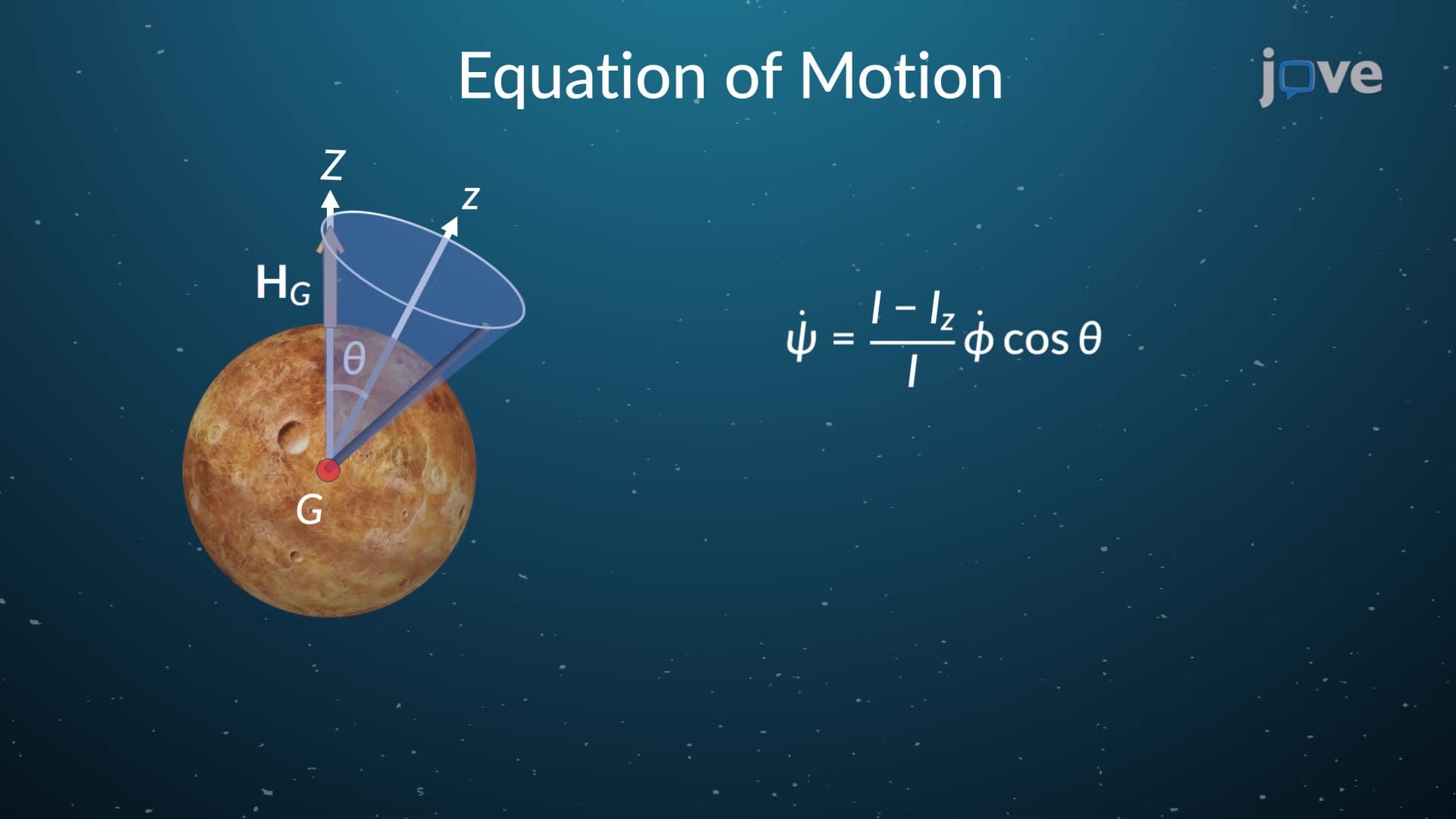
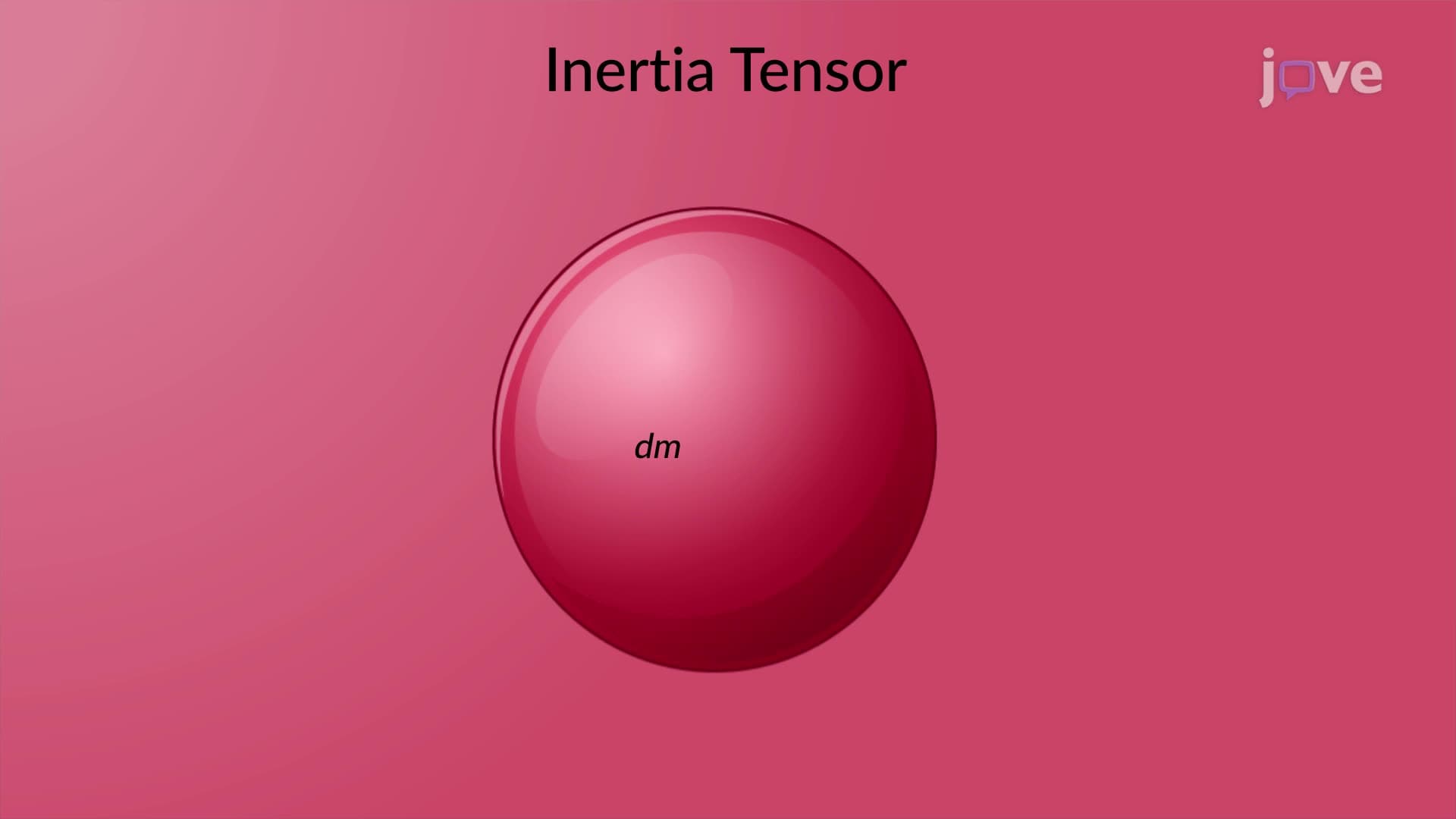
Why does a figure skater spin faster when pulling their arms in? The inertia tensor describes how mass distributes within rotating objects, determining their resistance to rotational motion. Consider NASA's spacecraft orientation systems-engineers use inertia tensor calculations to predict how satellites will tumble in space after thruster burns. This 3×3 matrix reveals which axes allow easiest rotation and how different rotational directions couple together. Watch the full video on JoVE Coach to master this concept with expert-led visuals and step-by-step explanations.
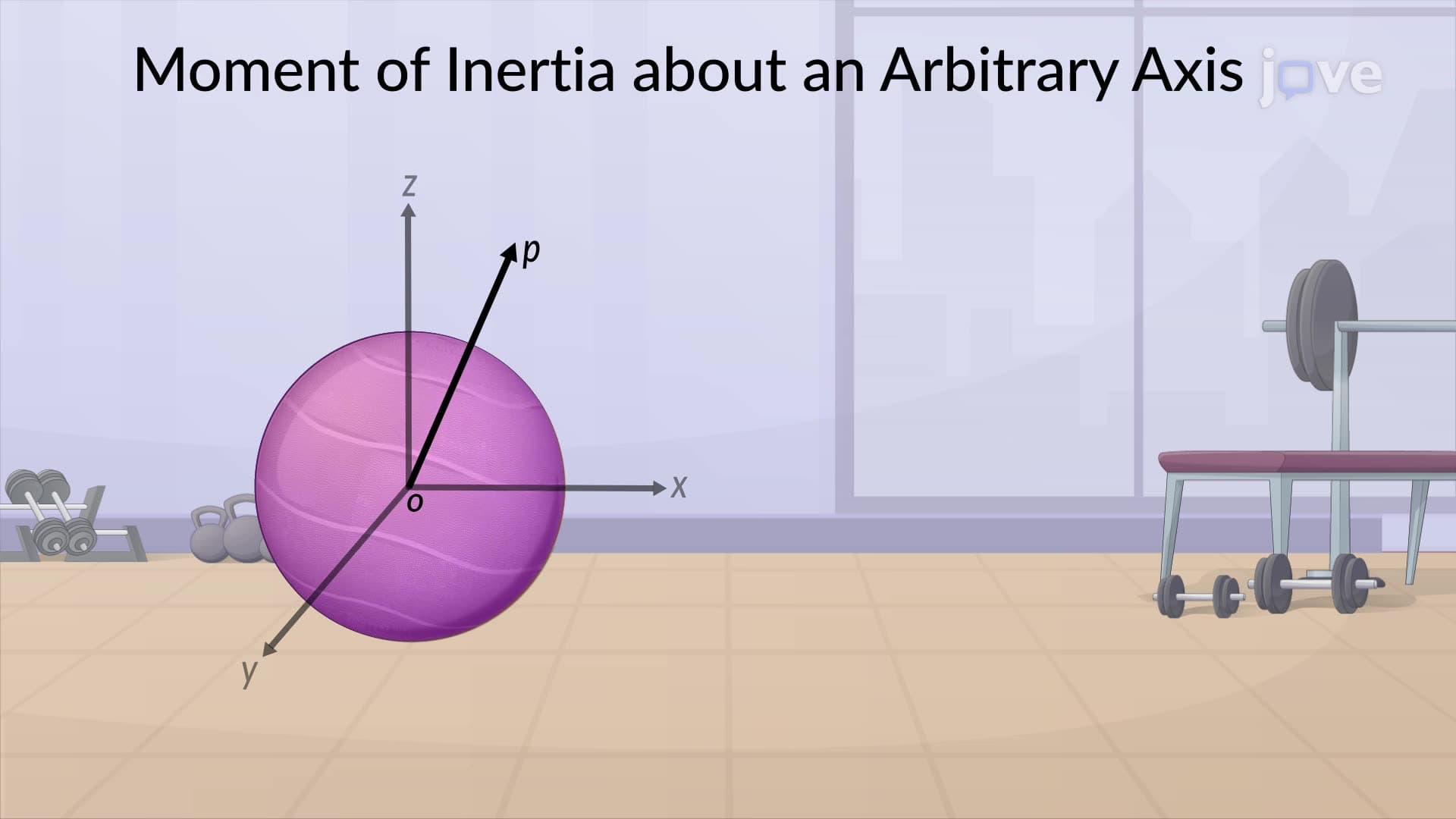
The inertia tensor serves as a comprehensive mathematical tool that captures how mass distributes throughout a three-dimensional rigid body. Unlike the simple moment of inertia used for planar rotation, this 3×3 matrix accounts for rotation about any axis in space. Each matrix element carries specific physical meaning-diagonal terms represent conventional moments of inertia about coordinate axes, while off-diagonal terms describe rotational coupling between different directions.
The inertia tensor matrix contains nine elements, though symmetry reduces this to six independent values. Diagonal elements (Ixx, Iyy, Izz) represent resistance to rotation about the x, y, and z axes respectively. Off-diagonal elements (Ixy, Ixz, Iyz) quantify how rotation about one axis induces motion about another axis. For instance, in helicopter rotor analysis, engineers must account for these coupling effects to prevent dangerous vibrations during flight.
Every rigid body possesses three special orientations called principal axes where rotational coupling vanishes. When the coordinate system aligns with these principal axes, the inertia tensor becomes diagonal-all off-diagonal elements equal zero. This diagonalization dramatically simplifies rotational dynamics calculations. The resulting diagonal values, called principal moments of inertia, represent the body's rotational resistance along its natural axes of rotation.
Understanding inertia tensors proves crucial for AP Physics C students tackling rotational mechanics problems. In college-level mechanical engineering courses, students apply these concepts to design stable spacecraft, analyze gyroscopic effects in machinery, and optimize sports equipment performance. For example, golf club manufacturers use inertia tensor calculations to position weight optimally, maximizing swing stability and ball control. Similarly, automotive engineers analyze vehicle inertia tensors to improve handling characteristics and rollover resistance.
The concept frequently appears on MCAT physics sections and engineering graduate school entrance exams, where students must demonstrate understanding of three-dimensional rotational motion. Mastering inertia tensor manipulation prepares students for advanced coursework in robotics, aerospace engineering, and theoretical mechanics.
Related Micro-courses