Loading subject page…

- Mechanical Engineering
- Physics Basics
- Acceleration due to Gravity on Earth
Micro-course: Physics Basics
13,580 views
Learn key concepts and earn your certificate.





Acceleration due to Gravity on Earth

00:00
00:55
Video Summary: Acceleration Due to Gravity on Earth Explained
Ever wonder why a feather and a bowling ball dropped simultaneously from the Empire State Building would hit the ground at exactly the same time in a vacuum? The acceleration due to gravity on earth creates this counterintuitive phenomenon, pulling all objects downward at 9.81 m/s² regardless of their mass. NASA engineers rely on this precise value when calculating spacecraft trajectories and satellite orbits. Watch the full video on JoVE Coach to master this concept with expert-led visuals and step-by-step explanations.
- Understand how acceleration due to gravity on earth governs the motion of all falling objects at 9.81 m/s²
- Identify the historical contributions of Galileo and Newton to our understanding of gravitational acceleration
- Analyze how Newton's law of universal gravitation explains why objects experience gravitational force
- Apply fundamental equations like F = mg and v = u + gt to solve gravitational motion problems
- Recognize how altitude, latitude, and geological formations cause slight variations in gravitational acceleration
- Evaluate real-world applications in engineering, from bridge design to projectile trajectory calculations
- Compare theoretical predictions with experimental observations in free fall and pendulum experiments
- Explore the relationship between gravitational force, mass, and distance in planetary motion contexts
Understanding Acceleration Due to Gravity on Earth
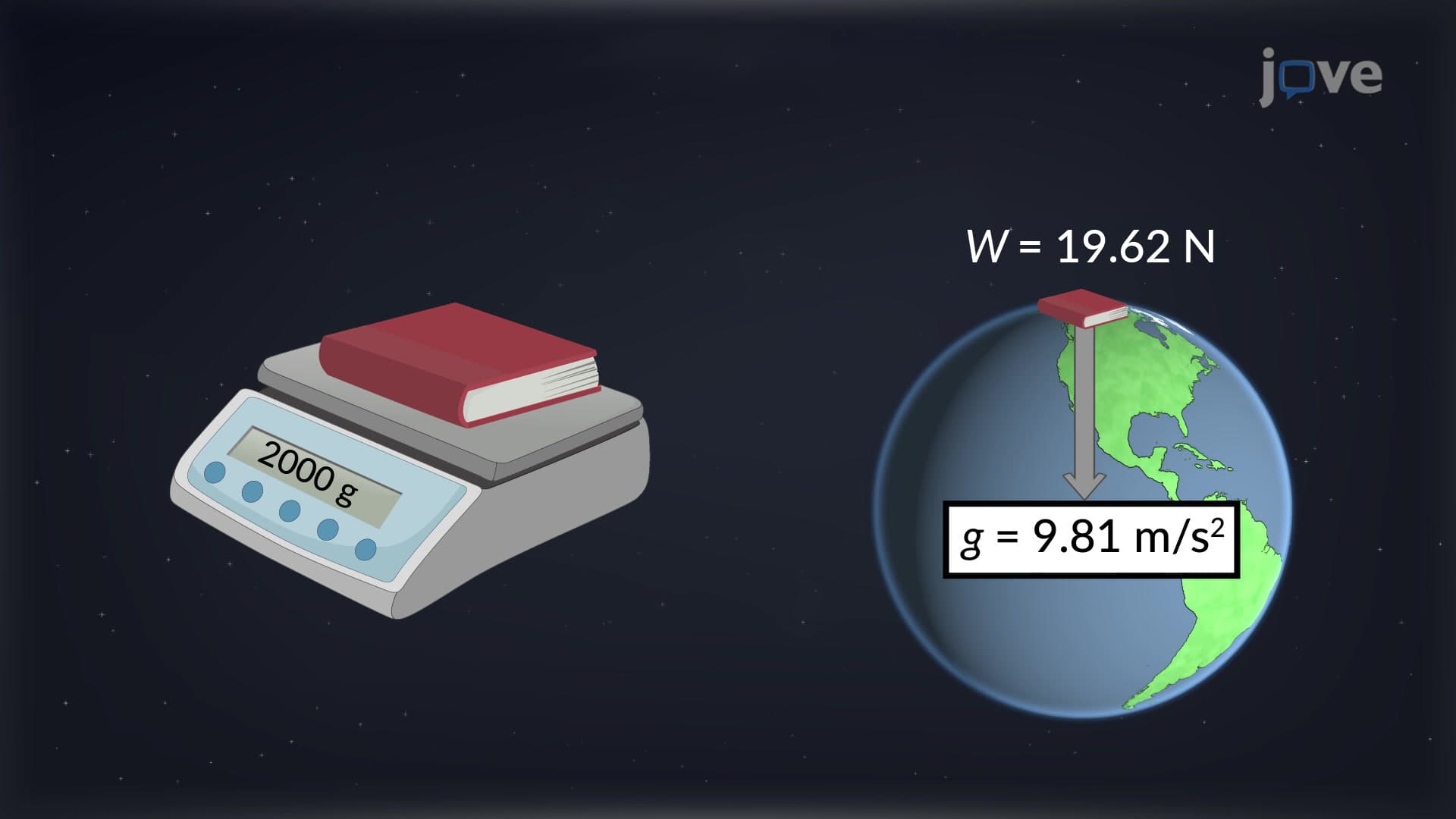
Acceleration due to gravity on earth represents one of the most fundamental constants in physics, affecting everything from the coffee falling from your cup to the International Space Station's orbital mechanics. At Earth's surface, this acceleration maintains a nearly constant value of 9.81 meters per second squared, meaning that every second an object falls, its velocity increases by 9.81 m/s toward Earth's center.
Historical Foundation and Scientific Principles
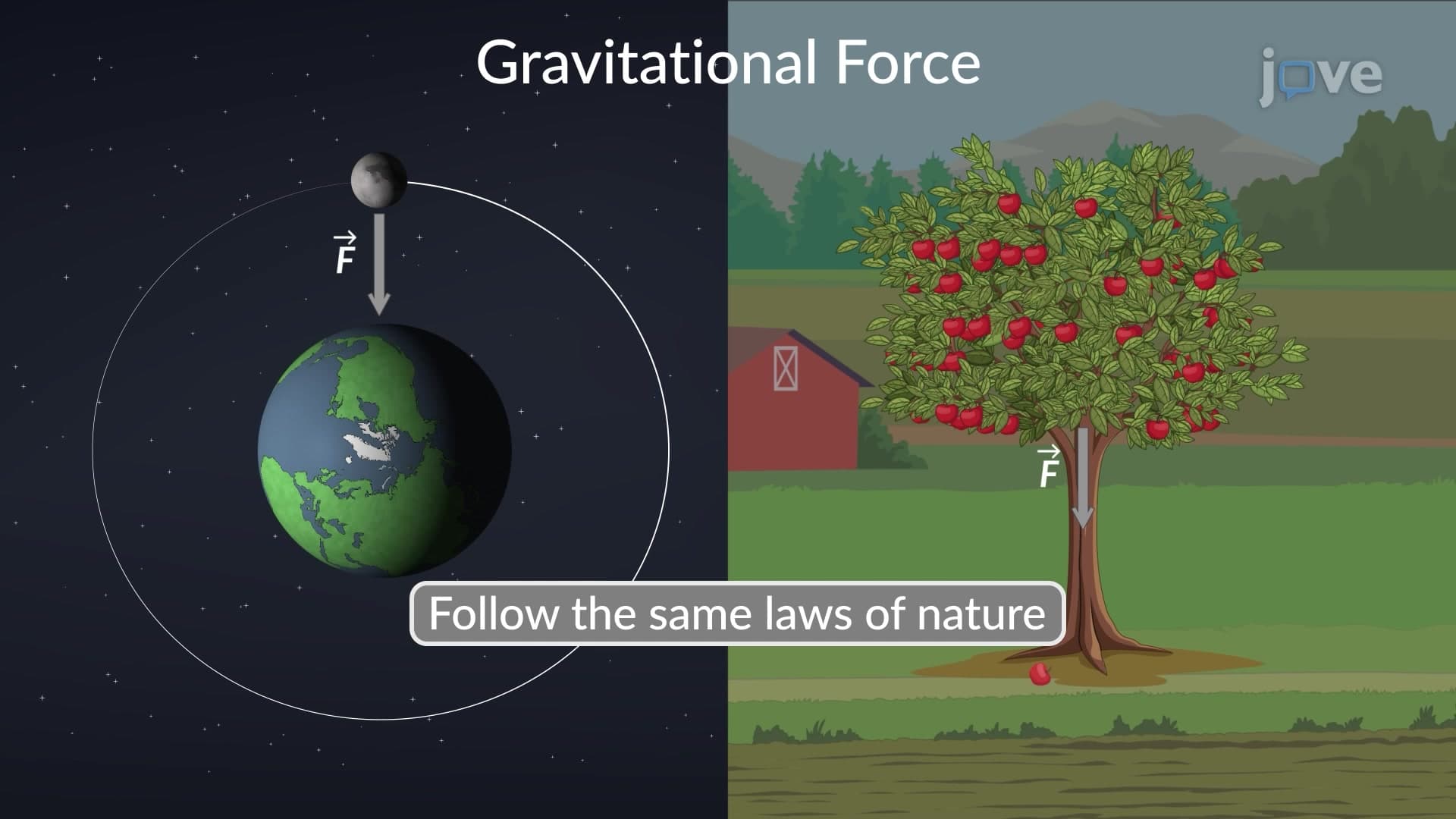
The concept emerged from Galileo Galilei's groundbreaking experiments at the University of Pisa, where he demonstrated that mass doesn't affect falling speed-contradicting centuries of Aristotelian physics. Isaac Newton later provided the mathematical framework through his law of universal gravitation: F = G(m1 × m2)/r², where G represents the gravitational constant. This law explains why Earth's massive size (5.97 × 10²⁴ kg) creates the consistent downward acceleration we observe.
Mathematical Applications and Problem-Solving
Students encounter gravitational acceleration through key equations that appear regularly on AP Physics exams and college assessments. The weight formula W = mg connects mass to gravitational force, while kinematic equations like h = (1/2)gt² and v² = u² + 2gh help solve projectile and free-fall problems. MIT and Stanford physics courses emphasize these relationships when analyzing everything from dropped objects to satellite launches at Kennedy Space Center.
Real-World Engineering Applications
Civil engineers designing the Golden Gate Bridge must account for gravitational loads when calculating structural support requirements. Aerospace engineers at Boeing and SpaceX use precise gravitational values to compute rocket trajectories and fuel requirements for Mars missions. Even everyday technology like smartphone accelerometers rely on gravitational reference points for orientation detection. The slight variations in Earth's gravitational field-from 9.78 m/s² at the equator to 9.83 m/s² at the poles-matter critically for GPS accuracy and geological surveying conducted by the U.S. Geological Survey.
Frequently Asked Questions
Acceleration due to gravity on earth is the rate at which objects accelerate toward Earth's center when falling freely, measuring 9.81 m/s². This value remains relatively constant because Earth's mass and radius create a consistent gravitational field strength at the surface. The slight variations occur due to Earth's rotation, altitude changes, and local geological density differences, but these typically affect only the third decimal place.
AP Physics 1 and Physics C exams frequently test gravitational acceleration through projectile motion, pendulum oscillations, and energy conservation problems. You'll encounter it in free-response questions involving dropped objects, launched projectiles, and circular motion scenarios. College placement exams and SAT Subject Tests also include gravitational acceleration in mechanics problems, particularly when calculating kinetic and potential energy transformations.
Focus on understanding the relationship between force, mass, and acceleration through F = mg as your foundation, then build to kinematic equations. Practice with real scenarios like calculating how long it takes objects to fall from known heights. Create formula sheets linking gravitational acceleration to energy (PE = mgh), motion (v = gt), and distance (h = (1/2)gt²) equations, since exam problems often combine multiple concepts.
NASA engineers must account for gravitational variations when designing spacecraft trajectories and calculating fuel requirements for missions. Launch windows from Kennedy Space Center depend on precise gravitational calculations to achieve proper orbital velocities. Satellite positioning systems like GPS require gravitational accuracy to maintain positioning precision within meters, while Mars rover landings need exact gravitational models to ensure successful parachute and thruster sequences.
Most introductory physics courses teach gravitational acceleration using algebra and basic trigonometry, making it accessible to high school students in Algebra 2 or Precalculus. While Newton's derivation involves calculus, you can master the fundamental concepts and solve practical problems using straightforward mathematical operations. Advanced applications in aerospace engineering require calculus, but core understanding develops through algebraic relationships and geometric principles.
Gravitational acceleration serves as a gateway to energy conservation, circular motion, and wave mechanics concepts. It provides concrete examples for applying Newton's laws, understanding vector quantities, and connecting theoretical physics to observable phenomena. This foundation proves essential for advanced topics like orbital mechanics, electromagnetic fields, and fluid dynamics that you'll encounter in university physics sequences.
Progress to projectile motion analysis, which combines gravitational acceleration with horizontal velocity components. Then explore orbital mechanics and Kepler's laws to understand how gravitational acceleration extends to planetary motion. Energy conservation principles build naturally from gravitational potential energy concepts, leading toward more advanced topics like rotational dynamics and electromagnetic field interactions.
Related Micro-courses