Loading subject page…

- Mechanical Engineering
- Physics Basics
- Introduction to Vectors
Micro-course: Physics Basics
13,580 views
Learn key concepts and earn your certificate.





Introduction to Vectors

00:00
01:21
Video Summary: What are Vectors
Ever wonder how NASA calculates the exact trajectory to launch a rocket to Mars? Vectors are the mathematical foundation behind these complex calculations, combining both magnitude and direction into a single powerful tool. From analyzing forces on a bridge in San Francisco to tracking hurricane paths across the Gulf Coast, understanding what are vectors enables engineers and scientists to solve real-world problems involving motion, forces, and fields. Watch the full video on JoVE Coach to master this concept with expert-led visuals and step-by-step explanations.
- Understand what are vectors and distinguish them from scalar quantities by identifying their dual characteristics of magnitude and direction
- Identify the graphical representation of vectors as arrows and interpret their length and orientation in coordinate systems
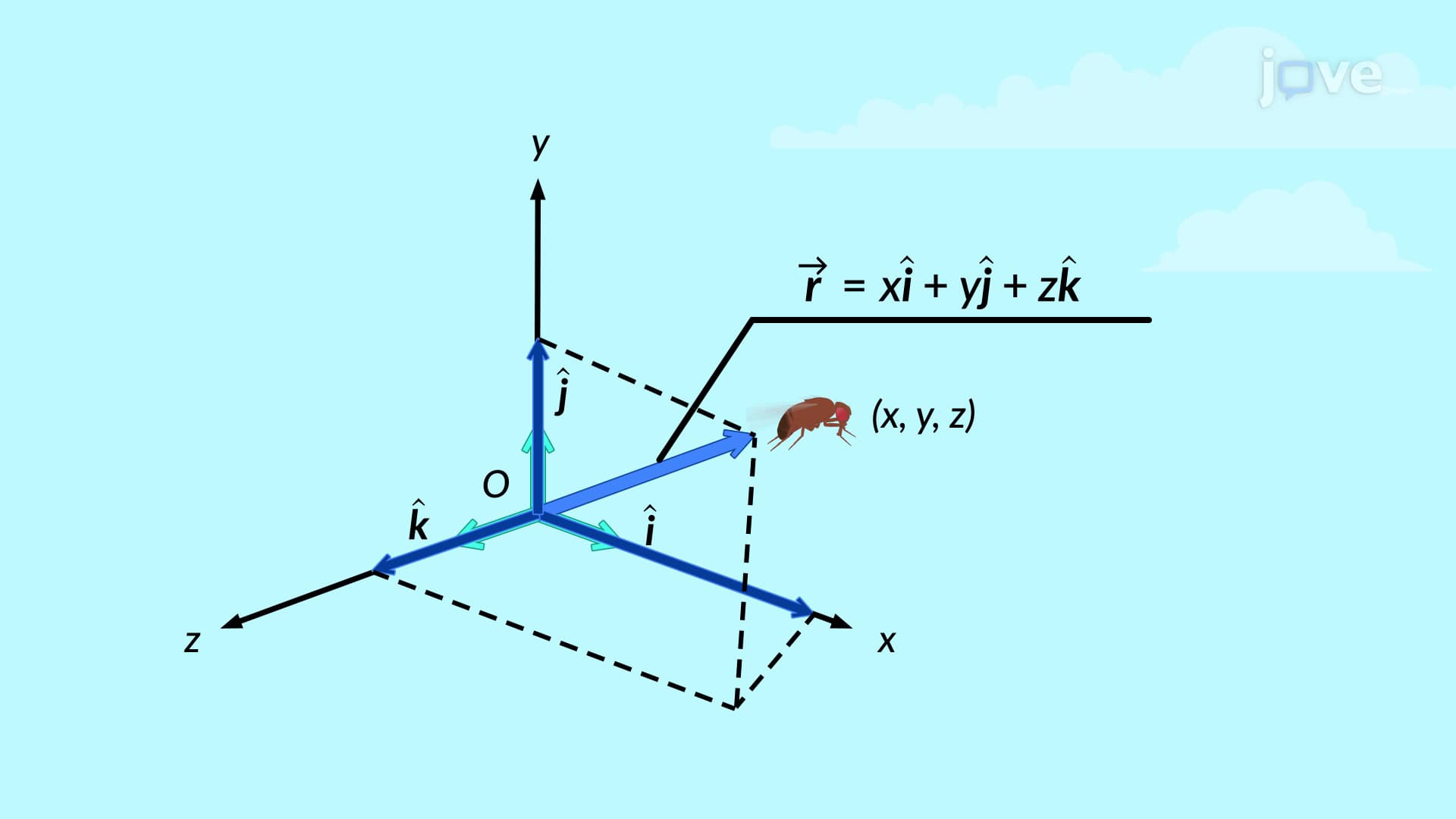
- Analyze vector components using algebraic notation like A = Axi + Ayj + Azk in three-dimensional space
- Apply fundamental vector operations including addition, subtraction, and scalar multiplication using both graphical and algebraic methods
- Recognize the parallelogram law for vector addition and understand how it applies to force analysis problems
- Evaluate real-world applications of vectors in physics and engineering, from analyzing structural loads to electromagnetic field calculations
- Compare different types of vectors such as displacement, velocity, acceleration, and force vectors in practical contexts
- Explore the historical development of vector mathematics and its role in modern scientific problem-solving
Understanding What Are Vectors: The Mathematical Foundation
What are vectors? They represent physical quantities that require both magnitude (size) and direction for complete description. Unlike scalars such as temperature or mass, vectors provide a complete picture of phenomena involving directional components. In the coordinate system, we express vectors algebraically as A = Axi + Ayj + Azk, where i, j, and k represent unit vectors along the x, y, and z axes respectively.
Types of Vectors in Physics and Engineering
The types of vectors encountered in STEM fields include displacement vectors (representing change in position), velocity vectors (describing speed and direction of motion), acceleration vectors (indicating changes in velocity), and force vectors (representing pushes or pulls). Each type serves specific purposes in problem-solving. For instance, when analyzing a car accident for insurance companies in Detroit, investigators use displacement and velocity vectors to reconstruct the collision sequence.
Vector Operations and Mathematical Properties
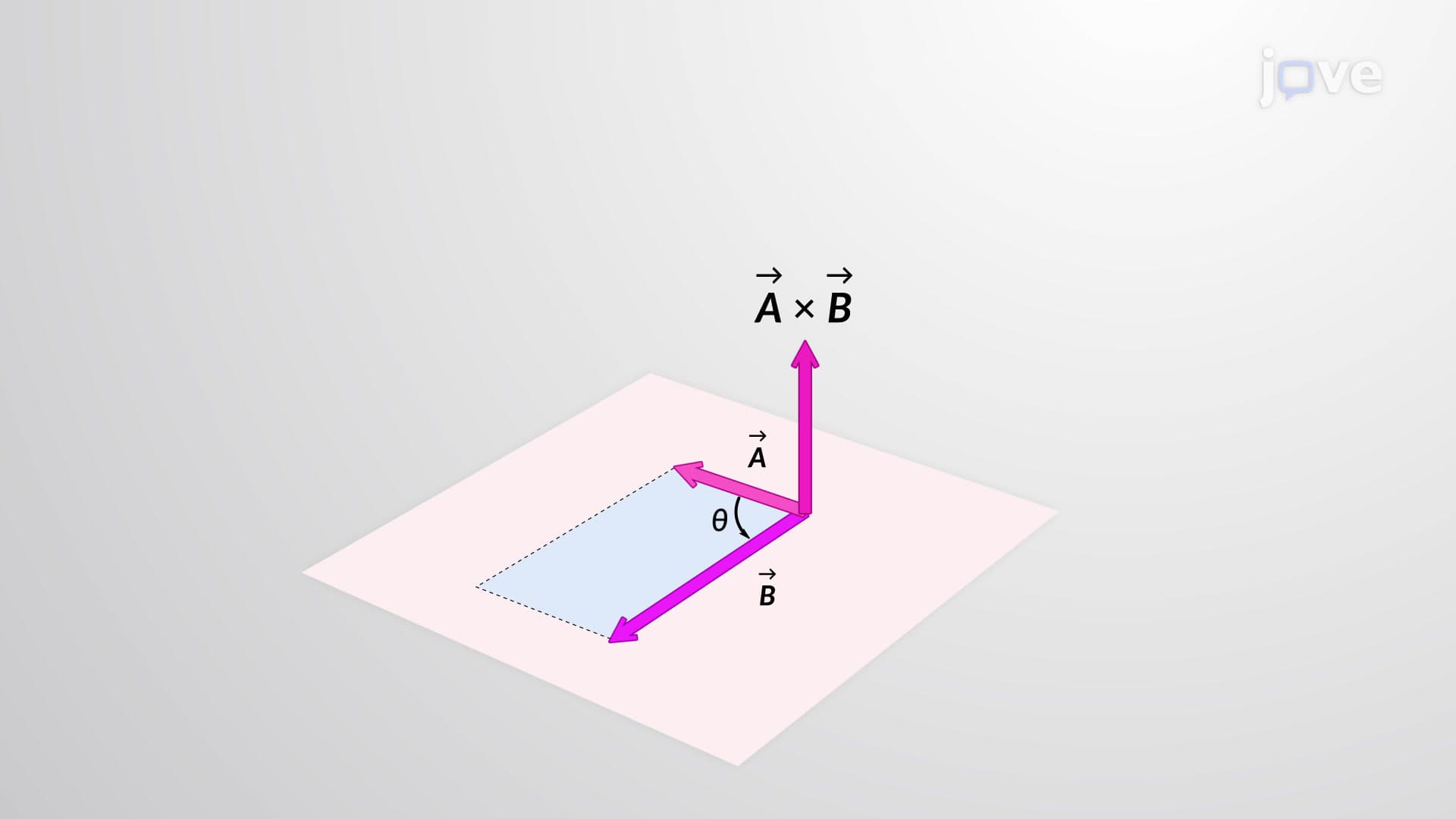
Vector addition follows the parallelogram law, where two vectors form adjacent sides of a parallelogram, and their sum represents the diagonal. This principle proves essential in engineering applications like analyzing forces on the Golden Gate Bridge's suspension cables. Vector subtraction involves adding the negative of the second vector, while scalar multiplication changes magnitude without affecting direction (unless the scalar is negative).
Real-World Applications and Exam Relevance
Vectors appear extensively in AP Physics courses, SAT Subject Tests, and college-level calculus and physics examinations. MIT and Caltech engineering programs emphasize vector analysis for structural mechanics, while medical schools include vector concepts in MCAT physics sections. Practical applications span from GPS navigation systems calculating optimal routes to NASA's trajectory planning for space missions. Understanding this vectors concept becomes crucial for students pursuing STEM careers, as it forms the foundation for advanced topics like electromagnetic field theory and fluid dynamics in mechanical engineering programs at universities like Stanford and Carnegie Mellon.
Frequently Asked Questions
Vectors are mathematical objects that have both size (magnitude) and direction, like an arrow pointing somewhere. Think of them as instructions that tell you both how far to go and which way to head. They're essential for describing motion, forces, and many physical phenomena in physics and engineering.
The primary types include displacement vectors (change in position), velocity vectors (speed with direction), acceleration vectors (change in velocity), and force vectors (pushes or pulls). Each type represents different physical quantities but follows the same mathematical rules for addition, subtraction, and scalar multiplication.
Vector problems typically involve analyzing motion in two dimensions, force diagrams, and projectile motion scenarios. Students must demonstrate graphical vector addition, component analysis, and real-world applications like calculating resultant forces or determining projectile trajectories for optimal performance.
Scalars have only magnitude (like temperature, mass, or speed), while vectors have both magnitude and direction (like velocity, acceleration, or force). MCAT questions often test this distinction through physics problems involving motion analysis and force calculations in biological systems.
Engineers use vectors to analyze structural loads on buildings, design aircraft flight paths, and calculate forces in mechanical systems. For example, civil engineers designing the new San Francisco-Oakland Bay Bridge used vector analysis to determine optimal cable tensions and load distributions.
Not initially, basic algebra and geometry provide sufficient foundation for introductory vector concepts. You'll learn graphical methods first, then progress to algebraic component analysis. Trigonometry helps with advanced applications, but isn't required for fundamental understanding.
Practice drawing vector diagrams first, then work on component breakdowns using trigonometry. Create a systematic approach: identify given vectors, choose coordinate systems, break into components, perform operations, and verify results make physical sense.
Progress to dot and cross products, vector calculus, and three-dimensional analysis. These concepts prove essential for engineering courses, advanced physics including electromagnetic theory, and mathematical modeling in fields like fluid dynamics and quantum mechanics.
Related Micro-courses