Loading subject page…

- Mechanical Engineering
- Physics Basics
- Vector or Cross Product
Micro-course: Physics Basics
13,585 views
Learn key concepts and earn your certificate.





Vector or Cross Product

00:00
01:17
Video Summary: What Is Vector or Cross Product
Ever wonder why helicopters generate lift or how engineers calculate the strength needed for bridge supports? The vector or cross product is the mathematical operation that explains these perpendicular forces in three-dimensional space. This fundamental concept produces a new vector perpendicular to two original vectors, with applications ranging from NASA rocket trajectory calculations to automotive torque specifications. Understanding What is Vector Or Cross Product unlocks the mathematical foundation behind rotational mechanics that governs everything from electric motors to planetary motion. Watch the full video on JoVE Coach to master this concept with expert-led visuals and step-by-step explanations.
- Understand what What is Vector Or Cross Product means and how it differs from dot product operations in vector mathematics
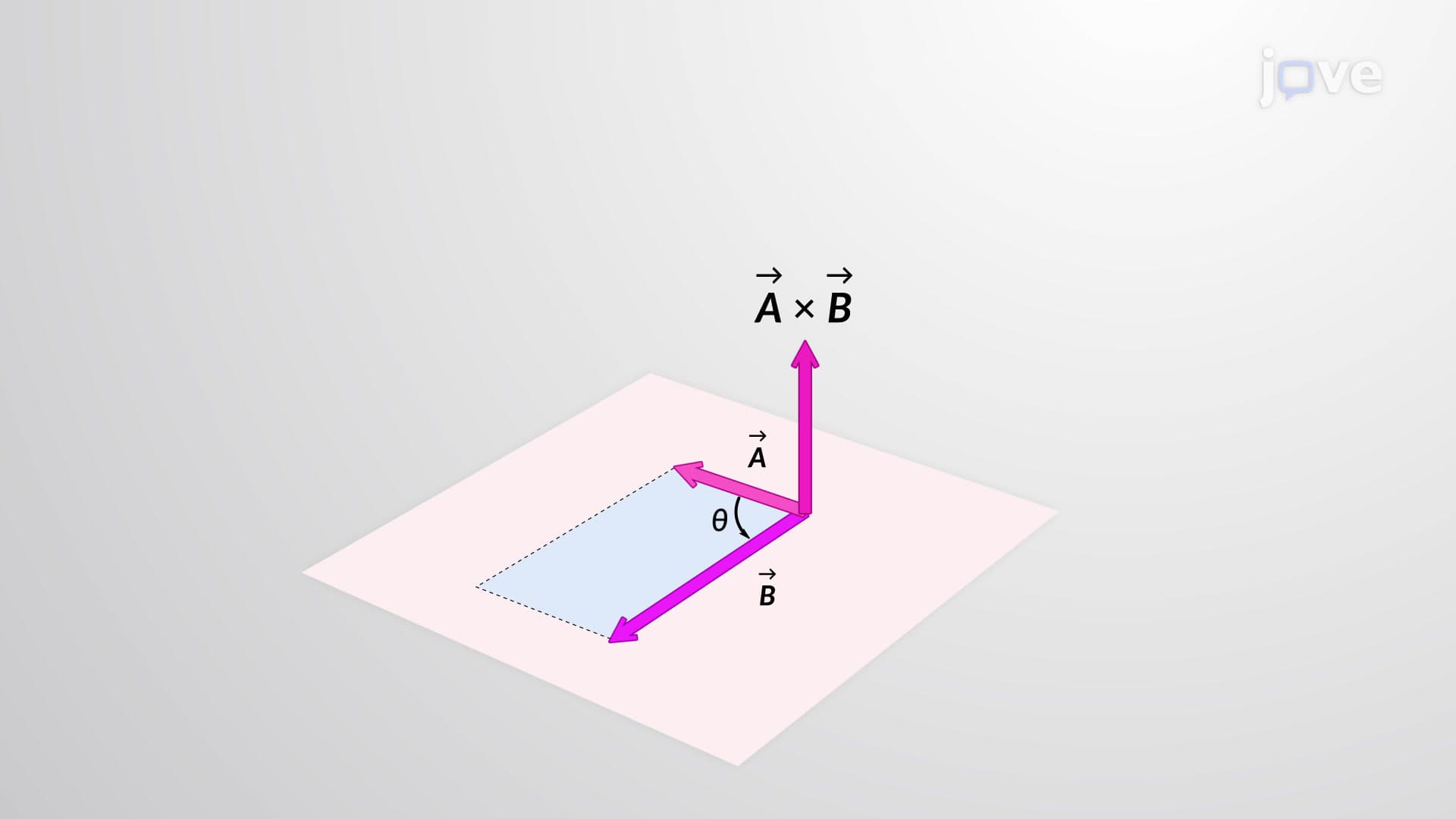
- Identify the geometric interpretation of cross products as representing areas of parallelograms and perpendicular directions using the right-hand rule
- Apply the mathematical formula |A × B| = |A||B|sin(θ) to calculate cross product magnitudes in physics and engineering problems
- Analyze real-world applications including torque calculations, angular momentum, and magnetic force problems commonly found in AP Physics and college mechanics courses
- Evaluate when cross products produce zero vectors and understand the significance of parallel and antiparallel vector relationships
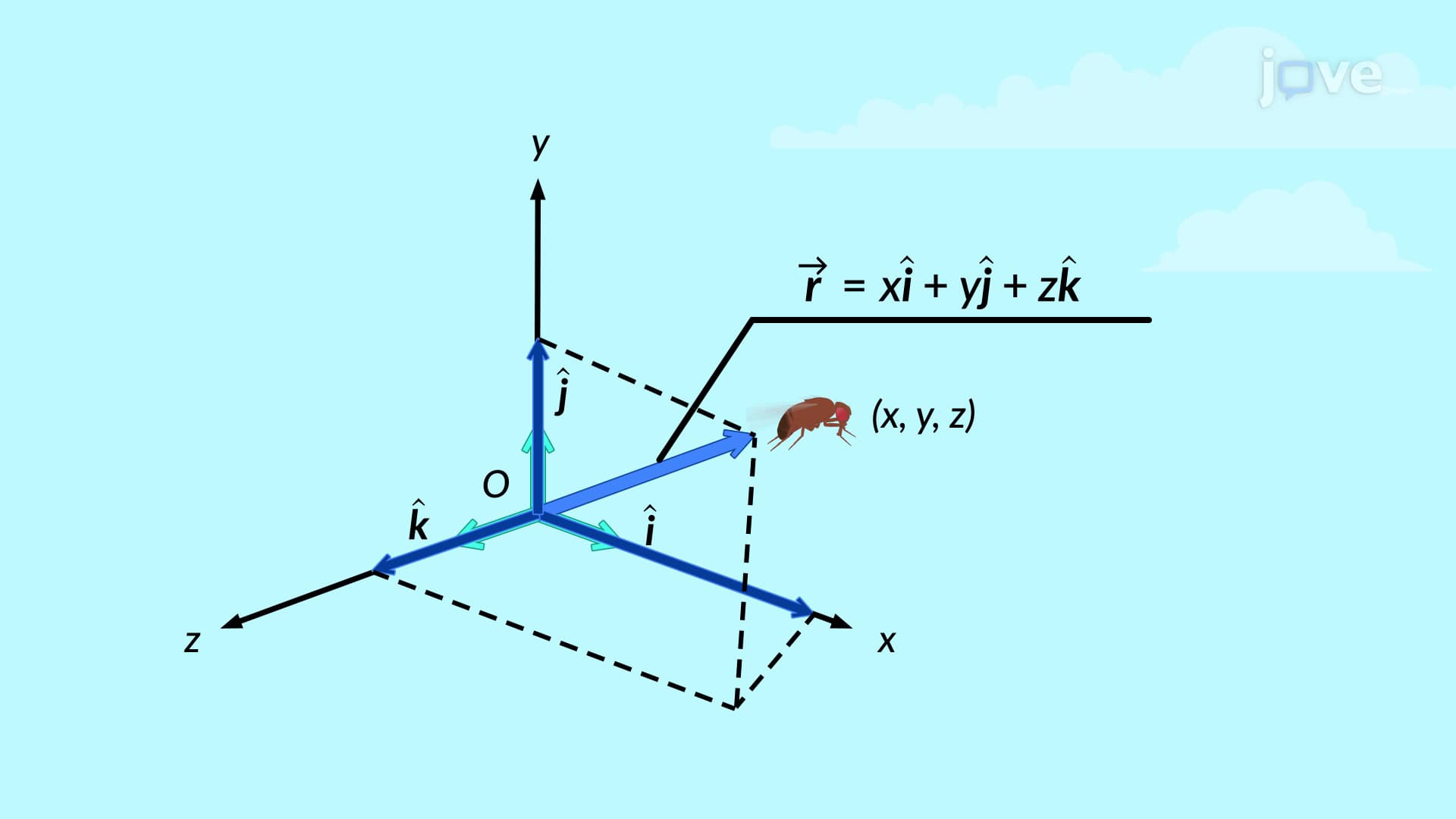
- Recognize the determinant method for calculating cross products using i, j, k unit vectors in Cartesian coordinate systems
- Compare cross product properties with scalar operations to understand why order matters in vector multiplication
- Explore connections between cross products and rotational motion concepts that appear on standardized exams like the MCAT and AP Physics C
Understanding What is Vector Or Cross Product: The Mathematical Foundation
The vector or cross product represents one of the most powerful operations in three-dimensional mathematics, producing a vector perpendicular to both input vectors. Unlike scalar multiplication, the cross product A × B creates a new vector whose magnitude equals the area of the parallelogram formed by vectors A and B. This operation follows the fundamental relationship |A × B| = |A||B|sin(θ), where θ represents the angle between the vectors.
The geometric interpretation reveals why cross products prove essential in physics and engineering. When two vectors lie in a plane, their cross product points perpendicular to that plane, with direction determined by the right-hand rule. Point your fingers along the first vector, curl them toward the second vector, and your thumb indicates the cross product direction.
Computational Methods and Mathematical Applications
Students encounter cross product calculations through the determinant method, expanding the 3×3 matrix containing unit vectors i, j, k and vector components. For vectors A = (A1, A2, A3) and B = (B1, B2, B3), the cross product becomes:
A × B = (A2B3 - A3B2)i + (A3B1 - A1B3)j + (A1B2 - A2B1)k
This systematic approach appears frequently on AP Calculus BC and college-level multivariable calculus exams. The anti-commutative property (A × B = -B × A) distinguishes cross products from regular multiplication, making order crucial in problem-solving.
Real-World Applications in American Industries
Cross products drive critical calculations across multiple sectors. Aerospace engineers at Boeing and SpaceX use cross products to determine spacecraft orientation and thrust vector directions. Automotive manufacturers like Ford and Tesla apply torque calculations (τ = r × F) when designing engine specifications and wheel assemblies.
In the energy sector, wind turbine efficiency depends on cross product relationships between wind velocity vectors and blade orientation. Civil engineers use cross products when analyzing structural loads and determining force distributions in bridges and skyscrapers throughout American cities.
Exam Preparation and Academic Success
Cross product problems appear consistently on the MCAT Physics section, particularly in mechanics and electromagnetism contexts. AP Physics C students encounter cross products when studying rotational dynamics and electromagnetic field interactions. College physics courses emphasize cross product applications in angular momentum conservation and magnetic force calculations.
Successful exam preparation requires recognizing cross product scenarios: whenever problems mention perpendicular forces, rotational effects, or area calculations involving two vectors, cross products likely provide the solution pathway.
Frequently Asked Questions
The vector or cross product creates a new vector perpendicular to both input vectors, while dot product produces a scalar value. Cross product magnitude equals the area of the parallelogram formed by the two vectors, making it essential for calculating torque, angular momentum, and magnetic forces in physics problems.
Cross product appears on AP Physics C in rotational mechanics and electromagnetism sections, typically worth 10-15% of exam points. Students must master the right-hand rule, understand anti-commutative properties, and solve torque problems using τ = r × F. Practice with determinant calculations and geometric interpretations ensures exam success.
MCAT physics sections test cross product understanding through magnetic force problems (F = qv × B) and torque calculations in biological systems. Expect 2-3 questions per exam involving perpendicular force directions and rotational motion. Focus on conceptual understanding rather than complex calculations.
Cross product mastery requires only basic trigonometry, specifically understanding sine functions and angle relationships. The right-hand rule provides intuitive direction finding without complex calculations. Students with Algebra II background can successfully learn cross products through systematic practice and visual learning approaches.
Create formula cards linking cross product components to physical meanings like torque and angular momentum. Practice the determinant method daily using different vector combinations. Use online vector calculators to verify hand calculations and build confidence before exams.
Tesla engineers apply cross products when designing electric motor torque specifications and analyzing wheel force distributions during acceleration. Boeing uses cross products for aircraft control surface calculations and thrust vector analysis during flight path planning. These applications demonstrate cross product relevance in cutting-edge American technology development.
Cross products form the foundation for vector calculus concepts including curl and divergence in multivariable calculus courses. They connect directly to linear algebra through determinant operations and appear in differential equations when modeling rotational systems. Understanding cross products prepares students for advanced physics and engineering mathematics.
Related Micro-courses