Loading video…


 13 Concepts
 6.9K views

Video Summary: Instantaneous Center of Zero Velocity Explained
Ever wonder how engineers at NASA calculate the precise motion of a Mars rover's wheels navigating rocky terrain? The instantaneous center of zero velocity reveals the hidden pivot point that simplifies complex wheel motion analysis. This fundamental concept in kinematics shows how any rotating object has a special point with zero velocity at each instant, making velocity calculations surprisingly straightforward. From automotive brake systems to robotic mechanisms used in US manufacturing, understanding Instantaneous Center of Zero Velocity Explained transforms how we analyze real-world motion. Watch the full video on JoVE Coach to master this concept with expert-led visuals and step-by-step explanations.
The instantaneous center of zero velocity represents one of the most elegant concepts in kinematics, providing a powerful tool for analyzing complex planar motion. This special point, often abbreviated as IC, exists at every instant for any rigid body undergoing planar motion and serves as a momentary pivot around which the entire body appears to rotate.
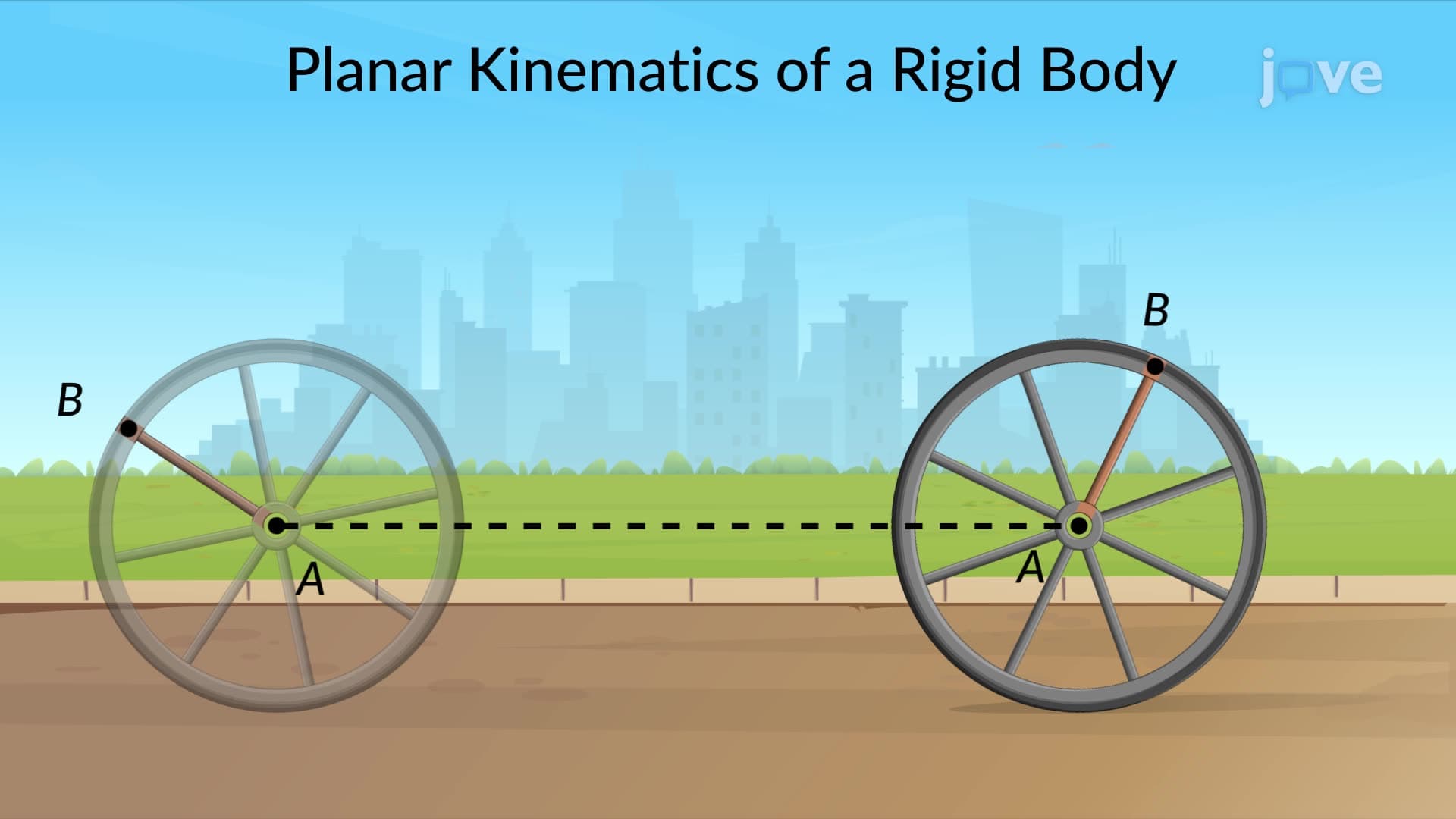
Unlike fixed rotation centers, the instantaneous center continuously shifts its position as the body moves. Think of a bicycle wheel rolling down a hill, at each moment, there's one specific point on or near the wheel that has exactly zero velocity, even though the wheel as a whole is moving forward.
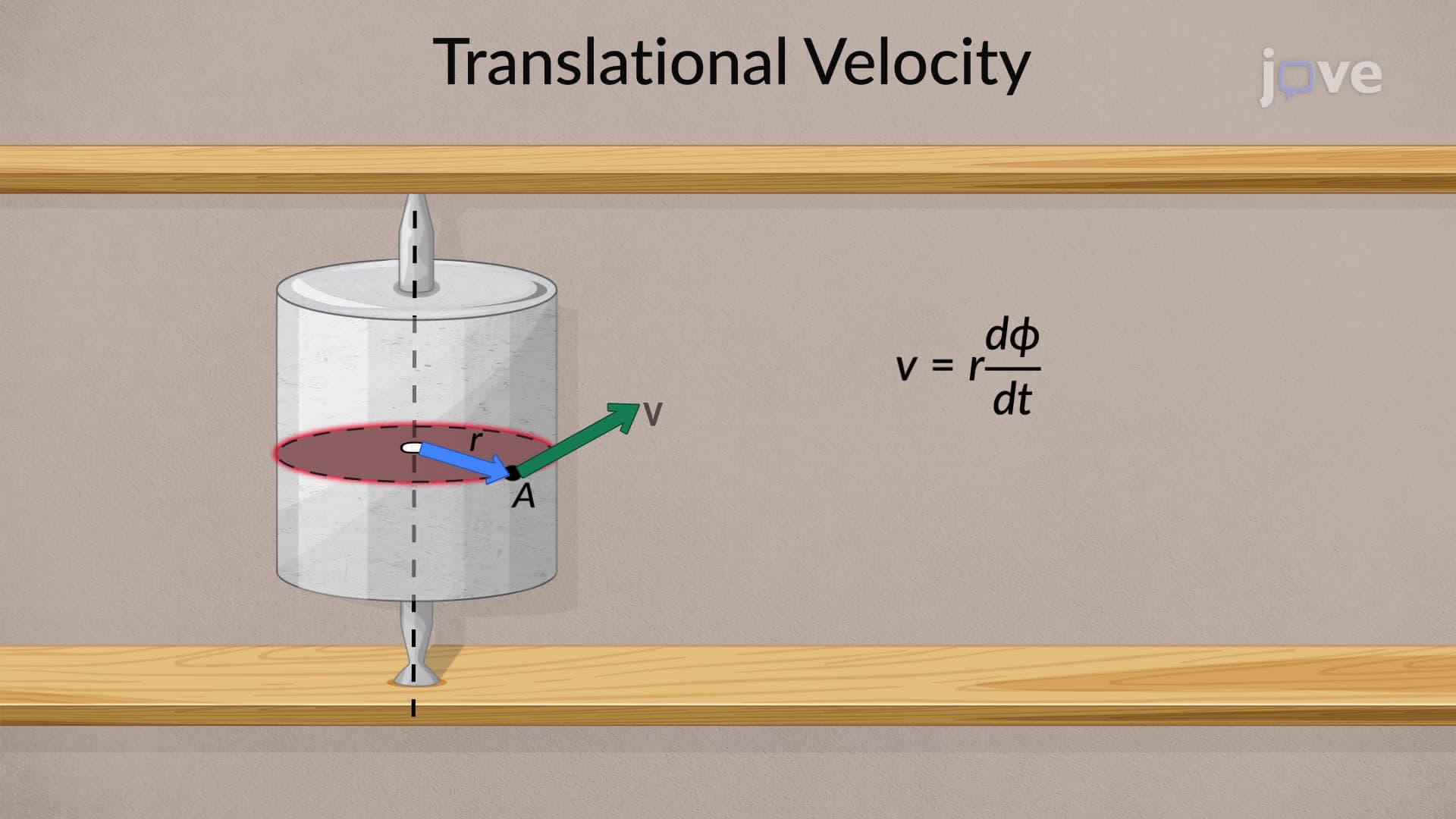
When we establish the instantaneous center of zero velocity, velocity calculations become remarkably straightforward. For any point on the rotating body, the velocity magnitude equals the angular velocity multiplied by the perpendicular distance from that point to the instantaneous center: v = ω × r.
This relationship transforms complex vector addition problems into simple geometric calculations. Engineering students at universities like MIT and Stanford regularly use this method in their mechanics courses because it eliminates the need for complicated relative velocity vector analysis.
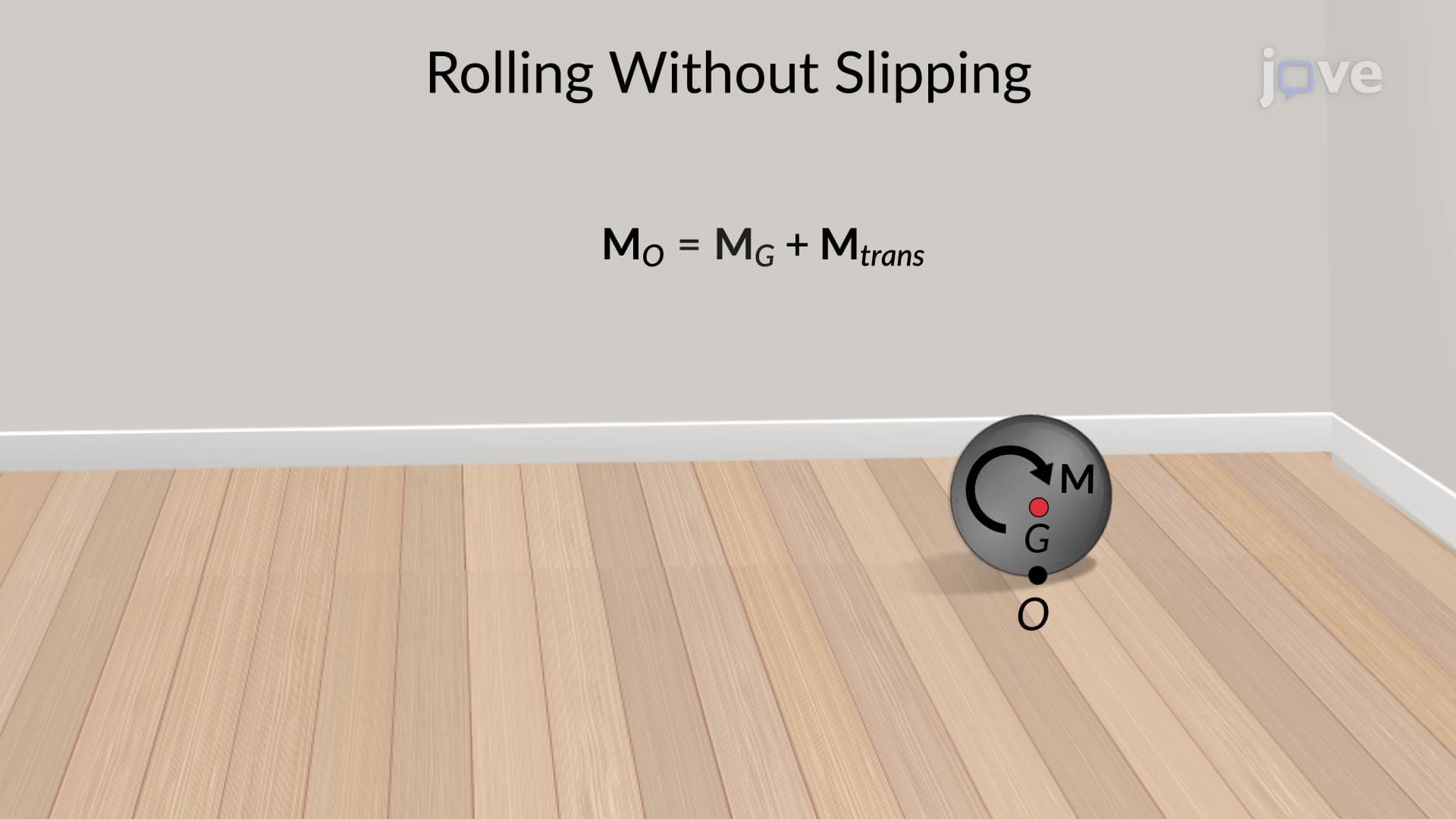
The instantaneous center concept proves invaluable in numerous engineering applications across American industries. Automotive engineers at companies like Ford and General Motors use this principle when designing transmission systems and analyzing tire-road interactions. The contact point between a rolling tire and the road surface represents the instantaneous center, it has zero velocity relative to the ground.
Robotics engineers apply this concept when programming industrial robots for precision manufacturing. Companies like Boston Dynamics and Tesla's automated production facilities rely on instantaneous center calculations to optimize robotic arm movements and ensure precise positioning accuracy.
Students preparing for AP Physics C exams frequently encounter instantaneous center problems, particularly in the mechanics section. The College Board emphasizes this concept because it demonstrates advanced understanding of rotational motion principles. Similarly, college engineering programs use instantaneous center problems in dynamics courses to bridge theoretical knowledge with practical problem-solving skills.
Understanding this concept proves essential for MCAT test-takers in the physics section, where rotational motion questions often appear. The instantaneous center method provides a reliable approach for quickly solving complex motion problems under time pressure.
Related Micro-courses