Loading subject page…


6,864 views


Video Summary: What Is Relative Motion Analysis Acceleration
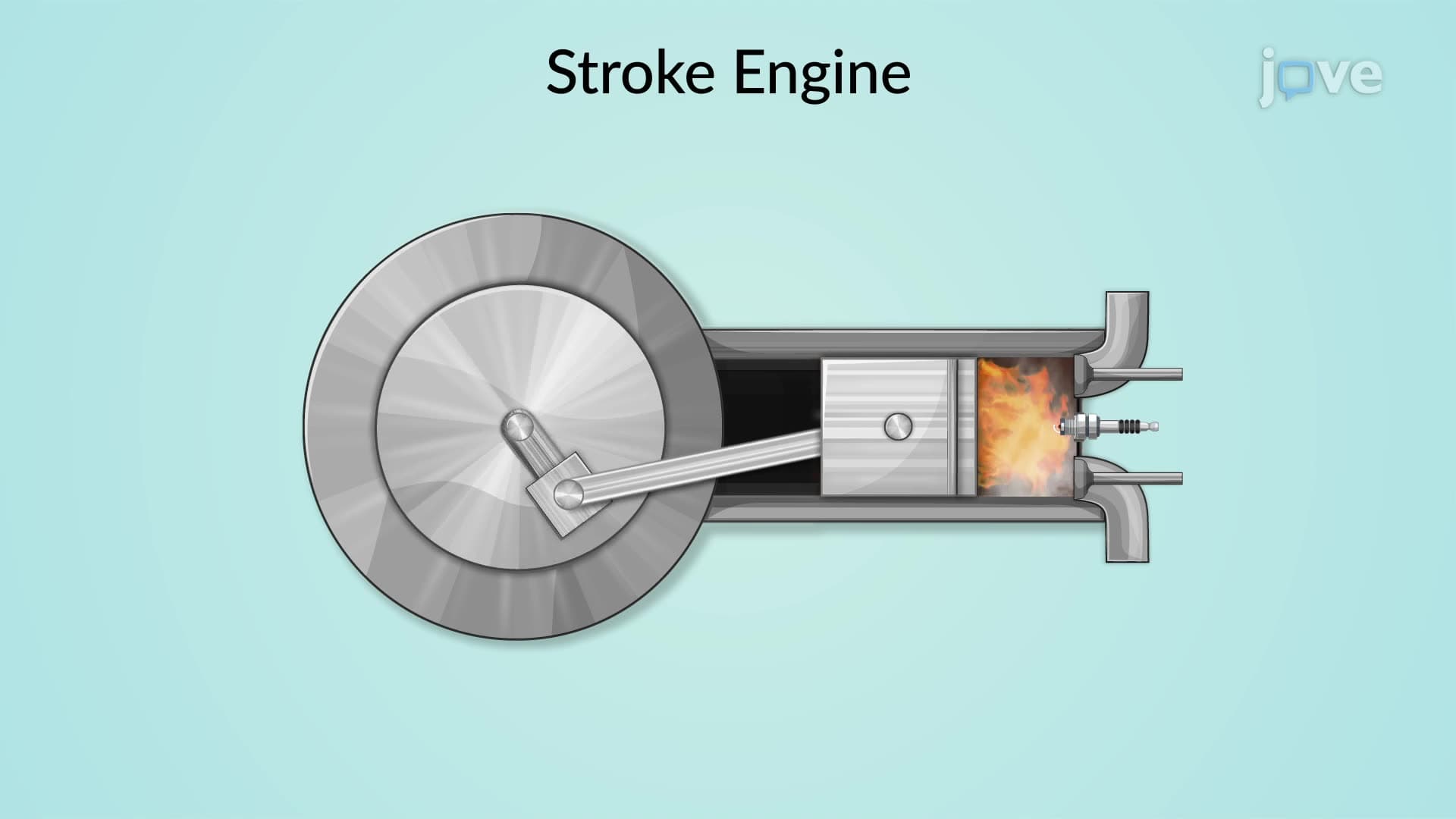
Have you ever wondered how the pistons in your car's engine move with such precision despite the complex rotating and sliding motions? Relative motion analysis acceleration reveals how interconnected mechanical parts like slider-crank mechanisms create non-uniform motion patterns. Consider the connecting rod in a Ford F-150's engine-its acceleration constantly changes as it converts rotational motion into linear piston movement. Understanding what is relative motion analysis acceleration helps engineers design everything from automotive engines to manufacturing equipment. Watch the full video on JoVE Coach to master this concept with expert-led visuals and step-by-step explanations.
Relative motion analysis acceleration forms the cornerstone of advanced kinematics, enabling engineers to analyze complex mechanical systems where multiple parts move simultaneously. This powerful analytical tool breaks down complicated motions into manageable components by establishing reference frames and examining how objects accelerate relative to these frames.
The concept becomes essential when dealing with mechanisms like slider-crank systems found in internal combustion engines. Unlike simple linear or rotational motion, these systems exhibit constantly changing acceleration patterns due to the geometric constraints and interconnected nature of their components.
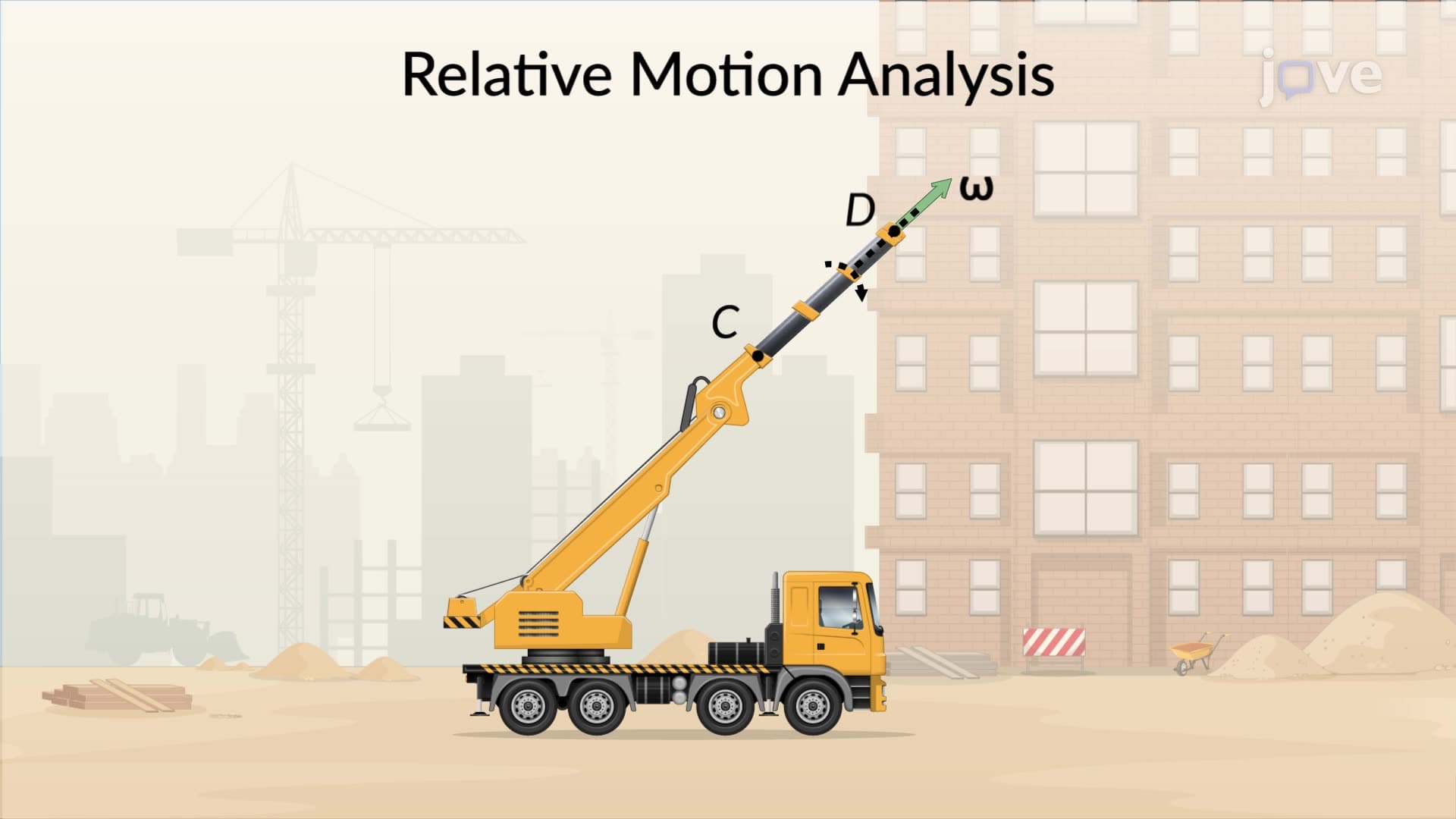
The mathematical foundation relies on vector addition principles. When analyzing a point's motion, we express its absolute acceleration as the vector sum of two components: the acceleration of the reference frame itself, plus the acceleration of the point relative to that moving reference frame.
For a slider-crank mechanism, engineers typically establish a fixed reference system at the pivot point and a translating reference frame at the crank pin connection. This dual-frame approach simplifies calculations by separating the rotational motion of the crank from the complex motion of the connecting rod.
The time derivative relationship proves crucial here. Since velocity represents the time rate of change of position, acceleration becomes the time rate of change of velocity. This mathematical relationship allows engineers to systematically convert known velocity patterns into acceleration profiles.
When the relative motion follows a circular path, the acceleration analysis incorporates both normal and tangential components. The normal component points toward the center of the circular path and relates to the centripetal acceleration, while the tangential component aligns with the velocity direction and represents changes in speed along the curved path.
This decomposition proves invaluable for AP Physics students and college engineering majors studying dynamics. Problems involving planetary gear systems, robotic arm joints, and automotive suspension linkages frequently appear on MCAT physics sections and engineering qualification exams.
Major US automotive manufacturers like General Motors and Ford rely heavily on relative motion analysis when designing engine components. The acceleration profiles determined through this analysis directly influence engine smoothness, vibration characteristics, and overall performance metrics.
Manufacturing equipment design also benefits significantly from this analysis. Companies like Caterpillar use relative motion principles when developing hydraulic systems for construction equipment, ensuring optimal performance under varying load conditions.
Related Micro-courses