Loading subject page…

- Mechanical Engineering
- Principal Stresses Under a Given Loading
- Principal Stresses in a Beam
Micro-course: Principal Stresses under a Given Loading
1,707 views
Learn key concepts and earn your certificate.


Principal Stresses in a Beam

00:00
01:11
Video Summary: What are Principal Stresses
Ever wondered why the Golden Gate Bridge's steel cables don't snap under massive loads while smaller beams sometimes fail unexpectedly? Principal stresses reveal the hidden stress patterns that determine whether structures like San Francisco's iconic bridge will stand or fall. These critical stress values occur when engineers analyze how forces distribute through materials at different angles, particularly in beams experiencing both bending and shearing forces. Understanding what are principal stresses is essential for predicting failure points in everything from skyscraper frames to aircraft wings. Watch the full video on JoVE Coach to master this concept with expert-led visuals and step-by-step explanations.
- Understand what are principal stresses and how they represent maximum and minimum normal stress values at any point in a loaded material
- Identify the relationship between normal stresses, shear stresses, and principal stress calculations in beam structures
- Analyze how principal stresses distribute throughout rectangular cantilever beams under concentrated loading conditions
- Compare principal stress magnitudes with surface normal stresses to predict potential failure locations
- Evaluate the conditions under which maximum principal stresses may exceed surface stresses in beam cross-sections
- Apply principal stress concepts to both rectangular and non-rectangular beam cross-sections in structural analysis
- Recognize the critical zones where shearing stresses and normal stresses interact to create maximum principal stress values
- Explore the computational methods used to determine principal stress distributions in real engineering applications
Understanding What Are Principal Stresses in Structural Analysis
Principal stresses represent the maximum and minimum normal stress values that occur at any given point within a loaded structural member, oriented along specific directions called principal axes. Unlike the complex stress states typically found in real structures, principal stresses occur on planes where shear stress equals zero, making them crucial for failure analysis and design optimization.
Types of Principal Stresses and Their Engineering Significance
Engineers classify principal stresses into three categories: maximum principal stress (σ₁), intermediate principal stress (σ₂), and minimum principal stress (σ₃). In beam analysis, we primarily focus on the maximum and minimum values since they govern material failure modes. The types of principal stresses become particularly important when analyzing structures like the steel framework of Chicago's Willis Tower, where complex loading creates multi-directional stress states that simple beam theory cannot fully capture.
Principal Stress Distribution in Beam Structures
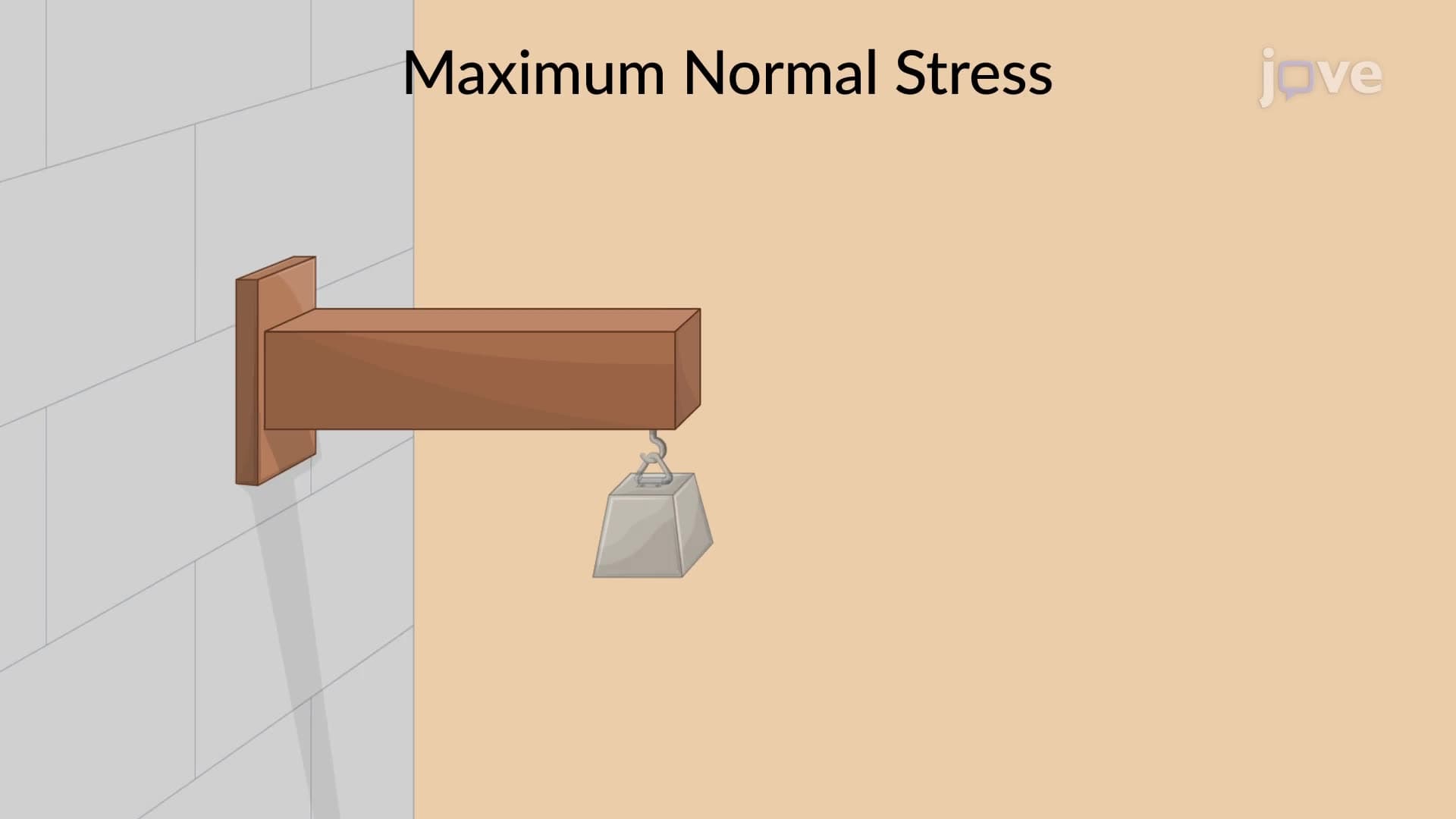
When examining cantilever beams under concentrated loads-similar to diving boards at Olympic training facilities-the stress distribution becomes complex near loading points. While elementary beam theory predicts maximum normal stress at the outer fibers, principal stress analysis reveals that true maximum stresses often occur at interior points where normal and shear stresses combine. This phenomenon explains why some structural failures occur away from expected high-stress locations, making principal stresses study guide materials essential for engineering students preparing for the Fundamentals of Engineering (FE) exam.
Practical Applications and Computational Methods
Modern structural analysis software used by firms designing infrastructure like California's earthquake-resistant buildings relies heavily on principal stress calculations. The computational approach involves solving eigenvalue problems to determine principal stress magnitudes and orientations. For rectangular cross-sections, simplified equations provide reasonable approximations, but complex geometries require finite element analysis. Students preparing for AP Physics C or college-level mechanics courses should understand that understanding principal stresses bridges theoretical mechanics with real-world engineering applications, from designing prosthetic implants to analyzing aircraft wing structures under turbulent flight conditions.
Frequently Asked Questions
Principal stresses are the maximum and minimum normal stress values at any point in a loaded structure, occurring on planes where shear stress equals zero. They represent the true maximum tensile and compressive stresses that materials experience, making them critical for predicting structural failures. Engineers use principal stresses to design everything from bridge components to medical implants, ensuring materials can withstand actual loading conditions rather than simplified theoretical stresses.
The MCAT Physics section may include principal stress concepts when testing biomechanics knowledge, particularly regarding bone and tissue failure under complex loading. Engineering exams like the FE (Fundamentals of Engineering) and PE (Professional Engineer) tests frequently feature principal stress calculations for beam analysis, pressure vessel design, and structural mechanics problems. Students should practice Mohr's circle constructions and stress transformation equations for exam success.
AP Physics C courses cover maximum principal stress (σ₁) and minimum principal stress (σ₃), which represent peak tensile and compressive values respectively. Students should understand how these relate to normal and shear stresses in beam bending problems. The College Board emphasizes conceptual understanding over complex calculations, so focus on identifying when principal stresses exceed simple beam theory predictions and their physical significance in structural failure analysis.
Principal stress analysis is crucial for designing earthquake-resistant buildings in California, where seismic forces create complex stress states in structural members. Boeing engineers use principal stress calculations to ensure aircraft wing safety under turbulent conditions, while biomedical companies apply these concepts to design hip implants that withstand human body forces. Bridge engineers analyzing structures like the Brooklyn Bridge renovation projects rely on principal stress data to predict fatigue life and maintenance requirements.
Basic principal stress concepts require only algebra and trigonometry, making them accessible to high school students in AP Physics or introductory college courses. While advanced applications involve differential equations and matrix operations, fundamental understanding focuses on stress transformation principles and failure criteria. Students with strong geometry and basic physics backgrounds can master essential concepts needed for most undergraduate examinations and practical applications.
Start with Mohr's circle constructions to visualize stress transformations, then practice beam problems combining bending and torsion. Create summary sheets linking principal stress equations to failure theories like maximum normal stress and Tresca criteria. Work through sample problems from your textbook involving cantilever beams, pressure vessels, and combined loading scenarios. Focus on understanding when principal stresses exceed elementary predictions and their engineering significance for design decisions.
Progress to failure theories that utilize principal stresses, including von Mises stress, Tresca criterion, and Mohr-Coulomb theory for material failure prediction. Advanced students should explore finite element analysis methods for complex geometries and dynamic loading conditions. Consider studying fracture mechanics, fatigue analysis, and composite material behavior, all of which build upon principal stress foundations for real-world engineering applications in aerospace, civil, and biomedical fields.
Related Micro-courses


