Loading subject page…

- Mechanical Engineering
- Principal Stresses Under a Given Loading
- Stresses under Combined Loadings
Micro-course: Principal Stresses under a Given Loading
1,707 views
Learn key concepts and earn your certificate.


Stresses under Combined Loadings

00:00
01:23
Video Summary: What Is Stresses Under Combined Loadings
Ever wondered why airplane wings don't snap under the combined forces of lift, weight, and wind resistance during turbulence? Stresses under combined loadings occur when structural members experience multiple force types simultaneously, creating complex internal stress patterns. Consider how a crane's boom experiences tension from lifted loads, bending from wind forces, and twisting from lateral movement - all at once. Understanding what is stresses under combined loadings helps engineers design safer bridges, buildings, and aircraft that withstand real-world conditions. Watch the full video on JoVE Coach to master this concept with expert-led visuals and step-by-step explanations.
- Understand what is stresses under combined loadings and how multiple force types create complex stress patterns in structural members
- Identify the different stress components including normal stresses from axial forces, bending stresses from moments, and shear stresses from torsion
- Analyze how Saint-Venant's principle and superposition principles guide stress calculations in combined loading scenarios
- Apply sectioning methods to determine internal force-couple systems at specific points within loaded members
- Evaluate principal stresses and their orientations when multiple loading conditions act simultaneously
- Recognize the limitations of superposition analysis, including material proportional limits and deformation interactions
- Compare normal stresses from centric axial forces versus bending moments in combined loading situations
- Explore maximum shearing stress determination at critical points under complex loading conditions
Understanding What is Stresses Under Combined Loadings
Stresses under combined loadings represent one of the most practical yet challenging concepts in structural analysis. Unlike idealized textbook problems where members experience single loading types, real-world structures face multiple simultaneous forces. A highway sign post experiences axial compression from its weight, bending from wind loads, and potential torsion from asymmetric wind patterns - all creating a complex internal stress state that engineers must accurately predict.
Components of Combined Loading Systems
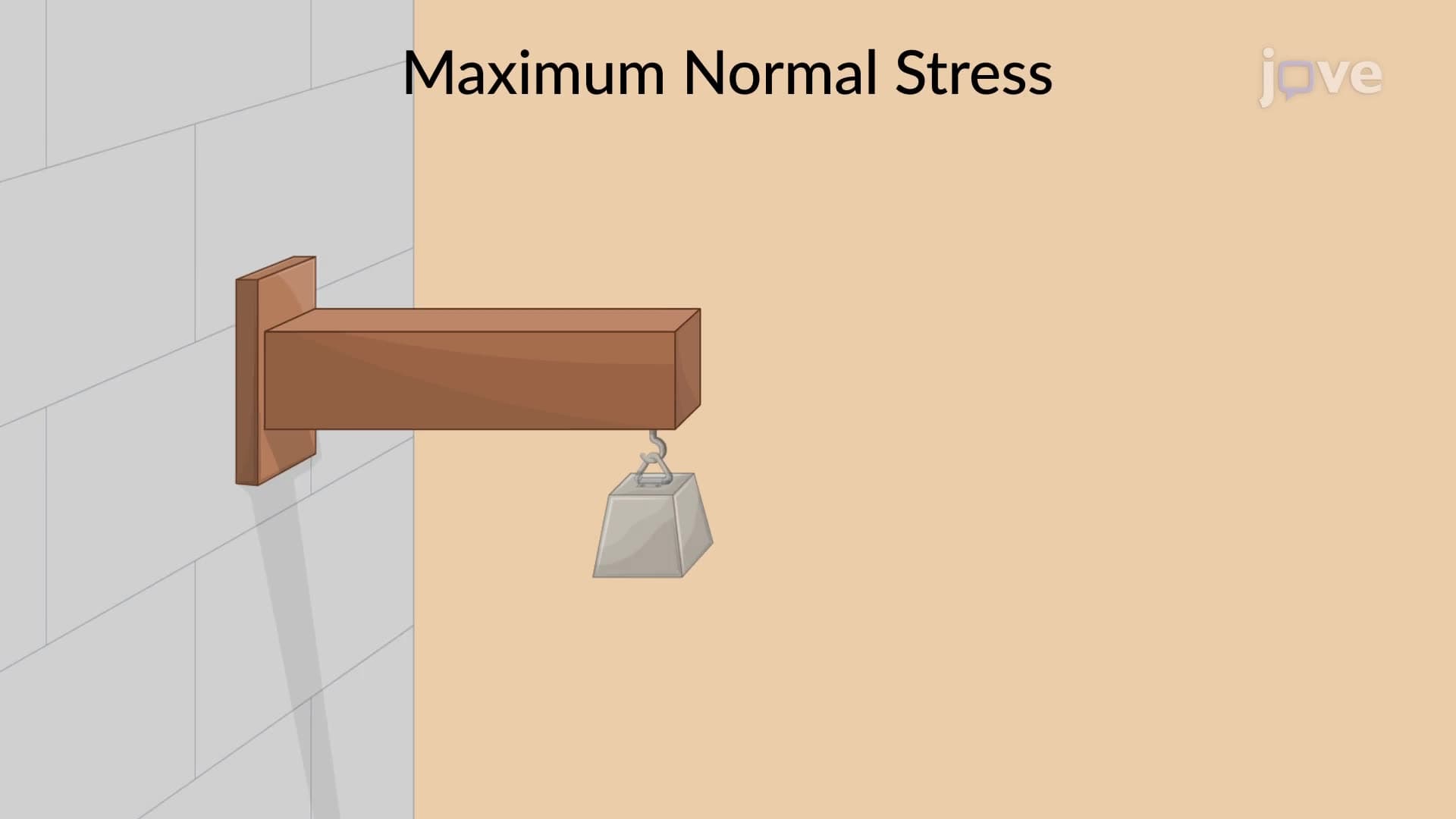
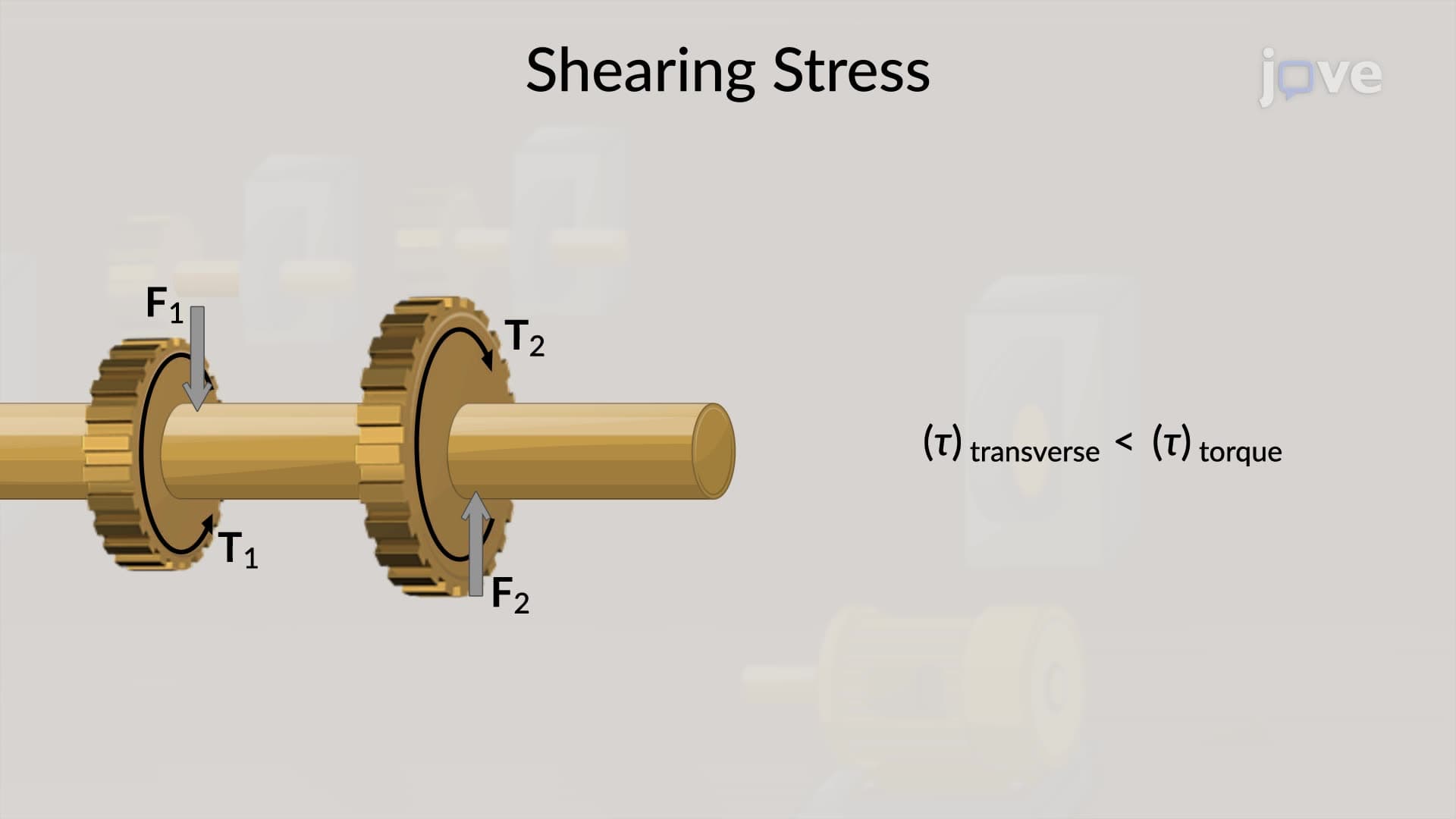
When analyzing stresses under combined loadings, engineers identify three primary stress contributors. Normal stresses arise from both centric axial forces and bending moments. Axial forces create uniform stress distributions across cross-sections, calculated as stress = Force/Area. Bending moments produce linear stress variations, with maximum values at extreme fibers following stress = (Moment × distance)/(moment of inertia). Shear stresses develop from both transverse shearing forces and torsional moments, creating additional complexity in the overall stress state.
Saint-Venant's Principle and Superposition Applications
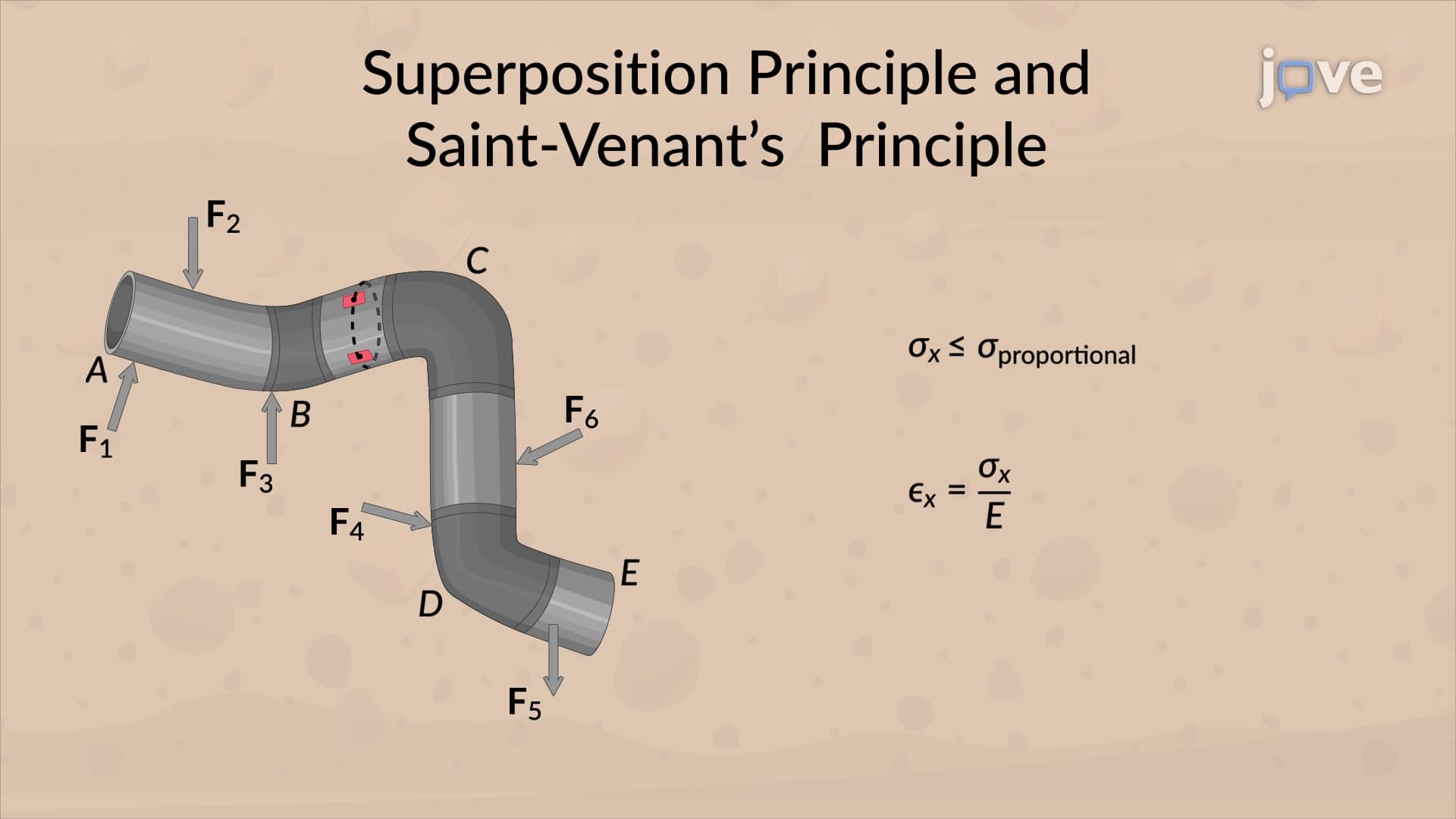
The mathematical foundation for combined loading analysis relies heavily on Saint-Venant's principle and superposition. Saint-Venant's principle states that stress distributions become uniform at distances greater than the largest cross-sectional dimension from load application points. This allows engineers to use simplified formulas for most practical calculations. Superposition enables adding individual stress components algebraically, but only when materials remain within their elastic limits and small deformation assumptions hold true.
Real-World Engineering Applications
Combined loading analysis appears frequently in structural engineering licensing exams and advanced mechanics courses. The concept directly applies to designing steel building frames subjected to dead loads, live loads, and wind forces simultaneously. Bridge engineers use these principles when analyzing girders experiencing compression from traffic loads while bending under their own weight. Students preparing for the Fundamentals of Engineering (FE) exam encounter these problems in statics and mechanics of materials sections, where understanding stress transformation and principal stress calculations becomes essential for professional practice.
Frequently Asked Questions
Stresses under combined loadings occur when structural members simultaneously experience multiple types of forces, creating complex internal stress patterns. This includes combinations of axial forces, bending moments, shear forces, and torsional moments acting together. Engineers must analyze these combined effects to ensure safe structural design, as real-world structures rarely experience single loading conditions.
Combined loading questions typically present scenarios with multiple applied forces requiring stress calculation at specific points. Students must identify all stress components, apply superposition principles, and often determine principal stresses or maximum shear stresses. These problems commonly appear in statics, mechanics of materials, and structural analysis courses, requiring integration of multiple theoretical concepts.
Simple loading involves single force types like pure tension, compression, or bending, while combined loadings involve multiple simultaneous force types. Combined cases require superposition of individual stress components and consideration of stress interactions. The analysis becomes significantly more complex, often requiring principal stress calculations and failure criterion evaluation rather than simple stress comparisons.
Buildings experience dead loads (their own weight), live loads (occupants and contents), wind loads, and seismic forces simultaneously. The Willis Tower in Chicago must withstand compression from building weight, bending from wind forces, and potential torsion from asymmetric loading. Engineers use combined loading principles to ensure these structures remain safe under all realistic force combinations.
Combined loading builds naturally on simpler concepts students already understand like normal stress and shear stress calculations. While more complex than single loading cases, the mathematical principles remain the same - just requiring careful organization and systematic application. Most students succeed by mastering individual stress types first, then practicing superposition methodically.
Create systematic solution templates identifying all force types, calculating individual stress components, and applying superposition carefully. Practice drawing free body diagrams and stress elements for visualization. Focus on understanding when superposition applies versus when nonlinear effects require more advanced analysis methods.
Combined loading analysis provides the foundation for advanced topics like fatigue analysis, dynamic response, and finite element methods. It directly leads to studying failure theories, stress concentration factors, and nonlinear material behavior. This knowledge becomes essential for graduate-level structural dynamics and advanced mechanics coursework.
Students need solid algebra skills, basic calculus for understanding stress distributions, and trigonometry for stress transformations. Vector addition concepts help with force combinations, while understanding of centroids and moments of inertia supports bending stress calculations. Most high school graduates with strong math backgrounds can handle these requirements successfully.
Related Micro-courses


