Loading subject page…

Micro-course: Behavioral Economics
1,364 views
Learn key concepts and earn your certificate.








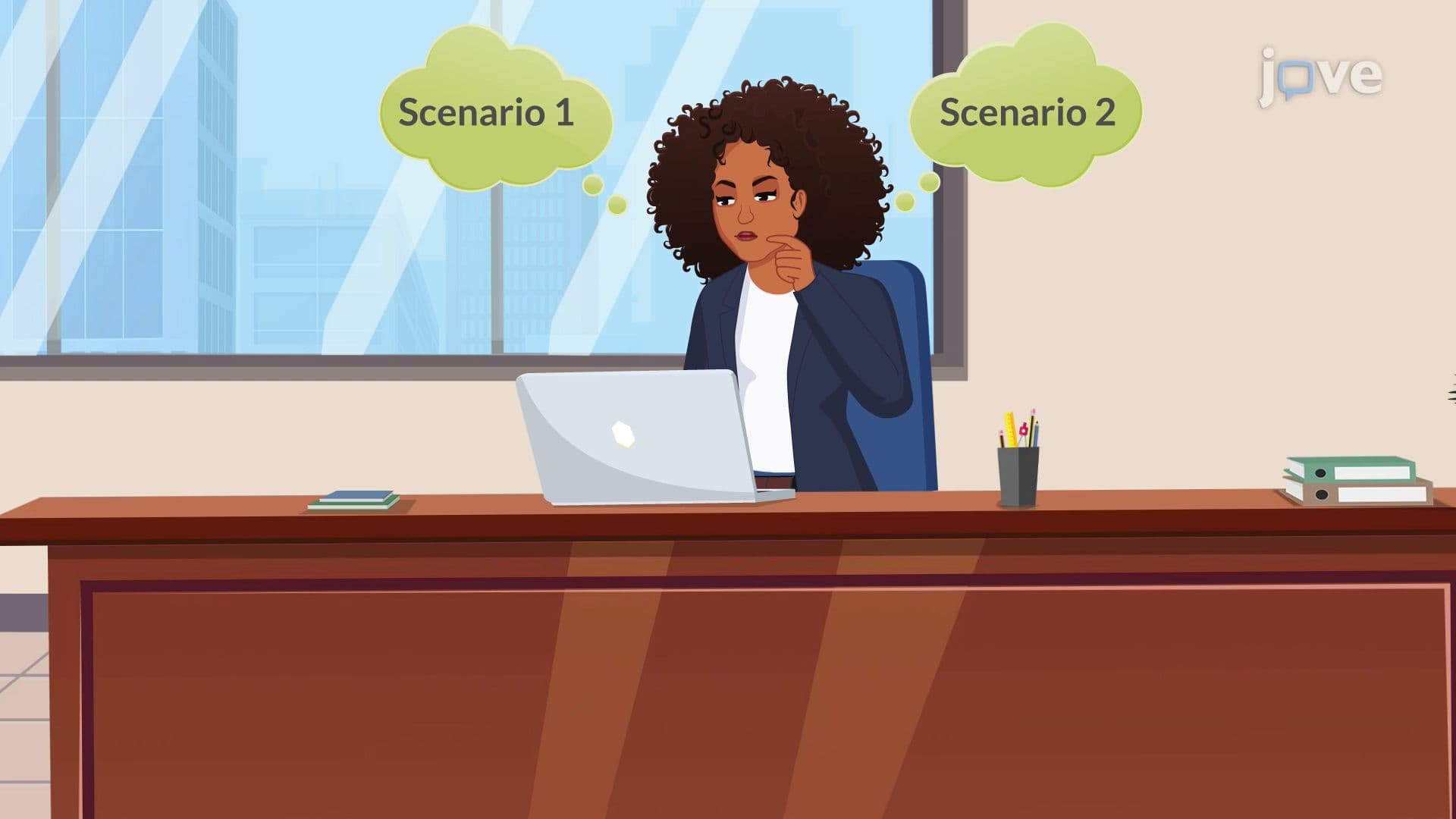
Biases I


00:00
01:21
Video Summary: What Is Biases I
Why do 93% of drivers believe they're above average, despite mathematical impossibility? Biases systematically distort our judgment and decision-making, creating predictable errors in thinking that affect everything from driving confidence to investment choices. For example, American investors often fall victim to confirmation bias, cherry-picking news that supports their stock picks while ignoring contrary evidence. Understanding What is Biases I reveals how these mental shortcuts influence daily decisions in ways we rarely recognize. Watch the full video on JoVE Coach to master this concept with expert-led visuals and step-by-step explanations.
- Understand What is Biases I and how cognitive biases systematically affect human judgment and decision-making processes
- Identify three major types of biases: overconfidence bias, availability heuristic, and confirmation bias in real-world scenarios
- Analyze how overconfidence bias leads people to overestimate their abilities and underestimate risks in everyday situations
- Recognize availability heuristic patterns where vivid, recent experiences overshadow statistical evidence in decision-making
- Evaluate confirmation bias effects on information processing and belief reinforcement in academic and personal contexts
- Apply bias awareness to improve critical thinking skills in academic assignments and standardized test scenarios
- Compare how different biases interact to influence consumer behavior, academic performance, and career decisions
- Explore practical strategies for recognizing and minimizing bias effects in problem-solving and analytical reasoning
Understanding What is Biases I: The Foundation of Behavioral Psychology
Biases represent systematic deviations from rational thinking that affect human judgment across virtually every domain of life. Unlike random errors, these cognitive shortcuts (called heuristics) create predictable patterns of mistakes that researchers have documented extensively since the 1970s. Understanding the biases definition explained provides crucial insight into why humans consistently make seemingly irrational decisions despite having access to complete information.
These mental shortcuts evolved as survival mechanisms, allowing our ancestors to make quick decisions with limited information. However, in modern complex environments-from college admissions to financial planning-these same shortcuts often lead us astray. The biases concept explained reveals how our brains prioritize speed and efficiency over accuracy, creating systematic blind spots in reasoning.
Overconfidence Bias: The Illusion of Superior Ability
Overconfidence bias manifests when individuals overestimate their knowledge, abilities, or chances of success. This bias appears prominently in American educational settings, where students often overestimate their exam performance, leading to inadequate preparation. Research from Stanford University shows that students who exhibit strong overconfidence bias score lower on AP exams and college entrance tests like the SAT.
In financial markets, overconfidence bias drives day traders to make excessive trades, believing they can consistently outperform market averages. Studies of American retail investors demonstrate that the most confident traders actually achieve the lowest returns due to increased transaction costs and poor timing decisions.
Availability Heuristic: When Vivid Examples Override Statistics
The availability heuristic occurs when people judge probability based on how easily examples come to mind rather than actual statistical evidence. Following major news events like airplane crashes, flight bookings typically decrease despite air travel remaining statistically safer than driving. This bias significantly impacts American policy discussions, where dramatic anecdotes often carry more weight than comprehensive research data.
Students encounter this bias frequently when studying for standardized tests. A single difficult practice question that caused frustration becomes more mentally "available" than dozens of successfully completed problems, leading to distorted perceptions of preparedness and unnecessary anxiety.
Confirmation Bias: Seeking Information That Confirms Beliefs
Confirmation bias drives people to seek, interpret, and remember information that confirms pre-existing beliefs while avoiding contradictory evidence. This bias heavily influences academic research interpretation, political viewpoints, and career decision-making. In college coursework, students may unconsciously select sources that support their thesis while overlooking credible opposing viewpoints, weakening their analytical arguments.
Understanding these biases proves essential for success on critical thinking sections of standardized tests like the MCAT, where questions specifically test ability to recognize flawed reasoning patterns and evaluate evidence objectively.
Frequently Asked Questions
Biases I introduces systematic thinking errors that affect everyone's decision-making process. Learning about biases improves critical thinking skills essential for academic success, better test performance on exams like the SAT and AP tests, and more effective real-world decision-making in college and career planning.
These exams frequently test bias recognition through scenario-based questions where you must identify confirmation bias, availability heuristic, or overconfidence bias in experimental designs or everyday situations. Understanding bias definitions helps you analyze flawed reasoning in critical thinking sections and psychological research interpretation questions.
Absolutely - bias awareness dramatically improves analytical writing, research paper quality, and exam performance. Students who understand confirmation bias write stronger arguments by considering opposing viewpoints, while those recognizing overconfidence bias prepare more thoroughly for tests, leading to higher grades across subjects.
No prior psychology experience required - this foundational concept uses everyday examples that high school students easily grasp. The material builds from simple definitions to real-world applications, making it accessible to anyone interested in understanding human decision-making patterns.
Recognize overconfidence bias by taking practice tests to accurately assess preparation levels, combat availability heuristic by reviewing all material systematically rather than focusing only on recent topics, and address confirmation bias by actively seeking out challenging practice problems that test weak areas.
College selection decisions often involve availability heuristic when campus visits create stronger impressions than statistical outcomes data. Career choices may reflect confirmation bias when students only research information supporting predetermined interests while ignoring potential drawbacks or alternative paths.
Overconfidence bias leads students to underestimate college costs and overestimate earning potential, while availability heuristic makes dramatic financial success stories seem more common than they actually are. Understanding these biases promotes more realistic budgeting and financial planning throughout college years.
Explore advanced topics like anchoring bias, framing effects, and loss aversion, which appear frequently in behavioral economics and advanced psychology courses. These concepts prove valuable for business majors, pre-med students taking the MCAT, and anyone pursuing graduate studies in social sciences.
Related Micro-courses

6 Concepts
10 Concepts

21 Concepts