Loading subject page…

- Microeconomics
- Analysis of Competitive Markets
- Price Ceiling and Elastic Demand
Micro-course: Analysis of Competitive Markets
2,182 views
Learn key concepts and earn your certificate.







Price Ceiling and Elastic Demand

00:00
01:14
Video Summary: Price Ceiling and Elastic Demand Explained
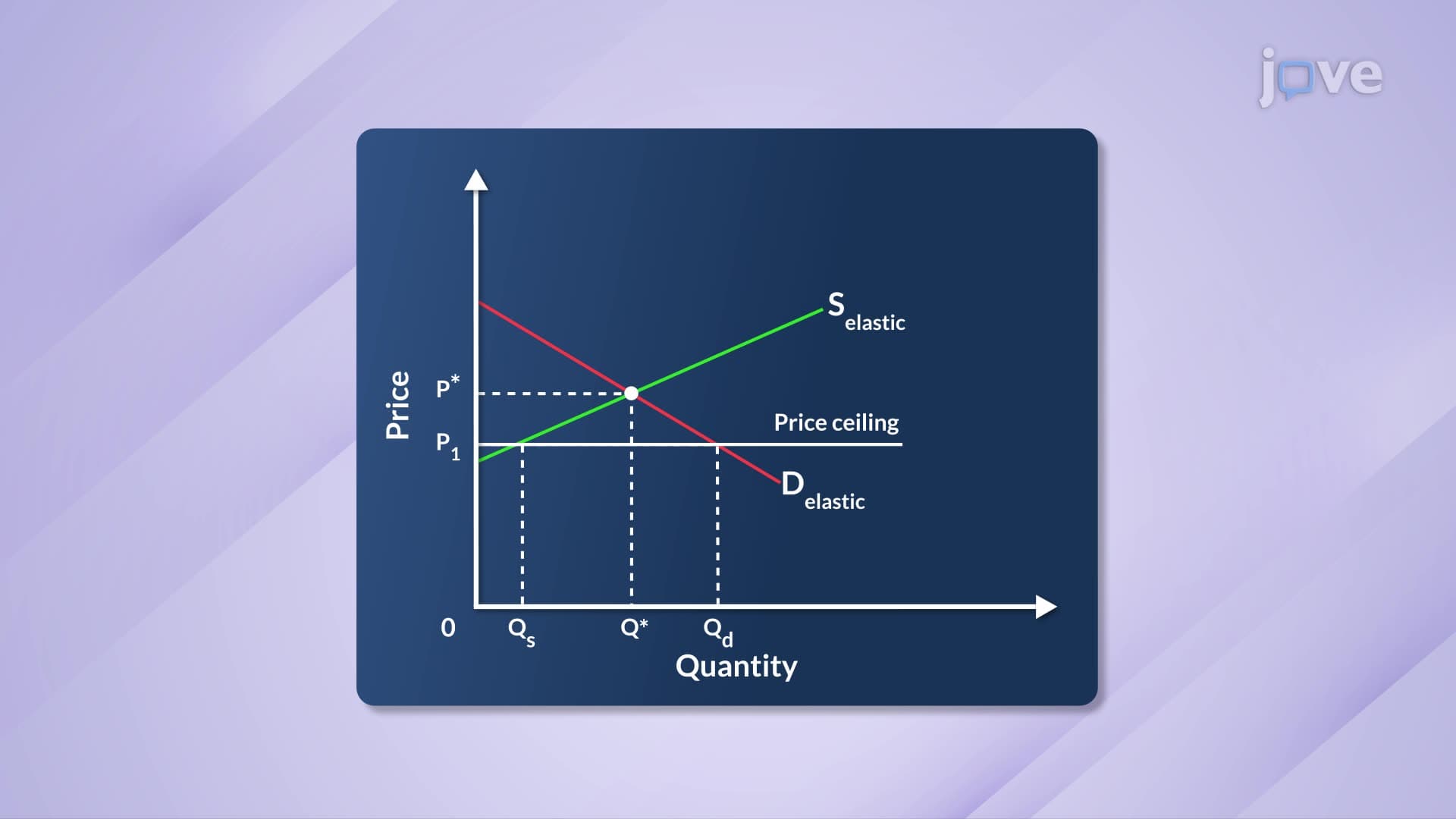
Ever wonder why rent control in New York City creates apartment shortages while boosting demand? Price ceiling elastic demand interactions reveal how government price interventions can backfire spectacularly in markets where consumers and producers are highly responsive to price changes. When cities like San Francisco implement rent caps below market rates, the elastic nature of housing demand means renters flood the market while landlords withdraw supply, creating severe imbalances. Price Ceiling And Elastic Demand Explained demonstrates how these economic forces amplify market distortions and reduce overall efficiency. Watch the full video on JoVE Coach to master this concept with expert-led visuals and step-by-step explanations.
- Understand how Price Ceiling And Elastic Demand interactions create amplified market distortions compared to inelastic scenarios
- Identify the relationship between price elasticity and the severity of shortages when price ceilings are implemented below equilibrium
- Analyze why elastic demand curves lead to greater consumer responsiveness when prices are artificially lowered through government intervention
- Compare the market outcomes between elastic and inelastic demand scenarios under identical price ceiling policies
- Evaluate the deadweight loss implications when both demand and supply exhibit high price sensitivity in regulated markets
- Apply elasticity concepts to predict real-world consequences of rent control, minimum wage laws, and other price intervention policies
- Recognize how elastic supply curves cause producers to dramatically reduce quantity supplied when price ceilings constraint market prices
- Explore the connection between elasticity coefficients and the magnitude of market inefficiencies created by binding price controls
Understanding Price Ceiling And Elastic Demand Fundamentals
Price ceiling elastic demand scenarios represent some of the most dramatic examples of government market intervention consequences. When policymakers set maximum allowable prices below the natural equilibrium point, the market's response intensity depends heavily on demand and supply elasticity. Elastic demand means consumers are highly sensitive to price changes-a small price reduction triggers substantial increases in quantity demanded.
Consider California's rent control laws affecting over 30 cities. When San Francisco caps apartment rents at $2,500 monthly while market equilibrium sits at $3,200, the elastic nature of housing demand means thousands of additional renters enter the market. Simultaneously, elastic supply means landlords convert rental properties to condos or delay new construction, creating severe shortages.
Market Distortion Amplification Through Elasticity
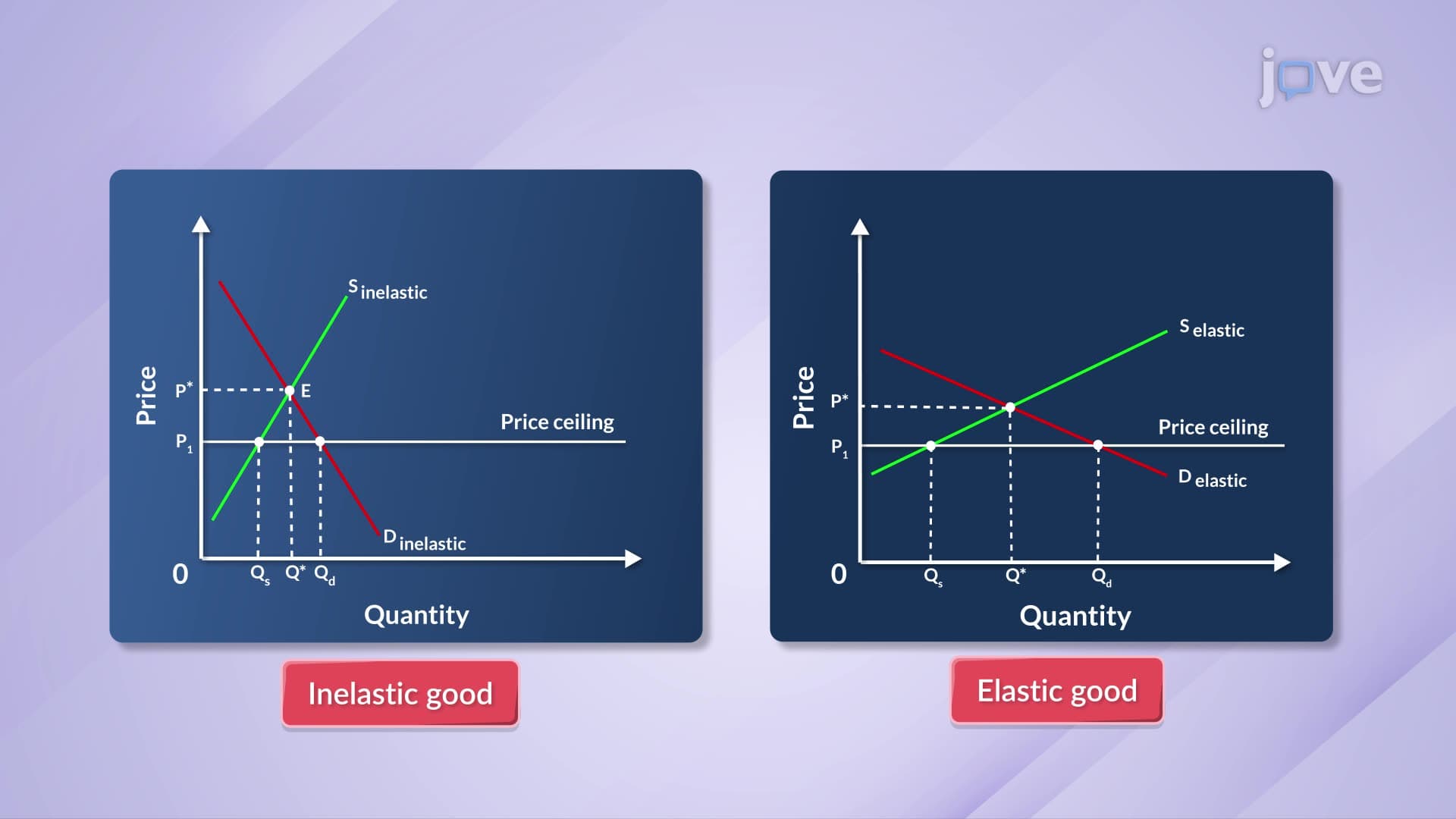
Price ceiling and elastic demand economics explained through mathematical relationships reveals why elasticity matters. If demand elasticity equals -2.5, a 10% price reduction from ceiling implementation increases quantity demanded by 25%. Meanwhile, if supply elasticity equals +1.8, that same 10% price drop reduces quantity supplied by 18%. This creates a massive gap between what consumers want (125% of original quantity) and what producers offer (82% of original quantity).
The price ceiling overview shows these distortions multiply in elastic markets. New York's rent stabilization affects over one million apartments, where elastic demand creates waiting lists of 200,000+ prospective renters while elastic supply reduces available units annually.
Deadweight Loss and Efficiency Impacts
What is price ceiling and elastic demand in terms of economic efficiency? The answer lies in deadweight loss calculations. When both curves are elastic, the triangular area representing lost economic surplus grows exponentially. In inelastic markets, price ceilings create modest efficiency losses. However, elastic markets experience dramatic welfare reductions because many beneficial trades between willing buyers and sellers are eliminated.
AP Economics students frequently encounter these scenarios in free-response questions. The College Board expects students to graph elastic demand and supply curves, show the binding price ceiling, and calculate the resulting shortage magnitude. Understanding that elastic markets experience larger shortages and greater deadweight losses is crucial for earning maximum points.
Real-World Policy Implications
Price ceiling and elastic demand study guide applications extend beyond housing. Gasoline price controls during the 1970s oil crisis demonstrated elastic demand consequences. When the federal government capped gas prices below market equilibrium, elastic demand (Americans drove more due to cheaper gas) met elastic supply (refineries reduced production), creating nationwide shortages and long lines at gas stations.
Modern examples include pharmaceutical price controls being debated in Congress. Medications often have inelastic demand (people need them regardless of price), but production has elastic supply. Price ceilings on drugs might not reduce consumption much but could significantly reduce pharmaceutical company willingness to maintain production levels, potentially creating shortages of life-saving medications.
Frequently Asked Questions
Price ceiling and elastic demand describes situations where government-set maximum prices interact with markets where consumers are very responsive to price changes. When prices are capped below equilibrium in elastic markets, both the surge in consumer demand and drop in producer supply are magnified, creating larger shortages than in less responsive markets. This combination typically results in significant market inefficiencies and welfare losses.
Elastic demand amplifies price ceiling effects dramatically compared to inelastic scenarios. With elastic demand, consumers increase their quantity demanded substantially when prices drop due to the ceiling, while inelastic demand shows minimal response. This means elastic markets experience much larger shortages, longer waiting times, and greater deadweight losses when price controls are implemented below market equilibrium.
Focus on elasticity calculations, consumer and producer surplus, deadweight loss graphing, and market efficiency analysis for comprehensive AP prep. Practice drawing elastic demand and supply curves, identifying binding versus non-binding price ceilings, and calculating shortage magnitudes. Review price control policy examples and be prepared to analyze both short-run and long-run market adjustments in your free-response essays.
College exams frequently include graphical analysis questions where you must draw elastic curves, show binding price ceilings, and calculate resulting economic surplus changes. Expect numerical problems requiring elasticity coefficient calculations and deadweight loss computations. Many professors include real-world policy analysis questions asking you to predict outcomes of rent control or other price ceiling implementations in elastic markets.
New York City's rent stabilization program affecting over one million apartments demonstrates this perfectly. Housing demand in NYC is relatively elastic because many people want to live there if prices are reasonable, while supply is elastic because landlords can convert rentals to condos or luxury units. When the city caps rent increases below market rates, this creates massive waiting lists (elastic demand response) while reducing available rental units (elastic supply response).
Basic algebra and graphing skills are sufficient for high school and introductory college coverage of these topics. You'll work with simple percentage calculations, linear demand and supply curves, and basic geometric area formulas for deadweight loss. The emphasis is on conceptual understanding of how elasticity amplifies price ceiling effects rather than complex mathematical derivations.
Practice drawing graphs showing elastic demand and supply curves with binding price ceilings, then work through the logical sequence of market responses. Create flashcards connecting elasticity concepts to real-world examples like rent control and gas price controls. Focus on explaining why elastic markets experience larger shortages and efficiency losses compared to inelastic markets when price ceilings are implemented.
Explore price floors with elastic supply and demand, tax incidence analysis in elastic markets, and consumer choice theory under budget constraints. Advanced students should investigate dynamic pricing models, behavioral economics applications to housing markets, and comparative policy analysis of different government intervention strategies. These concepts build naturally on your price ceiling elastic demand foundation.
Related Micro-courses


21 Concepts

21 Concepts