Loading subject page…


2,182 views


Video Summary: What Is Price Floor
Ever wonder why a gallon of milk costs roughly the same nationwide, even when dairy farmers face different production costs? A price floor is a government-imposed minimum price that prevents products from selling below a certain threshold, commonly seen in US agricultural markets like dairy and wheat. For instance, the USDA sets minimum prices for milk to protect dairy farmers across states like Wisconsin and California from volatile market fluctuations. Watch the full video on JoVE Coach to master this concept with expert-led visuals and step-by-step explanations.
A price floor represents a fundamental form of government market intervention where authorities establish a legally enforced minimum price above the natural equilibrium. Unlike price ceilings that cap maximum prices, price floors prevent prices from falling below a predetermined threshold. This mechanism serves as an economic safety net, particularly crucial in industries where producers face income volatility or unfair market conditions.
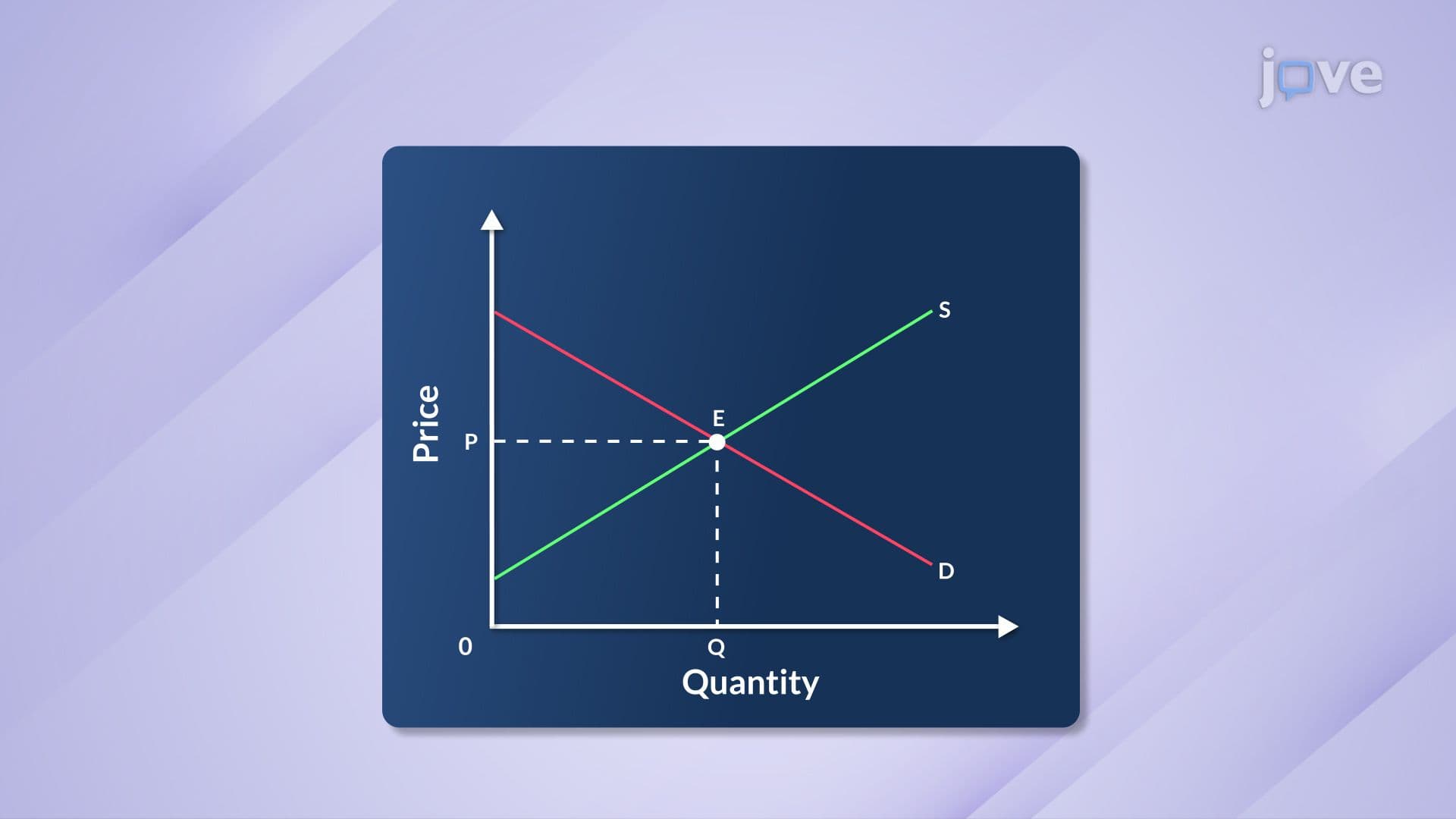
The theoretical foundation rests on supply and demand dynamics. When governments implement a price floor above equilibrium price, they artificially inflate the minimum selling price, creating immediate market distortions. This intervention directly impacts both consumer behavior and producer incentives, fundamentally altering natural market forces.
US agricultural policy extensively utilizes price floor mechanisms through programs administered by the USDA. The dairy industry exemplifies this approach through the Federal Milk Marketing Orders, which establish minimum prices dairy processors must pay farmers in different regions. Similarly, the sugar industry benefits from price supports that maintain domestic sugar prices well above international market rates.
Labor markets also demonstrate price floor principles through minimum wage legislation. The federal minimum wage of $7.25 per hour (as of 2024) functions as a price floor for labor, preventing employers from paying workers below this threshold. States like California and New York implement higher minimum wages, creating regional price floors that exceed federal requirements.
Price floors generate predictable economic outcomes that economics students encounter frequently on AP Economics exams and college assessments. The primary consequence involves surplus creation, when minimum prices exceed equilibrium levels, quantity supplied surpasses quantity demanded, resulting in excess inventory.
Consumer surplus invariably decreases under price floor scenarios because buyers pay higher prices for goods. Conversely, producer surplus presents a more complex picture: while remaining producers earn higher per-unit profits, some may exit the market due to reduced overall sales volume. The net effect often creates deadweight losses, representing economic inefficiency where potential mutually beneficial transactions don't occur.
These market distortions require careful analysis in college-level economics courses, particularly when examining government intervention effectiveness. Students preparing for standardized tests should understand both the intended policy goals and unintended economic consequences of price floor implementation.
Related Micro-courses