Loading subject page…


204,001 views


Video Summary: What Is Crossing Over
Why do you look different from your siblings despite having the same parents? Crossing over during meiosis is the key genetic shuffling mechanism that creates this diversity by allowing homologous chromosomes to exchange DNA segments. This process is crucial for genetic mapping studies at institutions like the National Institutes of Health, where researchers track disease inheritance patterns in American families. Understanding what is crossing over reveals how nature ensures no two gametes are genetically identical, driving evolution and adaptation. Watch the full video on JoVE Coach to master this concept with expert-led visuals and step-by-step explanations.
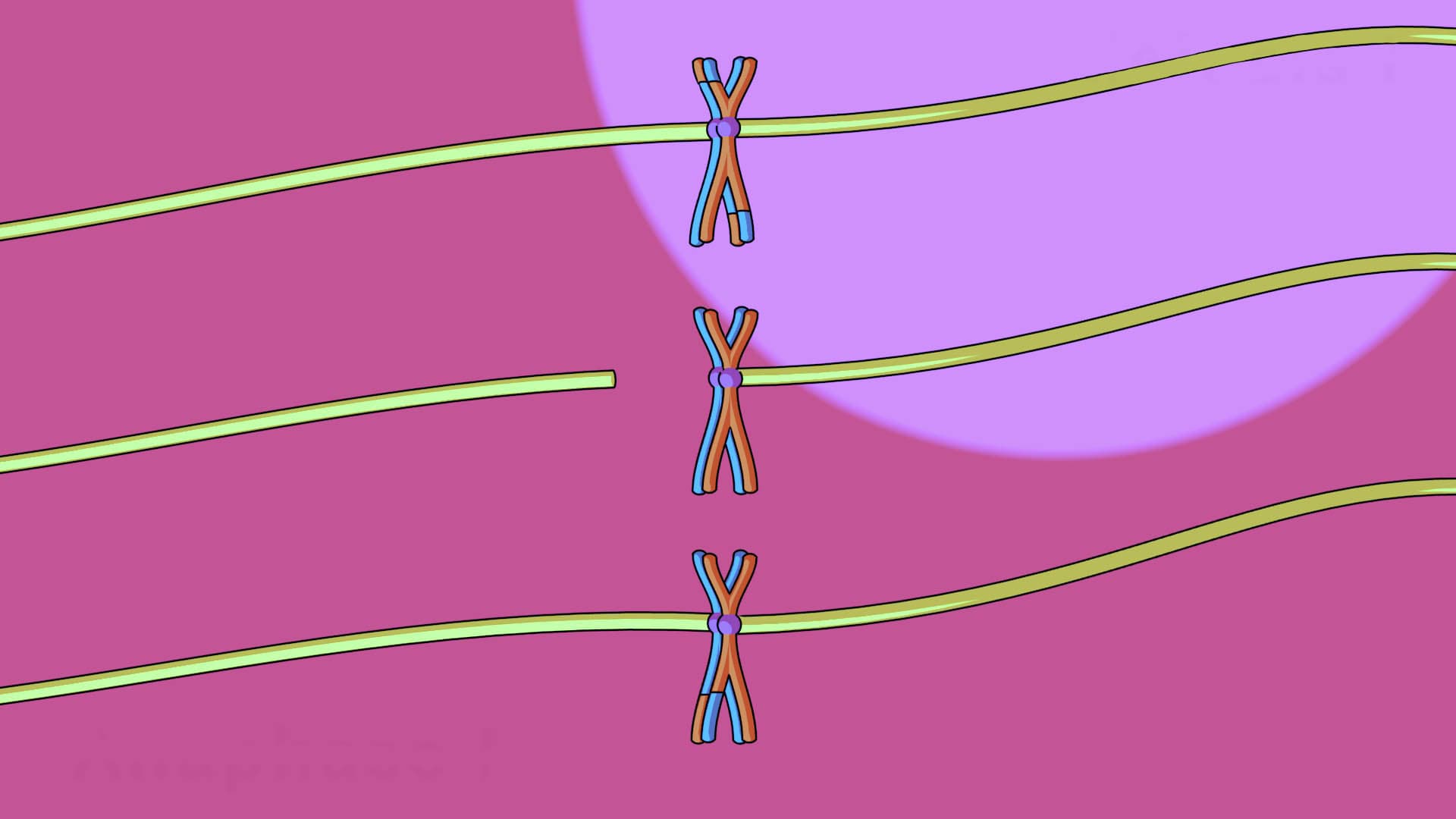
Crossing over represents one of biology's most elegant solutions to genetic diversity. During prophase I of meiosis, homologous chromosomes pair up and physically exchange segments of DNA through a precisely orchestrated molecular process. This isn't random cutting and pasting-it's a highly regulated mechanism that ensures genetic material is accurately transferred between chromosomes while maintaining chromosome integrity.
The crossing over process begins when the enzyme Spo11 creates deliberate double-strand breaks in DNA. These breaks might seem destructive, but they're actually the starting point for homologous recombination. Specialized proteins called recombinases then facilitate the search for homologous sequences on the paired chromosome. When matching sequences are found, the DNA strands invade the homologous chromatid, forming complex structures called Holliday junctions. These temporary connections, visible under the microscope as chiasmata, represent the physical sites where genetic exchange occurs.
The frequency of crossing over between two genes provides a direct measure of their physical distance on a chromosome. This principle, discovered by American geneticist Thomas Hunt Morgan at Columbia University, forms the foundation of genetic mapping. When studying inherited diseases in American populations, researchers at institutions like the Centers for Disease Control and Prevention use recombination frequencies to locate disease genes. For example, if two genes show 10% recombination, they're considered 10 map units apart-a measurement that proves invaluable in medical genetics and agricultural breeding programs.
Understanding crossing over is essential for success on standardized exams like the AP Biology exam and MCAT. Students frequently encounter questions about linkage analysis, genetic mapping, and inheritance patterns that directly test crossing over concepts. In clinical settings, genetic counselors use crossing over principles to assess disease risk in families with inherited conditions like Huntington's disease or cystic fibrosis, both prevalent in American populations.
Related Micro-courses