Loading video…


 12 Concepts
 21.6K views

Video Summary: Assessment of Apical Radial Pulse Explained
Did you know that in a healthy person, your heart's electrical signal and the pulse you feel at your wrist should beat in perfect synchronization? The assessment of apical radial pulse is a critical nursing skill that detects when this coordination breaks down, potentially signaling serious cardiac issues like atrial fibrillation-a condition affecting over 6 million Americans. This Assessment of Apical Radial Pulse Explained technique involves simultaneously measuring heartbeats at two locations to identify pulse deficits. Watch the full video on JoVE Coach to master this concept with expert-led visuals and step-by-step explanations.
The assessment of apical radial pulse represents a fundamental cardiovascular evaluation technique that provides critical insights into cardiac function and circulation efficiency. This procedure simultaneously measures the heart rate at its source (apex of the heart) and at a peripheral location (radial artery), revealing potential discrepancies that indicate underlying pathology.
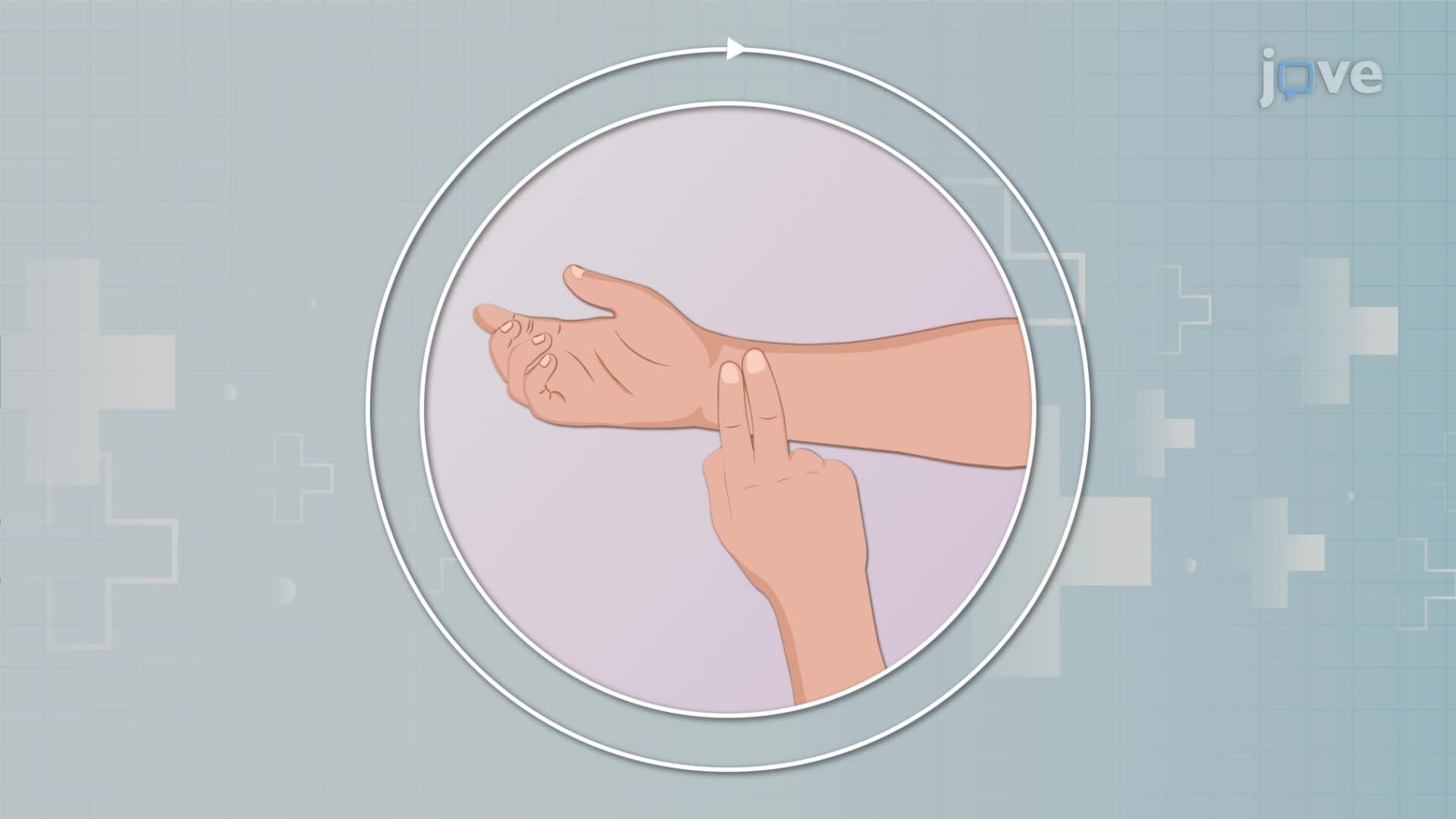
In healthy individuals, the apical pulse-heard through a stethoscope placed at the heart's apex-should match exactly with the radial pulse felt at the wrist. When these measurements differ, healthcare providers identify what's called a pulse deficit, which can signal conditions like atrial fibrillation, heart blocks, or other arrhythmias affecting millions of Americans annually.
Proper execution of apical-radial pulse assessment requires specific equipment and systematic preparation. Essential materials include a calibrated stethoscope, accurate timepiece, antiseptic wipes for infection control, and documentation materials. The procedure demands meticulous attention to sterile technique, particularly important in hospital settings where healthcare-associated infections affect approximately 1 in 31 hospitalized patients according to the CDC.
Patient positioning plays a crucial role in accuracy. The supine or semi-Fowler's position optimizes stethoscope placement over the fifth intercostal space at the midclavicular line-the anatomical landmark for the cardiac apex. This positioning ensures optimal sound transmission while maintaining patient comfort during the assessment process.
Healthcare facilities typically employ two distinct approaches for apical-radial pulse assessment. The two-nurse method involves simultaneous measurement, with one nurse auscultating the apical pulse while a colleague palpates the radial pulse. This approach provides real-time comparison and reduces timing errors that could affect accuracy.
The one-nurse method requires sequential measurement, first assessing the apical pulse followed immediately by radial pulse evaluation. While this approach may introduce slight timing variations, it remains clinically acceptable when performed by experienced practitioners and is often necessary in understaffed situations common in many US healthcare facilities.
This technique appears frequently in nursing school curricula, NCLEX-RN examinations, and continuing education requirements. Students preparing for health science careers encounter apical-radial pulse assessment in courses ranging from basic nursing fundamentals to advanced cardiac care. The concept also appears in MCAT preparation materials under cardiovascular physiology sections, emphasizing its importance across healthcare disciplines.
Related Micro-courses