Loading subject page…


21,637 views

Video Summary: What Is Increased Pulse Rate
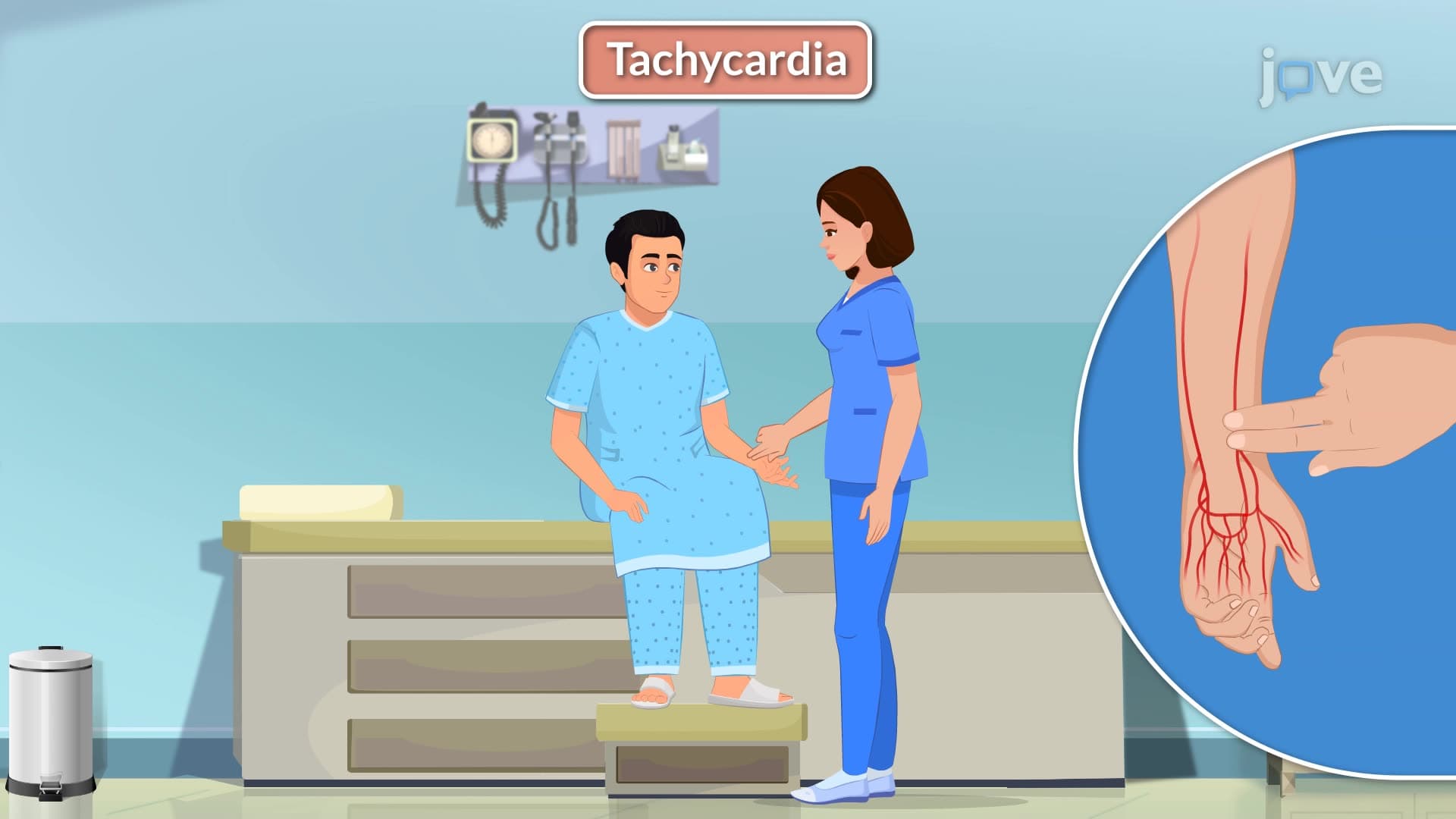
Did you know that during a typical high school basketball game, a player's increased pulse rate can spike from 70 to 160 beats per minute in seconds? An increased pulse rate, medically known as tachycardia, occurs when your heart beats faster than 100 beats per minute at rest due to abnormal electrical impulses from the sinus node. The Cleveland Clinic reports this affects millions of Americans annually, potentially reducing oxygen delivery to vital organs. Watch the full video on JoVE Coach to master this concept with expert-led visuals and step-by-step explanations.
An increased pulse rate represents one of the most fundamental cardiovascular concepts in human physiology. When your heart's natural pacemaker-the sinoatrial (SA) node-generates electrical impulses faster than normal, it creates a cascade of physiological changes throughout your body. This condition affects approximately 1.5 million Americans annually, making it a critical topic for students pursuing healthcare careers or taking Advanced Placement Biology.
The heart's electrical conduction system operates like a sophisticated circuit board. Under normal circumstances, the SA node fires 60-100 times per minute, creating the rhythmic contractions we feel as our pulse. However, when arrhythmias disrupt this system, the pulse rate can escalate to 100-180 beats per minute. This rapid firing often results from ion channel dysfunction, where sodium and calcium channels in cardiac cells become hyperactive. Students preparing for the MCAT should understand how this relates to action potential duration and cardiac output calculations.
The symptoms of increased pulse rate extend far beyond just feeling your heart race. Patients frequently experience palpitations-the uncomfortable awareness of their heartbeat-along with chest discomfort and syncope (fainting). Consider a college athlete at UCLA who suddenly develops tachycardia during practice: they might feel lightheaded because their rapidly beating heart cannot fill completely between contractions, reducing stroke volume and cardiac output. This decreased efficiency means less oxygenated blood reaches vital organs, particularly the brain and kidneys.
Multiple factors contribute to developing an increased pulse rate. Genetic predisposition plays a significant role-if your parents experienced arrhythmias, your risk increases substantially. Hyperthyroidism, commonly seen in women aged 20-40, accelerates metabolism and heart rate. External triggers include certain medications (epinephrine auto-injectors used for severe allergies), dehydration, fever, and even excessive caffeine consumption. The American Heart Association recommends limiting caffeine intake to 400mg daily-roughly four cups of coffee-to prevent triggering episodes in susceptible individuals.
Understanding these mechanisms proves essential for students taking the NCLEX-RN or preparing for cardiology rotations, where rapid assessment and intervention can be life-saving.
Related Micro-courses