Loading subject page…


48,274 views


Video Summary: What are Factors Affecting Body Temperature
Ever wonder why you feel colder during early morning basketball practice than during afternoon games? The factors affecting body temperature create fascinating patterns in our daily lives, from why elderly patients in US hospitals need extra warming blankets to how female athletes experience different thermal responses than their male teammates. These biological mechanisms involve age-related changes, exercise physiology, hormonal fluctuations, and environmental adaptations that constantly regulate our core temperature. Understanding what are factors affecting body temperature reveals the complex interplay between our internal biology and external environment. Watch the full video on JoVE Coach to master this concept with expert-led visuals and step-by-step explanations.
The human body maintains a remarkably stable core temperature around 98.6°F (37°C) despite constant internal and external challenges. The factors affecting body temperature represent a complex network of physiological processes that work together to preserve thermal homeostasis. This intricate system involves multiple variables that students encounter in AP Biology, college anatomy courses, and pre-health programs preparing for the MCAT.
Age significantly impacts thermoregulatory efficiency across the human lifespan. Newborns present unique challenges in clinical settings like pediatric units at Children's Hospital of Philadelphia, where healthcare providers must carefully monitor temperature due to immature thermoregulatory systems. These infants cannot effectively shiver or sweat, making them vulnerable to temperature extremes.
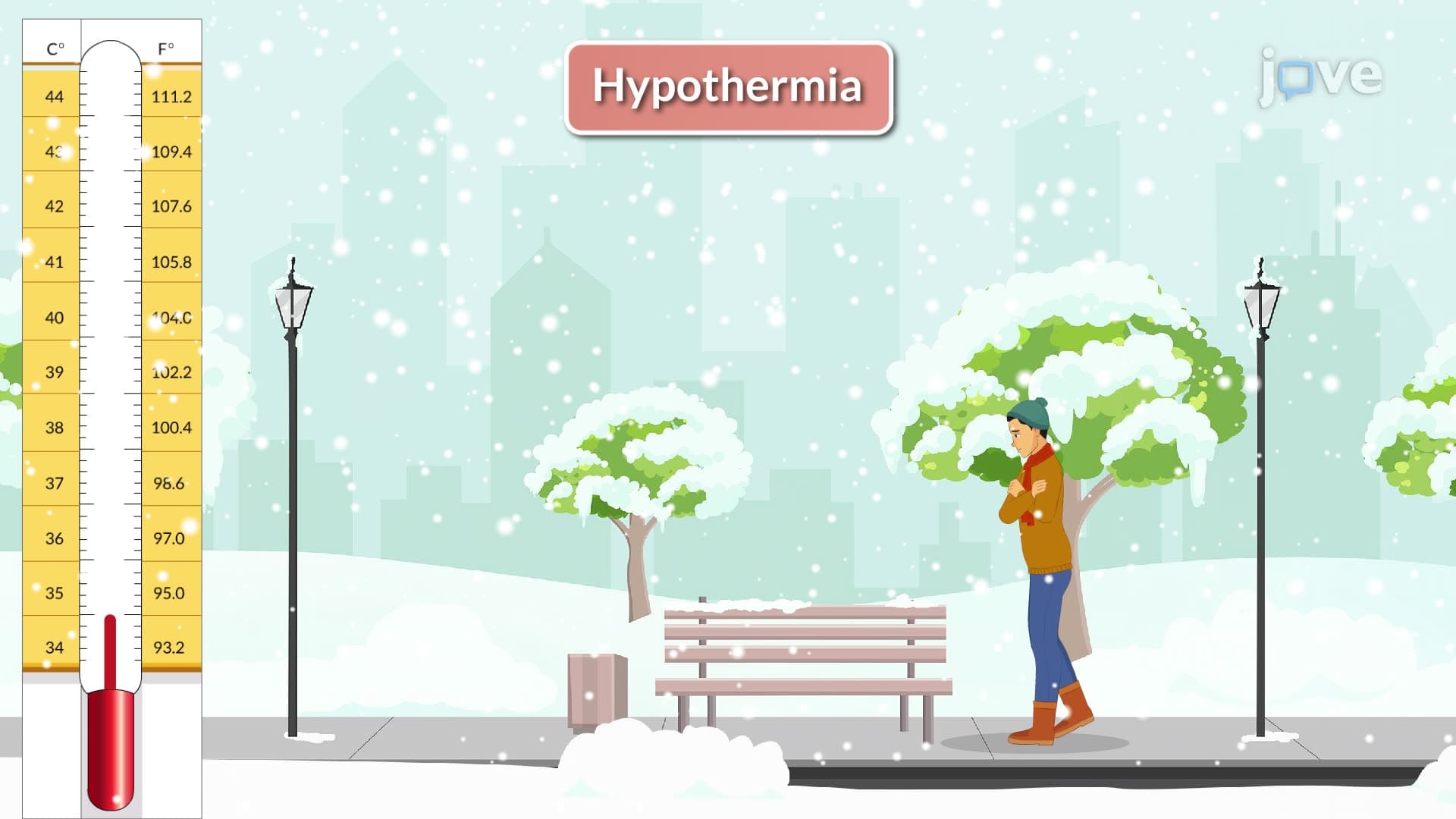
Conversely, elderly patients in nursing homes across the United States face different challenges. Aging reduces subcutaneous fat layers, decreases sweat gland responsiveness, and slows metabolic processes. This explains why retirement communities in Florida maintain warmer indoor temperatures and why hypothermia risks increase dramatically in senior populations during winter months.
Physical activity creates one of the most dramatic alterations in body temperature. During exercise, skeletal muscles increase their metabolic rate by up to 20 times, generating substantial heat. The cardiovascular system responds by redirecting blood flow to working muscles and skin surfaces for cooling. This concept frequently appears in exercise physiology courses and ACSM certification exams.
College athletes training in hot climates like Arizona or Texas demonstrate these principles practically. Their bodies adapt through acclimatization, improving heat dissipation mechanisms over 7-14 days of consistent exposure.
Gender differences in temperature regulation stem primarily from hormonal fluctuations. Women experience cyclical temperature variations during menstrual cycles, with progesterone elevating core temperature during the luteal phase. This principle underlies fertility awareness methods taught in reproductive health courses and appears regularly on NCLEX examinations for nursing students.
Menopause introduces additional complexity, as declining estrogen levels affect hypothalamic temperature control centers, leading to characteristic hot flashes experienced by millions of American women.
Environmental temperature creates immediate challenges requiring rapid physiological adjustments. Cold exposure triggers vasoconstriction and shivering thermogenesis, while heat exposure activates sweating and vasodilation. These responses involve complex neurological pathways that students study in advanced biology and pre-medical coursework.
Psychological and physical stress elevate body temperature through sympathetic nervous system activation and hormonal releases, including cortisol and adrenaline. Understanding these mechanisms proves essential for students pursuing healthcare careers and frequently appears in HESI A2 and TEAS entrance examinations.
Related Micro-courses