Loading video…


 17 Concepts
 48.3K views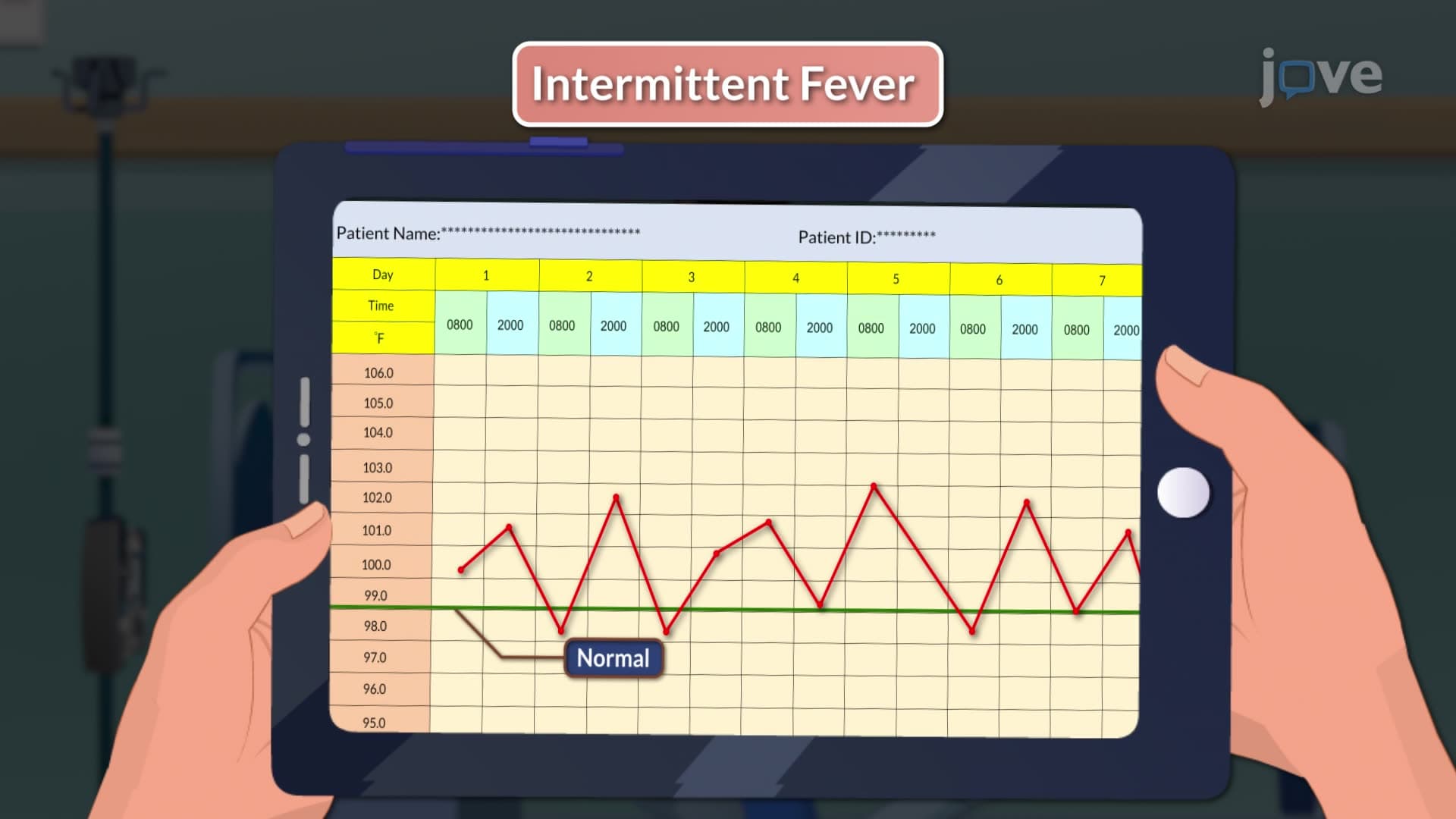

Video Summary: What are Patterns of Fever
Did you know that patterns of fever can help doctors diagnose diseases just like fingerprints identify people? Understanding patterns fever recognition is crucial for medical professionals analyzing patient symptoms. For instance, malaria patients in Florida emergency rooms often present with characteristic intermittent fever patterns that cycle every few days. What are patterns of fever and how do healthcare providers use them for accurate diagnosis? Watch the full video on JoVE Coach to master this concept with expert-led visuals and step-by-step explanations.
Fever patterns serve as diagnostic roadmaps for healthcare professionals, providing crucial clues about underlying pathological processes. These systematic temperature variations help distinguish between various infectious diseases, autoimmune conditions, and malignancies. Medical students studying for the MCAT and nursing students preparing for NCLEX examinations must master these patterns for clinical success.
Intermittent fever represents one of the most diagnostically significant patterns, characterized by alternating periods of elevated temperature and normal readings. Classic examples include malaria, where Plasmodium species create predictable fever cycles-P. vivax typically produces fever every 48 hours, while P. malariae causes symptoms every 72 hours. This pattern often appears in AP Biology exam questions testing students' understanding of parasitic life cycles.
Remittent fever demonstrates continuous temperature elevation with significant daily fluctuations exceeding 2°F between morning and evening measurements. Unlike intermittent fever, temperatures never normalize completely. This pattern frequently occurs in bacterial pneumonia cases treated at major US medical centers like Johns Hopkins Hospital or Mayo Clinic.
Continuous or sustained fever maintains consistently elevated temperatures with minimal variation (less than 1.5°F). This pattern characterizes severe infections like typhoid fever or certain hospital-acquired infections. Healthcare workers monitoring patients in intensive care units across American hospitals regularly encounter this pattern.
Crisis fever patterns demand immediate medical attention, involving rapid temperature drops after prolonged elevation. True crisis indicates genuine recovery with improved patient condition, while false crisis shows temporary improvement followed by deterioration. Emergency medicine residents studying for board examinations must distinguish between these presentations for proper patient management.
Inverse fever presents an unusual circadian pattern where temperatures peak during morning hours rather than typical evening elevation. This rare pattern sometimes occurs in elderly patients or those with certain neurological conditions treated at specialized facilities like Cleveland Clinic or Massachusetts General Hospital.
Fever of unknown origin (FUO) represents a diagnostic challenge, persisting for weeks without identifiable cause despite comprehensive medical evaluation. These cases require systematic investigation protocols taught in internal medicine residency programs and frequently appear in USMLE Step 2 clinical scenarios.
Related Micro-courses