Loading subject page…


48,273 views


Video Summary: What Is Increased Body Temperature
When you touch your forehead and feel burning hot during illness, your body's temperature regulation system has shifted into high gear. Increased body temperature represents your immune system's sophisticated defense strategy against invading pathogens. During the 2020 flu season, over 35 million Americans experienced fever as their primary symptom, demonstrating how increased body temperature serves as both a warning sign and therapeutic response. This complex physiological process involves intricate interactions between your hypothalamus, immune cells, and inflammatory mediators that work together to create an inhospitable environment for harmful microorganisms. Watch the full video on JoVE Coach to master this concept with expert-led visuals and step-by-step explanations.
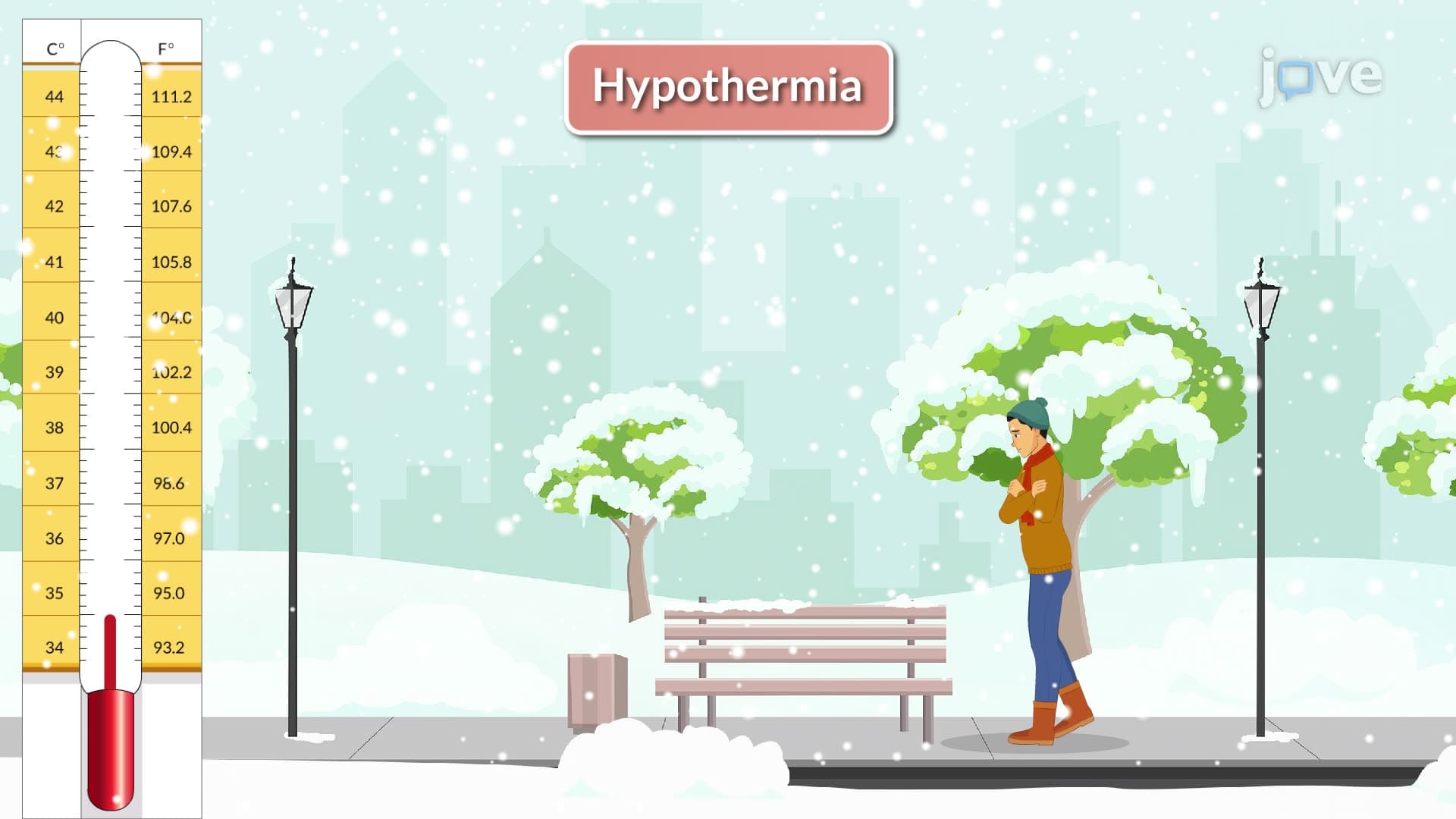
Increased body temperature represents a fundamental shift in your body's thermal regulation that extends far beyond simply "feeling hot." While normal core body temperature hovers around 98.6°F (37°C), any elevation above 100.4°F (38°C) signals that your body's sophisticated thermoregulatory system has been activated or compromised. This concept appears frequently in AP Biology courses, MCAT preparation, and nursing school curricula because it demonstrates the integration of multiple physiological systems.
The hypothalamus functions as your body's primary temperature control center, continuously monitoring core temperature through specialized thermoreceptors. Unlike a simple home thermostat, the hypothalamus responds dynamically to both internal and external temperature changes by coordinating responses from your cardiovascular, respiratory, and muscular systems. When pathogens enter your body, immune cells recognize foreign substances called pyrogens and initiate a complex signaling cascade that ultimately "resets" the hypothalamic thermostat to a higher temperature setpoint.
Understanding the difference between fever and hyperthermia proves crucial for healthcare professionals and appears regularly on NCLEX and HESI A2 examinations. Fever represents a controlled, beneficial response where the hypothalamus deliberately raises the body's temperature setpoint to enhance immune function. Research from Johns Hopkins University demonstrates that moderate fever increases white blood cell activity by up to 20%, making it harder for bacteria and viruses to replicate.
Hyperthermia, conversely, occurs when the body's cooling mechanisms fail to manage excessive heat production or environmental heat exposure. Heat stroke cases surge during summer months in states like Arizona and Texas, where emergency departments treat hundreds of hyperthermia patients annually. Unlike fever, hyperthermia represents a dangerous failure of temperature regulation rather than an adaptive immune response.
The pathway from pathogen detection to increased body temperature involves a sophisticated molecular cascade that biology students must master for college-level examinations. When immune cells encounter bacterial cell wall components or viral proteins, they release inflammatory cytokines including interleukin-1 (IL-1), interleukin-6 (IL-6), and tumor necrosis factor (TNF). These signaling molecules travel through the bloodstream to the hypothalamus, where they stimulate the production of prostaglandin-E2 (PGE2). This prostaglandin acts as the key mediator that triggers the hypothalamus to initiate heat-generating responses including shivering, vasoconstriction, and increased metabolic rate.
Related Micro-courses