Loading subject page…


145,801 views

Video Summary: Acetals and Thioacetals as Protecting Explained
Ever wonder how pharmaceutical companies like Pfizer create complex drugs without unwanted side reactions destroying their target molecules? Acetals thioacetals as protecting groups act like molecular shields, temporarily hiding reactive aldehydes and ketones during multi-step synthesis. These chemical "bodyguards" allow chemists to selectively modify one functional group while keeping others intact-essential for producing life-saving medications at companies like Merck and Johnson & Johnson. Acetals And Thioacetals As Protecting Explained reveals the strategic masking techniques that make modern drug synthesis possible. Watch the full video on JoVE Coach to master this concept with expert-led visuals and step-by-step explanations.
Protecting groups represent one of organic chemistry's most elegant solutions to a fundamental challenge: how to perform reactions on molecules containing multiple reactive sites without unwanted cross-reactions. Acetals and thioacetals as protecting strategies have revolutionized synthetic chemistry, particularly in pharmaceutical development where precise molecular modifications determine drug efficacy and safety.
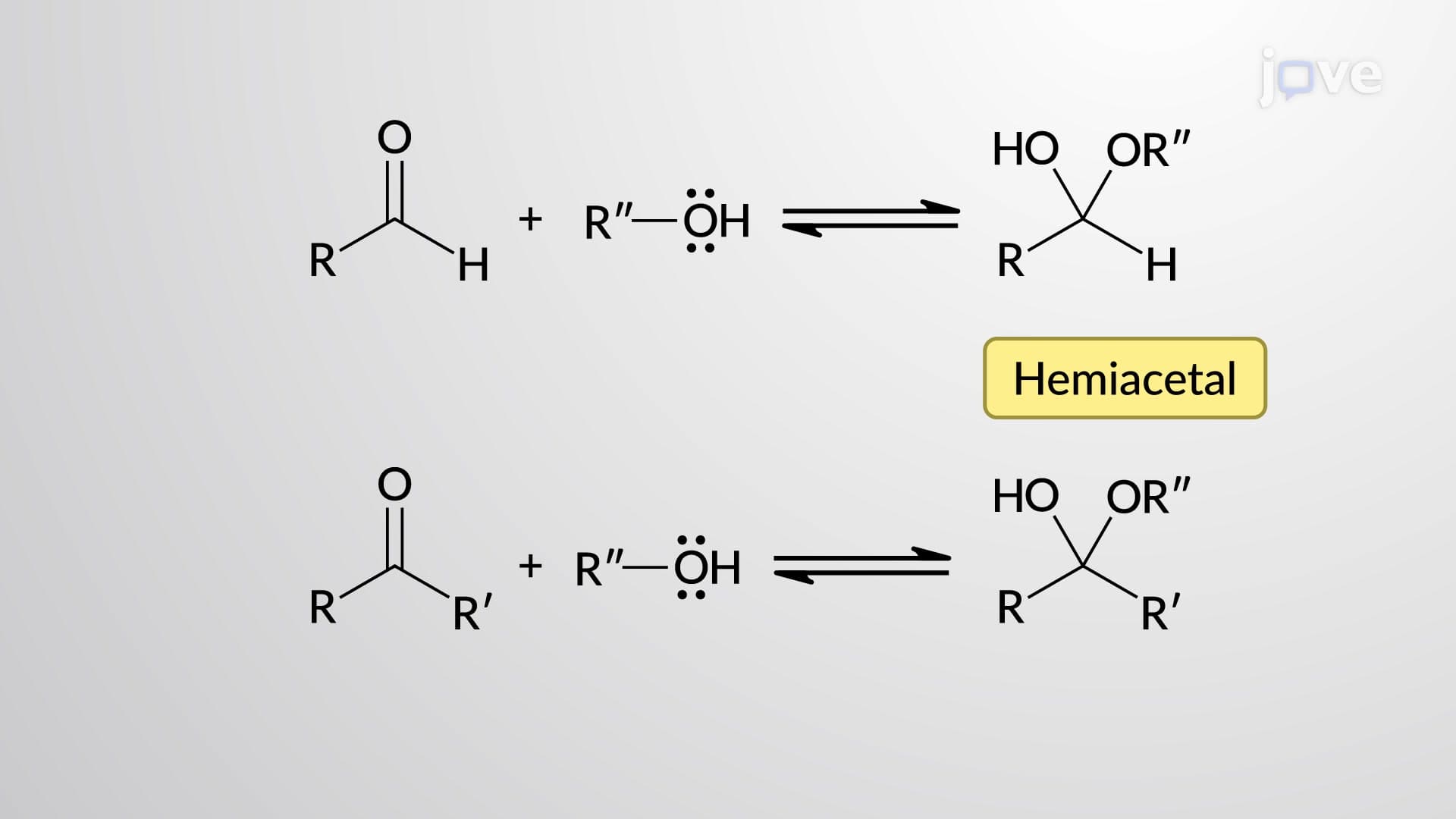
Acetals form when aldehydes or ketones react with alcohols under acidic conditions, creating stable C-O-C linkages that resist nucleophilic attack, oxidation, and reduction. This remarkable stability under basic conditions makes acetals invaluable protecting groups. Consider a molecule containing both an aldehyde and a ketone-perhaps an intermediate in synthesizing heart medication digoxin. Since aldehydes form acetals approximately 10 times faster than ketones, chemists can selectively protect the aldehyde, reduce the ketone with sodium borohydride, then remove the acetal protection using dilute hydrochloric acid.
This selective approach appears frequently on AP Chemistry exams and college organic chemistry tests, where students must identify which carbonyl group reacts first and design protection strategies accordingly. Major pharmaceutical companies like Bristol Myers Squibb routinely employ acetal protection in manufacturing processes, demonstrating the industrial relevance of this concept.
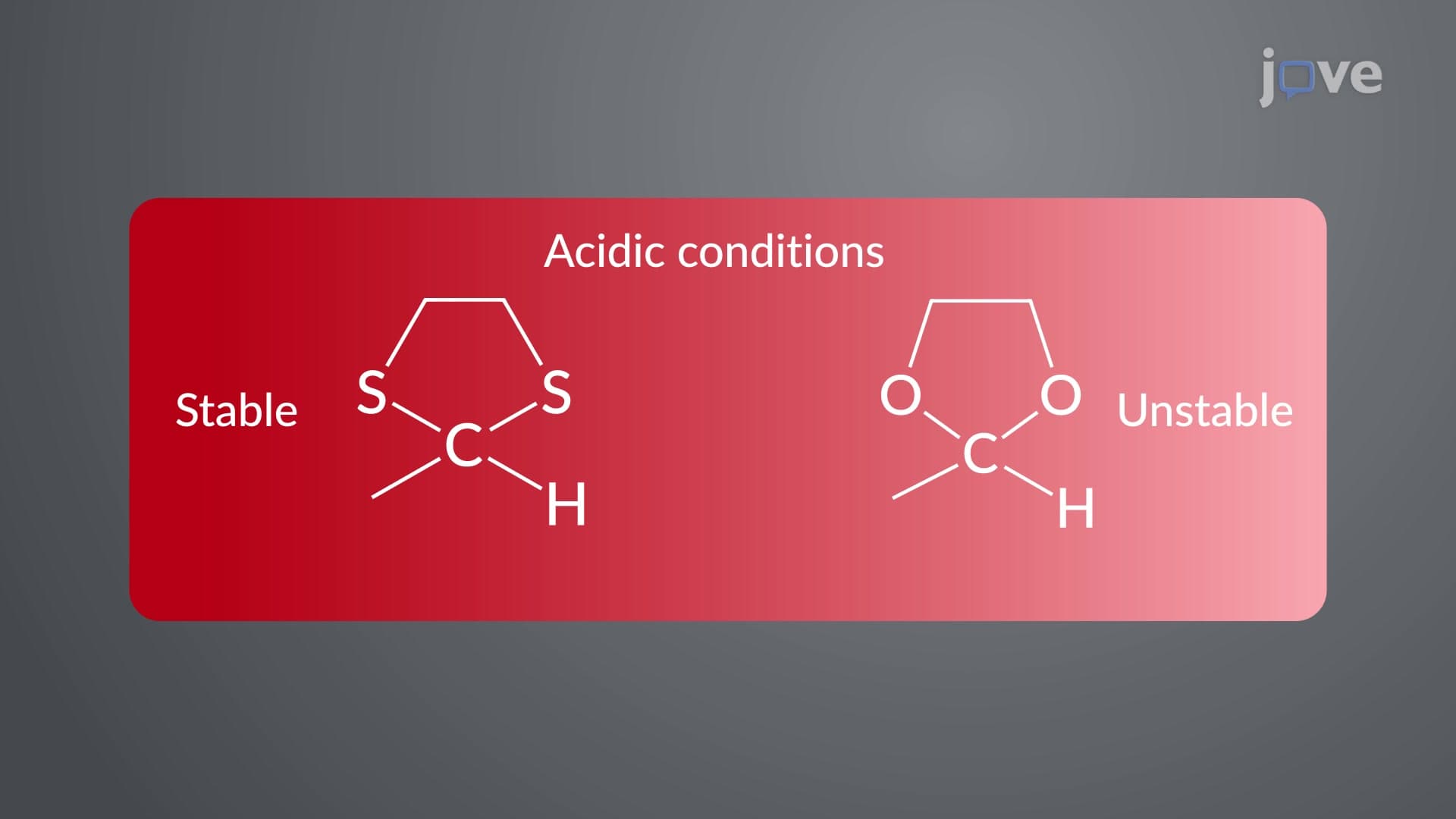
Thioacetals offer enhanced protection by replacing oxygen atoms with sulfur, creating C-S-C bonds that resist both acidic and basic conditions. This dual stability proves crucial when synthetic routes require acidic reaction conditions that would destroy regular acetals. The formation mechanism mirrors acetal synthesis but uses thiols (RSH) instead of alcohols, producing more robust protecting groups.
Deprotection requires specialized conditions-typically mercuric chloride in aqueous acetonitrile-reflecting the stronger C-S bonds. This method, while requiring careful handling due to mercury toxicity, provides clean deprotection without affecting other functional groups. Students preparing for the MCAT or advanced organic chemistry courses should understand these mechanistic differences, as they frequently appear in synthesis-based questions.
The choice between acetal and thioacetal protection depends entirely on downstream chemistry. Pharmaceutical synthesis often involves harsh acidic conditions for cyclization reactions or protecting group manipulations, making thioacetals essential. For example, synthesizing complex natural products like taxol (used in cancer treatment) requires multiple protection-deprotection cycles, with thioacetals providing stability during acidic steps while acetals suffice for base-mediated transformations.
Related Micro-courses