Loading video…


 25 Concepts
 145.8K views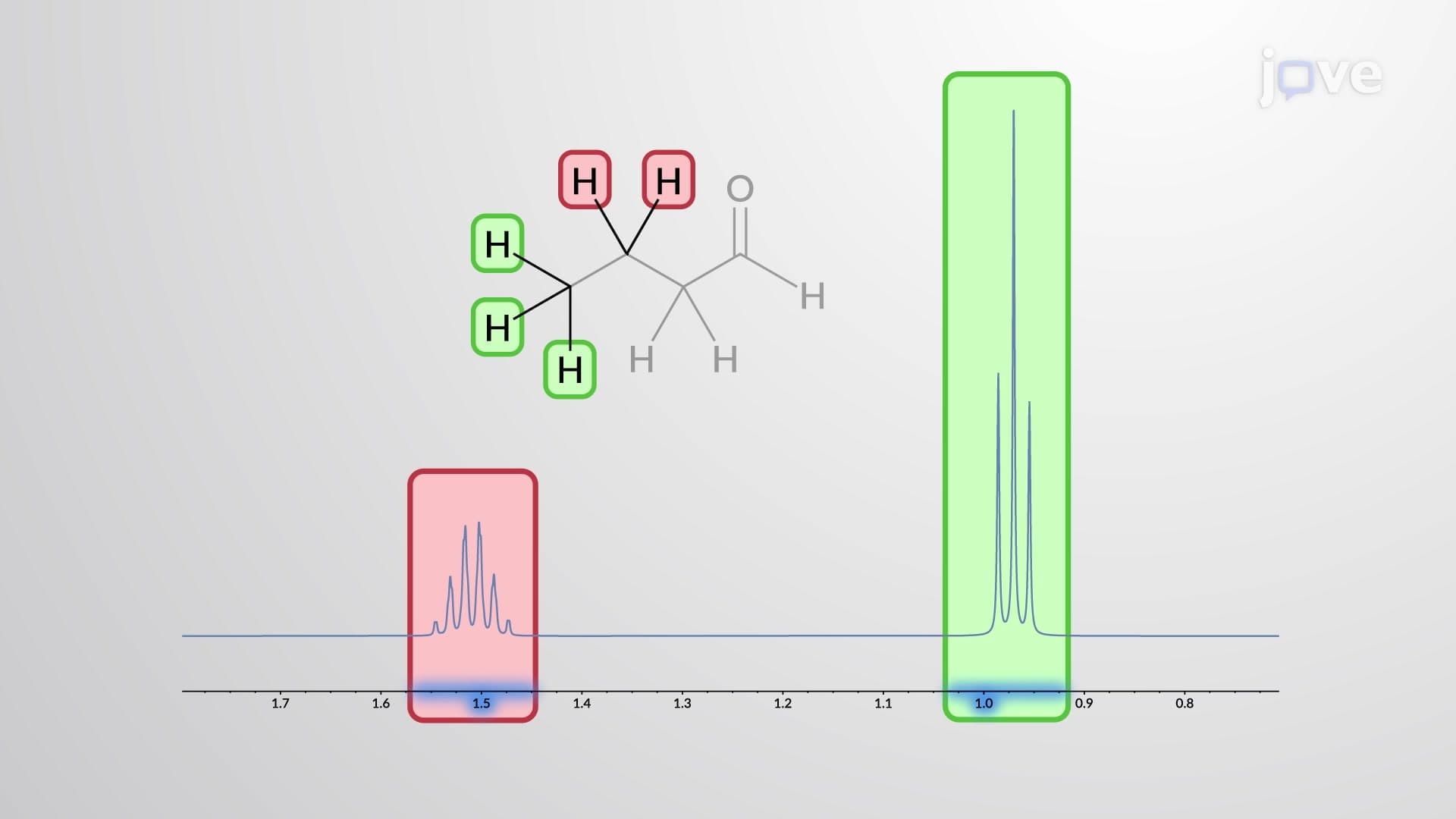

Video Summary: Nmr Spectroscopy and Mass Spectrometry Explained
Ever wonder how forensic scientists at the FBI identify unknown substances found at crime scenes? NMR spectroscopy mass spectrometry techniques provide the molecular fingerprints needed to solve these mysteries. These powerful analytical methods reveal the structure and composition of organic compounds by analyzing how molecules behave in magnetic fields and how they fragment when ionized. NMR Spectroscopy And Mass Spectrometry Explained demonstrates how aldehydes and ketones produce distinctive spectral patterns that chemists use for identification. Watch the full video on JoVE Coach to master this concept with expert-led visuals and step-by-step explanations.
Nuclear Magnetic Resonance (NMR) spectroscopy and mass spectrometry represent two of the most powerful analytical tools in modern chemistry. These techniques work synergistically to provide comprehensive structural information about organic molecules. While NMR reveals how atoms are connected and their electronic environments, mass spectrometry determines molecular weight and fragmentation patterns. Together, they form the backbone of structural elucidation in pharmaceutical companies like Pfizer and Merck, where chemists routinely use these methods to characterize new drug compounds.
In ¹H NMR spectroscopy, the position of signals (chemical shifts) tells us about the electronic environment surrounding hydrogen atoms. The aldehydic proton serves as a distinctive landmark, appearing around 10 ppm due to the strong deshielding effect of the adjacent carbonyl group. This downfield shift occurs because the electronegative oxygen atom pulls electron density away from the aldehydic hydrogen, making it more vulnerable to the external magnetic field.
The splitting patterns (coupling) observed in NMR spectra provide additional structural information. When protons are separated by two or three bonds, they influence each other's magnetic environments, creating characteristic multipicity patterns. Students preparing for AP Chemistry or organic chemistry courses at universities like UCLA or MIT learn to interpret these patterns as molecular puzzles that reveal connectivity.
¹³C NMR spectroscopy focuses on the carbon skeleton of molecules. Carbonyl carbons in aldehydes and ketones appear in the distinctive 190-220 ppm region, far downfield from typical aliphatic carbons. This dramatic shift reflects the unique electronic structure of the C=O bond, where the carbon experiences significant deshielding due to the double-bond character and oxygen's electronegativity.
Mass spectrometry complements NMR by revealing how molecules break apart under ionization conditions. Aldehydes characteristically lose their aldehydic hydrogen (M-1 peak), while ketones typically show a molecular ion peak. The fragmentation occurs predominantly through alpha cleavage-breaking bonds adjacent to the carbonyl group. This process generates acylium ions (R-CO⁺), which are particularly stable due to resonance stabilization. The most stable fragment often becomes the base peak, appearing with maximum intensity in the mass spectrum.
These fragmentation patterns prove invaluable for students tackling MCAT organic chemistry sections or working through advanced undergraduate coursework. Understanding why certain fragments form preferentially helps predict spectra and solve structural problems efficiently.
Related Micro-courses