Loading video…


 25 Concepts
 145.8K views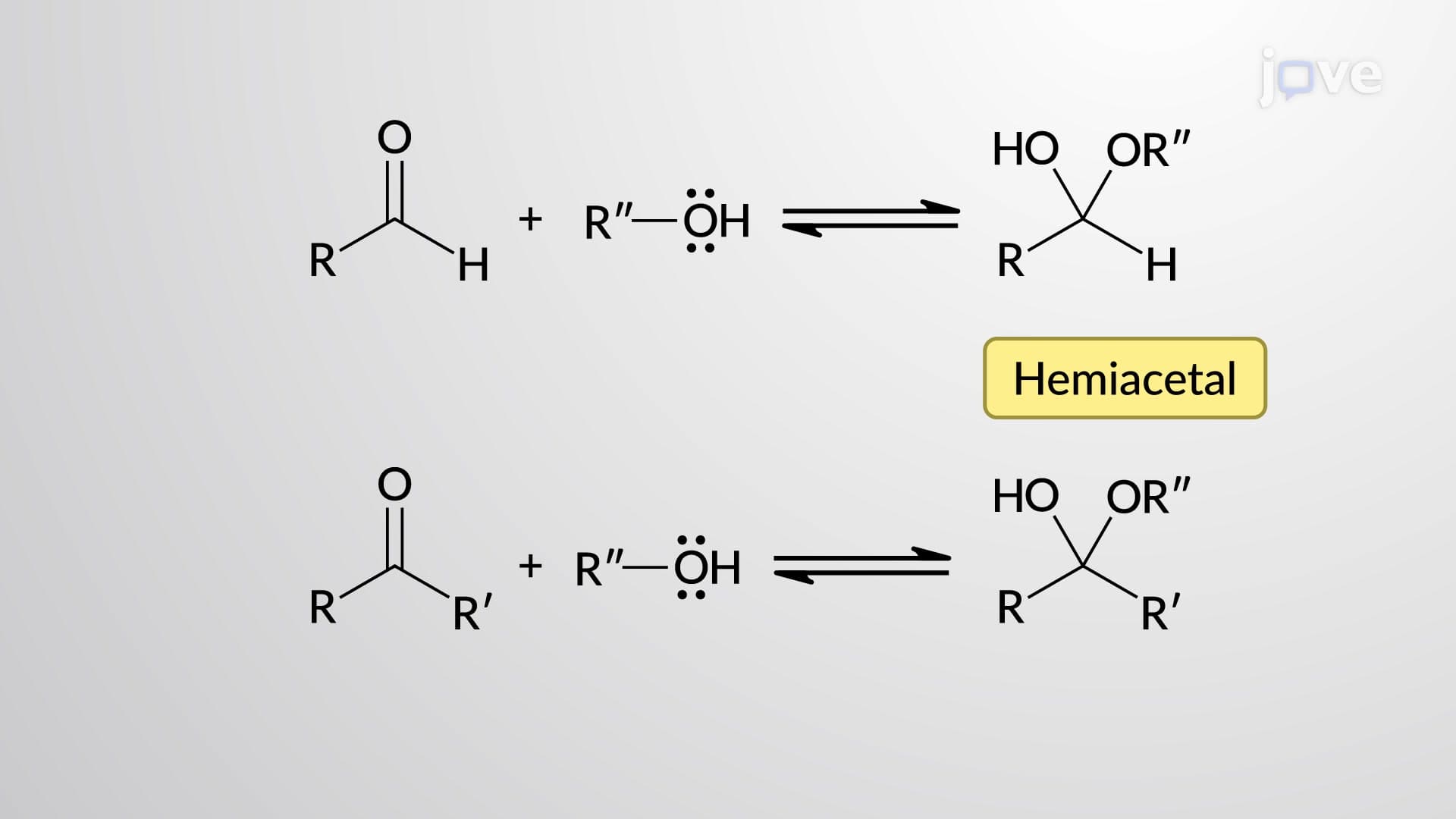

Video Summary: Hemiacetal Formation From Aldehydes and Ketones
Did you know that the sweet smell of freshly baked cookies involves hemiacetal formation from aldehydes? When vanilla extract (containing vanillin aldehyde) combines with sugars during baking, it creates hemiacetals that contribute to complex flavors. Hemiacetal Formation from Aldehydes and Ketones occurs when alcohols react with carbonyl compounds, creating unstable intermediates with both OH and OR groups attached to the same carbon. This reaction happens in pharmaceutical manufacturing across the US, where companies like Pfizer use controlled hemiacetal formation in drug synthesis. Watch the full video on JoVE Coach to master this concept with expert-led visuals and step-by-step explanations.
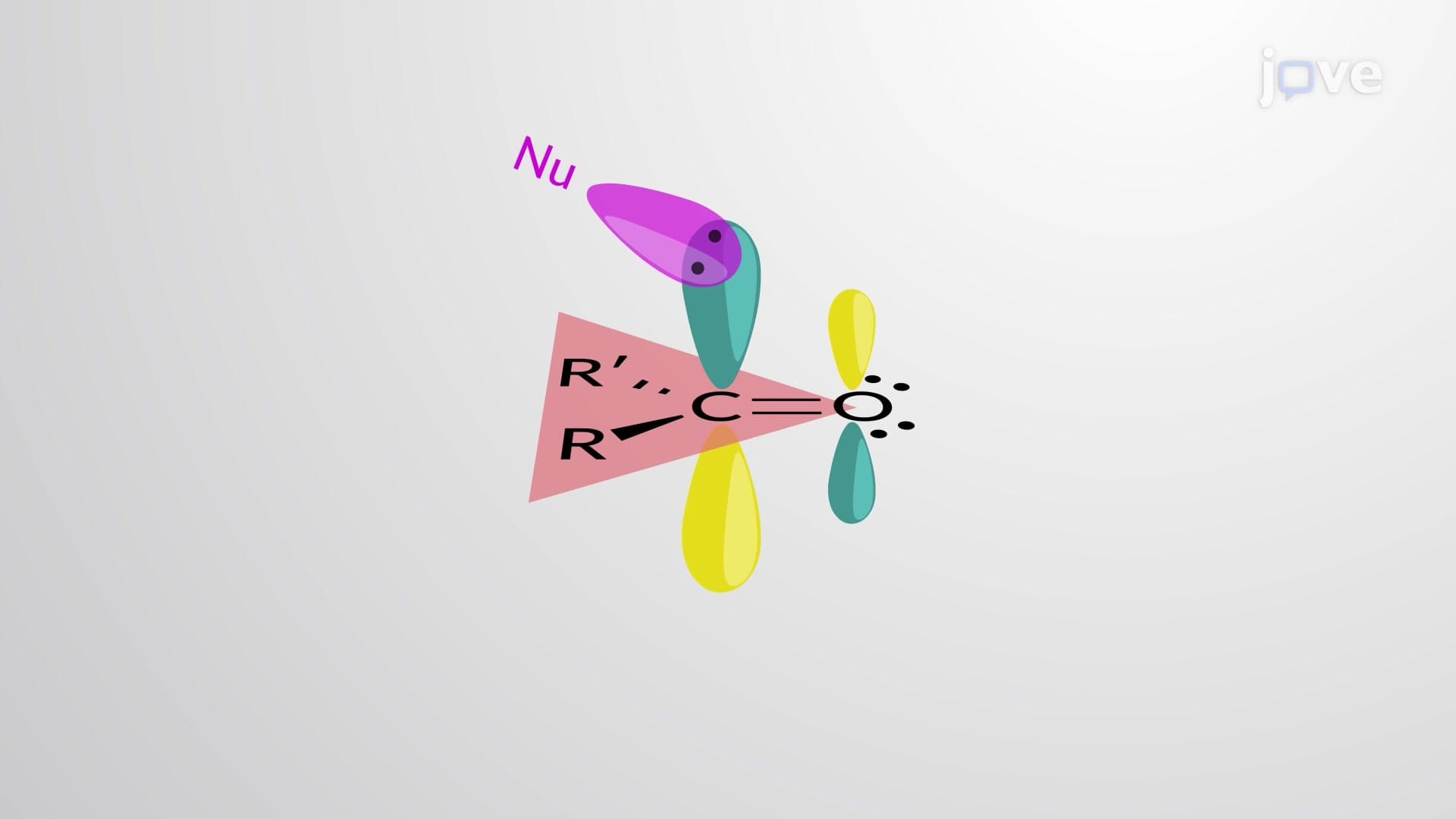
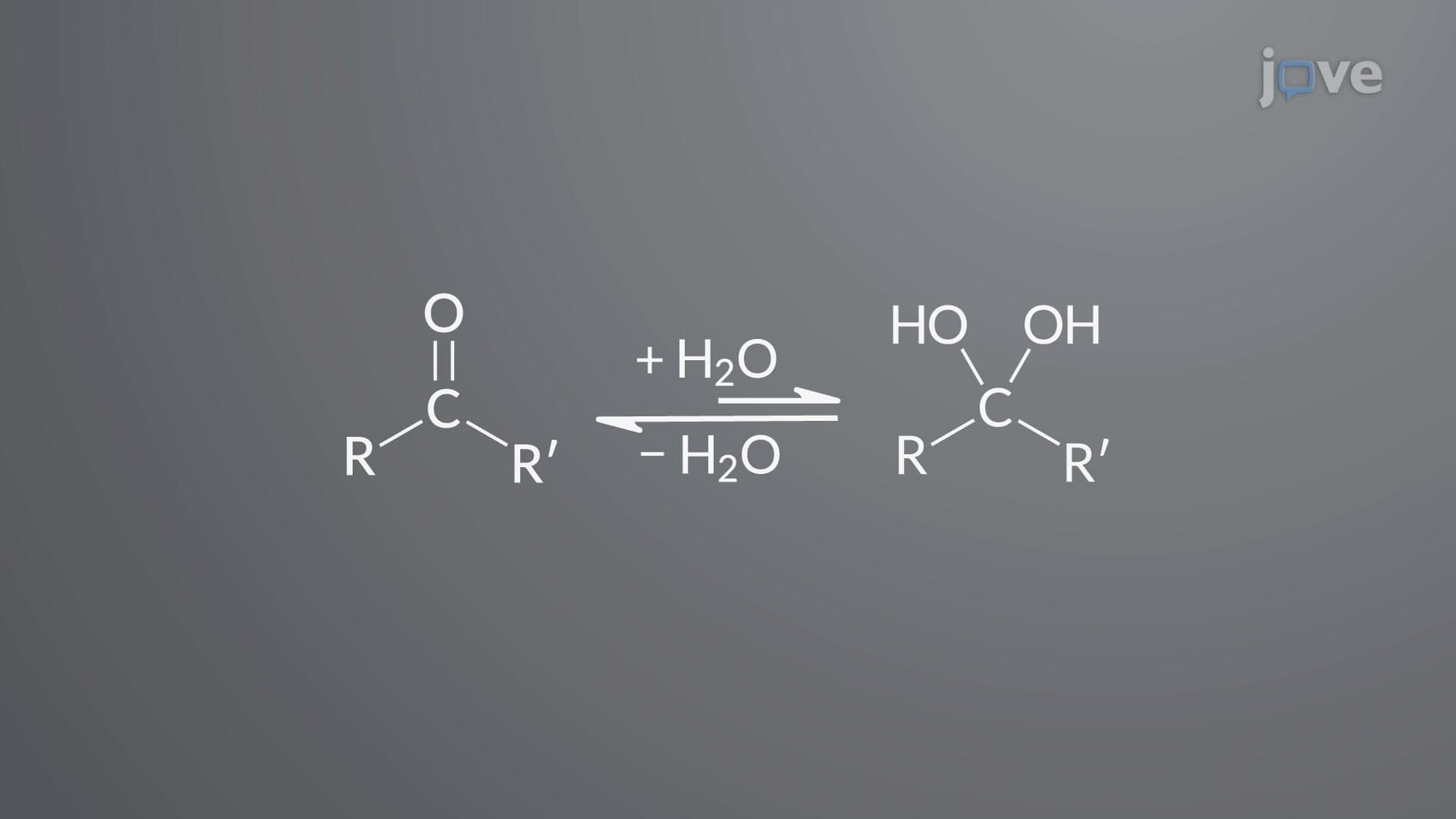
Hemiacetal formation from aldehydes and ketones represents a fundamental nucleophilic addition reaction in organic chemistry. When one equivalent of alcohol attacks the electrophilic carbon of an aldehyde or ketone, the result is a hemiacetal-a compound containing both a hydroxyl (OH) group and an alkoxy (OR) group attached to the same carbon atom. This reaction is crucial in biochemistry, pharmaceutical synthesis, and industrial processes across the United States.
The formation of hemiacetals faces significant thermodynamic challenges. These compounds possess higher energy than their corresponding carbonyl precursors, making the equilibrium position unfavorable for product formation. This energy difference explains why hemiacetals are typically unstable and tend to decompose back to their starting materials. The weak nucleophilic nature of alcohols compounds this problem, resulting in slow reaction rates under neutral conditions. Students preparing for the AP Chemistry exam or MCAT should understand that overcoming these kinetic barriers requires catalytic assistance.
In acid-catalyzed conditions, the mechanism begins with protonation of the carbonyl oxygen by a strong acid catalyst. This protonation dramatically increases the electrophilicity of the carbonyl carbon, making it more susceptible to nucleophilic attack. When the alcohol molecule attacks this activated carbonyl, it forms an oxonium ion intermediate-a positively charged species that students often encounter in college organic chemistry courses. The final step involves deprotonation by another alcohol molecule, yielding the hemiacetal product and regenerating the acid catalyst for additional reaction cycles.
Base catalysis follows a different mechanistic pathway, beginning with deprotonation of the alcohol by a strong base. This generates an alkoxide anion-a powerful nucleophile that readily attacks the carbonyl carbon. The resulting anionic intermediate undergoes proton transfer from another alcohol molecule, producing the hemiacetal and regenerating the base catalyst. Pharmaceutical companies like Johnson & Johnson utilize these catalyzed pathways in controlled manufacturing environments to produce drug intermediates. Understanding both mechanisms proves essential for students tackling organic chemistry problems on standardized tests like the MCAT or advanced placement examinations.
Related Micro-courses