Loading subject page…


145,807 views

Video Summary: Hydrate Formation From Aldehydes and Ketones
Ever wondered why formaldehyde in biology labs forms a stable water solution while acetone evaporates quickly? This difference relates to hydrate formation from aldehydes, where carbonyl compounds react with water to create geminal diols. Formaldehyde readily forms stable hydrates used in medical preservation, while larger ketones like acetone resist hydration. Understanding hydrate formation from aldehydes and ketones reveals why some carbonyl compounds dissolve easily in water while others don't. Watch the full video on JoVE Coach to master this concept with expert-led visuals and step-by-step explanations.
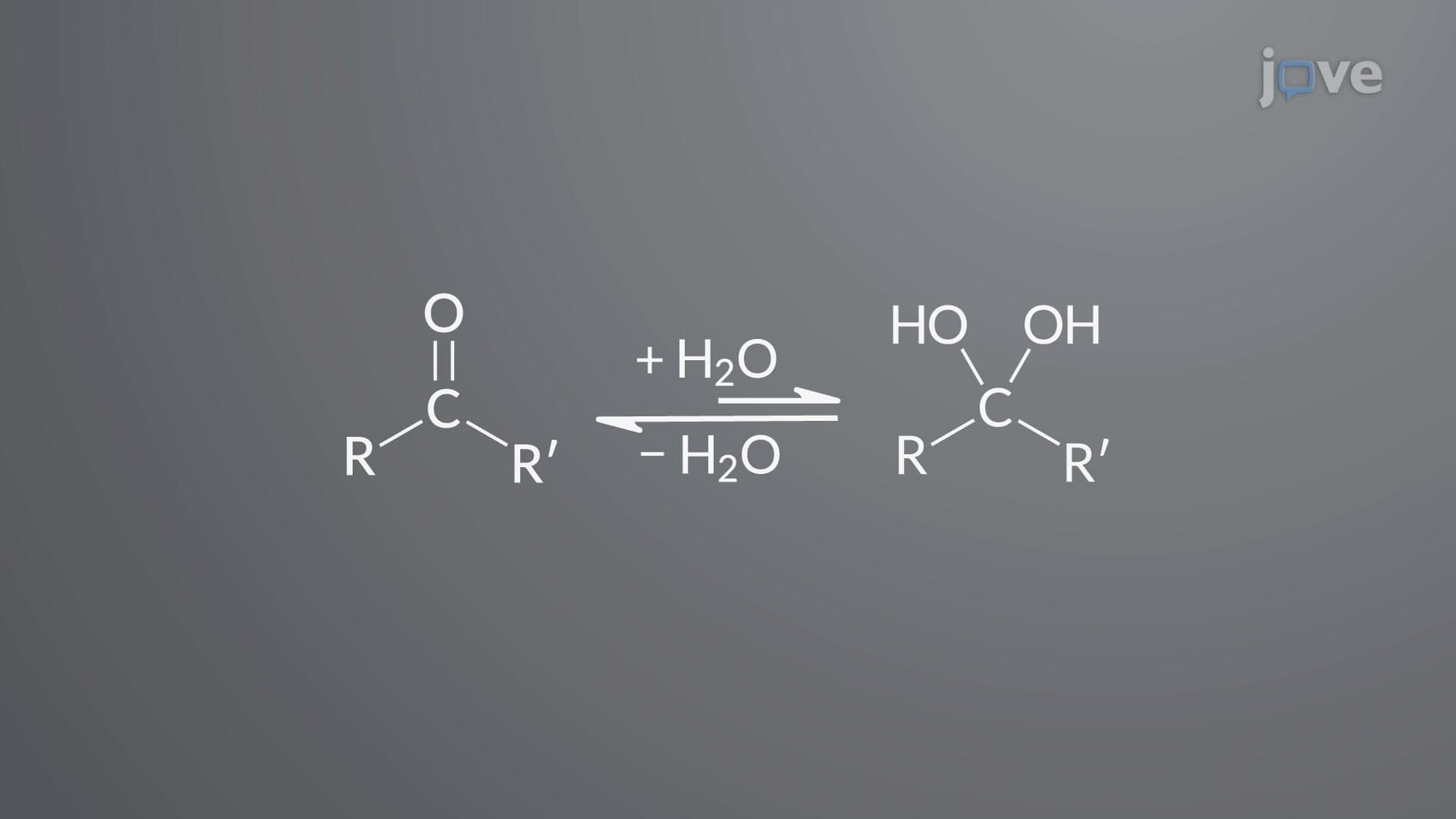
Hydrate formation from aldehydes and ketones represents a fundamental equilibrium reaction where carbonyl compounds add water across the C=O double bond, producing geminal diols (compounds with two hydroxyl groups on the same carbon). This process, also called hydration, is crucial for understanding carbonyl chemistry in both academic settings and real-world applications.
The position of hydration equilibrium depends heavily on the carbonyl compound's structure. Formaldehyde forms nearly 100% hydrate in water, making it useful in medical preservation solutions used in US hospitals. In contrast, acetone shows less than 1% hydration under similar conditions. This dramatic difference occurs because alkyl groups attached to the carbonyl carbon provide both steric hindrance (physically blocking water approach) and electronic stabilization of the carbonyl form through hyperconjugation.
Students preparing for the MCAT or AP Chemistry exam should recognize that electron-withdrawing groups (like in chloral hydrate, used historically as an anesthetic) stabilize the hydrate form, while electron-donating alkyl groups favor the carbonyl form. This concept frequently appears in organic chemistry coursework at universities like UCLA, MIT, and other top US institutions.
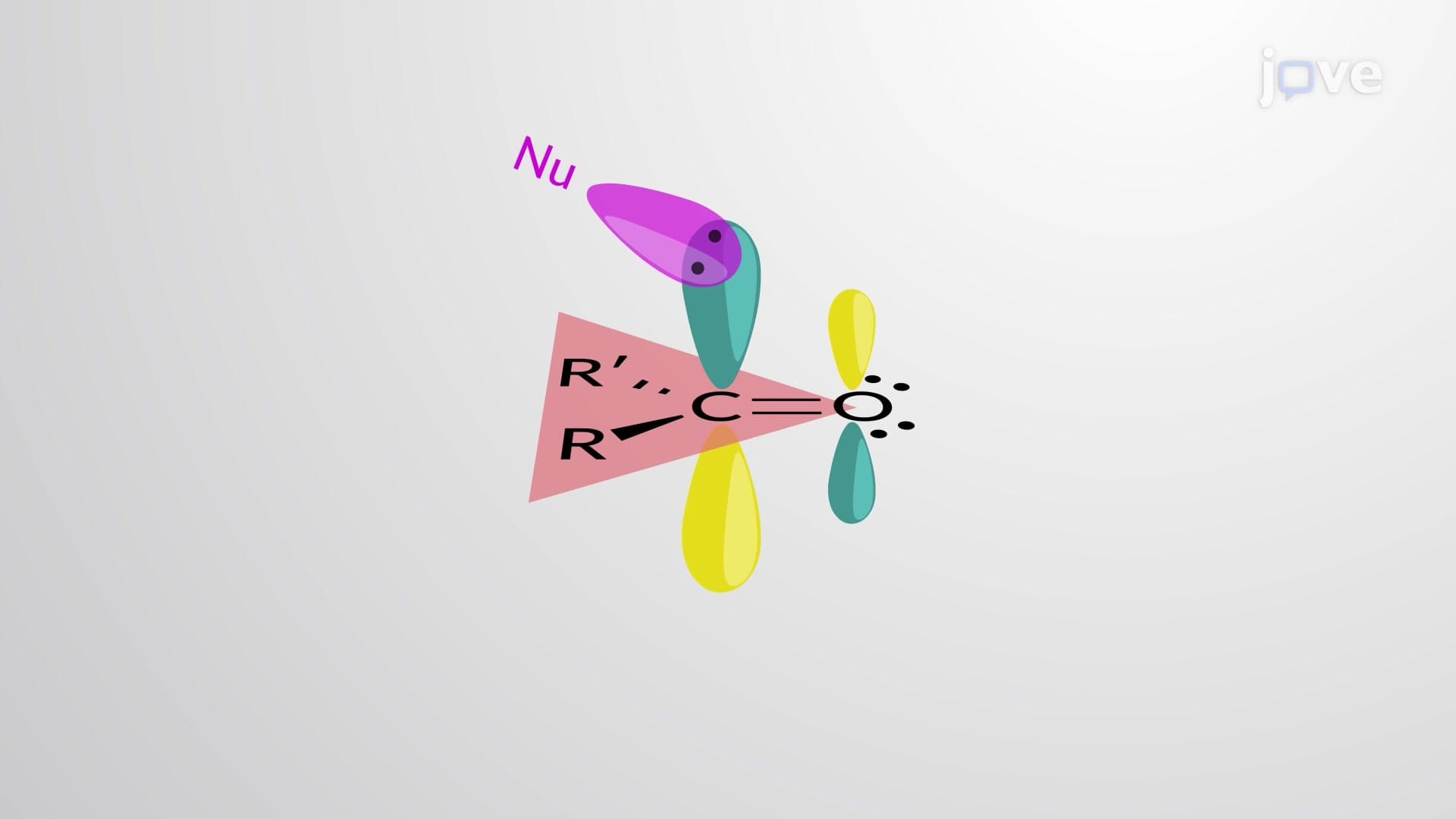
Under neutral conditions, hydrate formation proceeds extremely slowly because water is a poor nucleophile. However, both acid and base catalysis dramatically accelerate the reaction through different pathways. Acid catalysis begins with protonation of the carbonyl oxygen by hydronium ion (H3O+), creating a highly electrophilic carbon center that readily accepts attack from water. The resulting oxonium intermediate loses a proton to form the final geminal diol.
Base catalysis follows an alternative pathway where hydroxide ion directly attacks the carbonyl carbon, forming an alkoxide intermediate that subsequently gets protonated by water. This mechanism explains why laboratory hydration reactions often use either dilute acid or base conditions to achieve reasonable reaction rates.
Understanding hydrate formation helps explain pharmaceutical stability issues, such as why certain drug formulations require anhydrous conditions. College organic chemistry courses emphasize these concepts in reaction mechanism problems, while the MCAT tests students' ability to predict hydrate stability based on molecular structure. Advanced placement students should focus on drawing complete mechanisms and identifying factors that influence equilibrium position.
Related Micro-courses