Loading subject page…


145,807 views

Video Summary: Identifying Aldehydes and Ketones Using Ir and Uv Vis Spectroscopy
Ever wondered how forensic chemists at the FBI identify unknown compounds in criminal investigations? IR UV-Vis spectroscopy aldehydes detection relies on characteristic molecular vibrations and electronic transitions that create unique spectral fingerprints. For instance, acetone (a common ketone) shows distinct IR peaks around 1715 cm⁻¹, while formaldehyde (an aldehyde) appears at 1725 cm⁻¹ with additional C-H stretching bands. Identifying aldehydes and ketones using IR and UV-Vis spectroscopy provides analytical chemists with powerful tools to distinguish these crucial carbonyl compounds. Watch the full video on JoVE Coach to master this concept with expert-led visuals and step-by-step explanations.
IR and UV-Vis spectroscopy of aldehydes and ketones explained begins with recognizing that these carbonyl compounds produce distinctive spectroscopic signatures. The carbonyl group (C=O) serves as a molecular beacon, generating characteristic absorption patterns that analytical chemists use for identification. In pharmaceutical companies like Pfizer or Merck, quality control laboratories routinely employ these techniques to verify drug intermediate structures during synthesis.
The IR UV-vis spectroscopy definition centers on molecular vibrations and electronic excitations. Simple aldehydes typically show strong carbonyl stretching around 1725 cm⁻¹, while ketones absorb at slightly lower frequencies (around 1715 cm⁻¹). This frequency difference occurs because aldehydes have one electron-donating alkyl group, whereas ketones have two, affecting the C=O bond strength through inductive effects.
Aldehydes display two additional weak bands in the 2720-2820 cm⁻¹ region, representing aldehydic C-H stretching vibrations. These bands serve as diagnostic markers distinguishing aldehydes from ketones. Students preparing for the MCAT or AP Chemistry exams should memorize these key frequencies, as they frequently appear in spectroscopy identification problems.
When carbonyl groups conjugate with aromatic rings (like in benzaldehyde) or alkenes, electron delocalization reduces the C=O double bond character. This partial single-bond nature requires less energy for stretching, shifting absorption to lower frequencies (around 1680-1700 cm⁻¹). Students often encounter these concepts in organic chemistry courses at universities like UCLA or MIT.
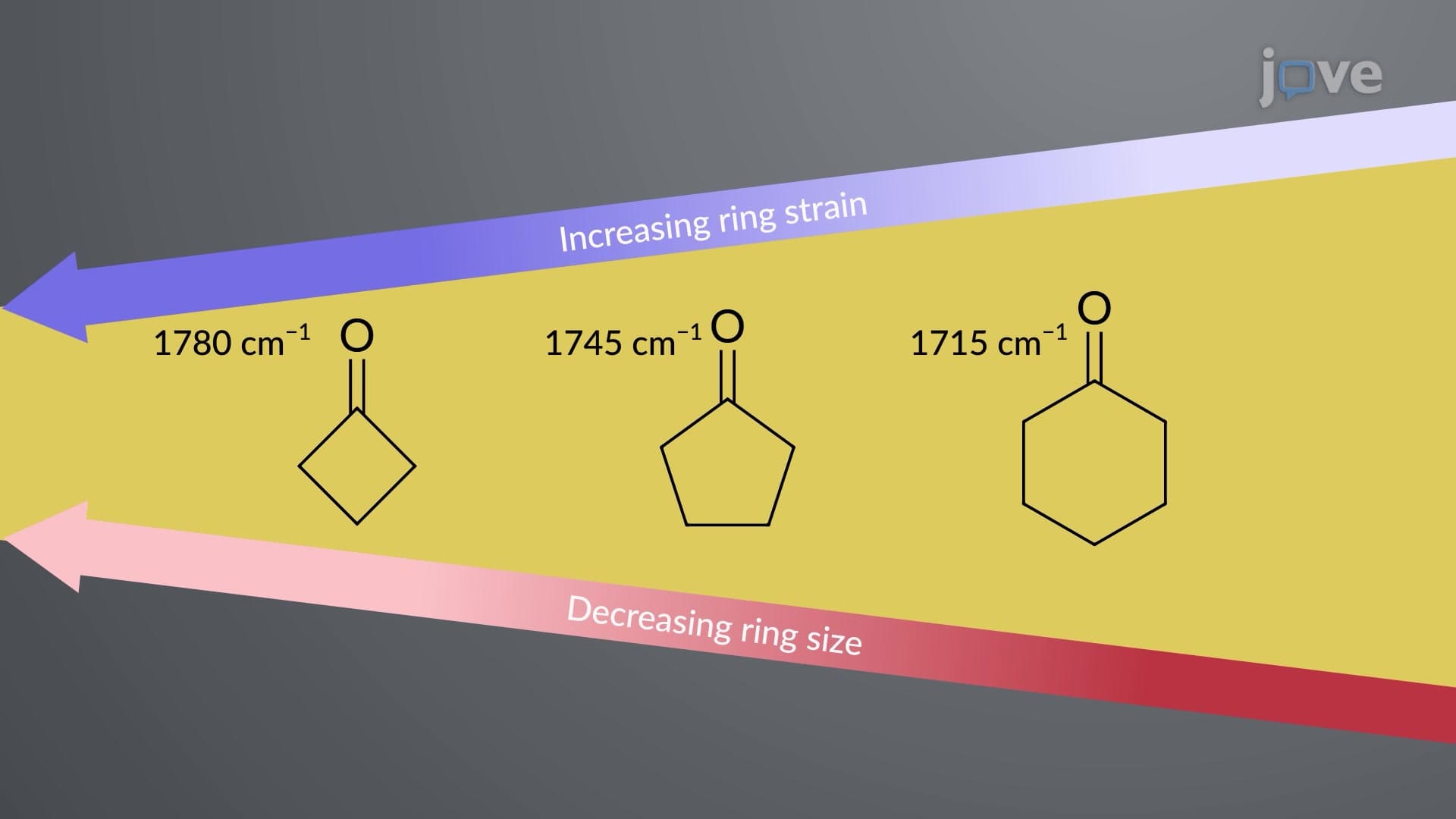
Cyclic ketones demonstrate ring strain effects dramatically. As ring size decreases from six-membered (cyclohexanone) to four-membered rings, increasing angle strain raises carbonyl stretching frequencies. Cyclobutanone absorbs around 1775 cm⁻¹, significantly higher than acyclic ketones.
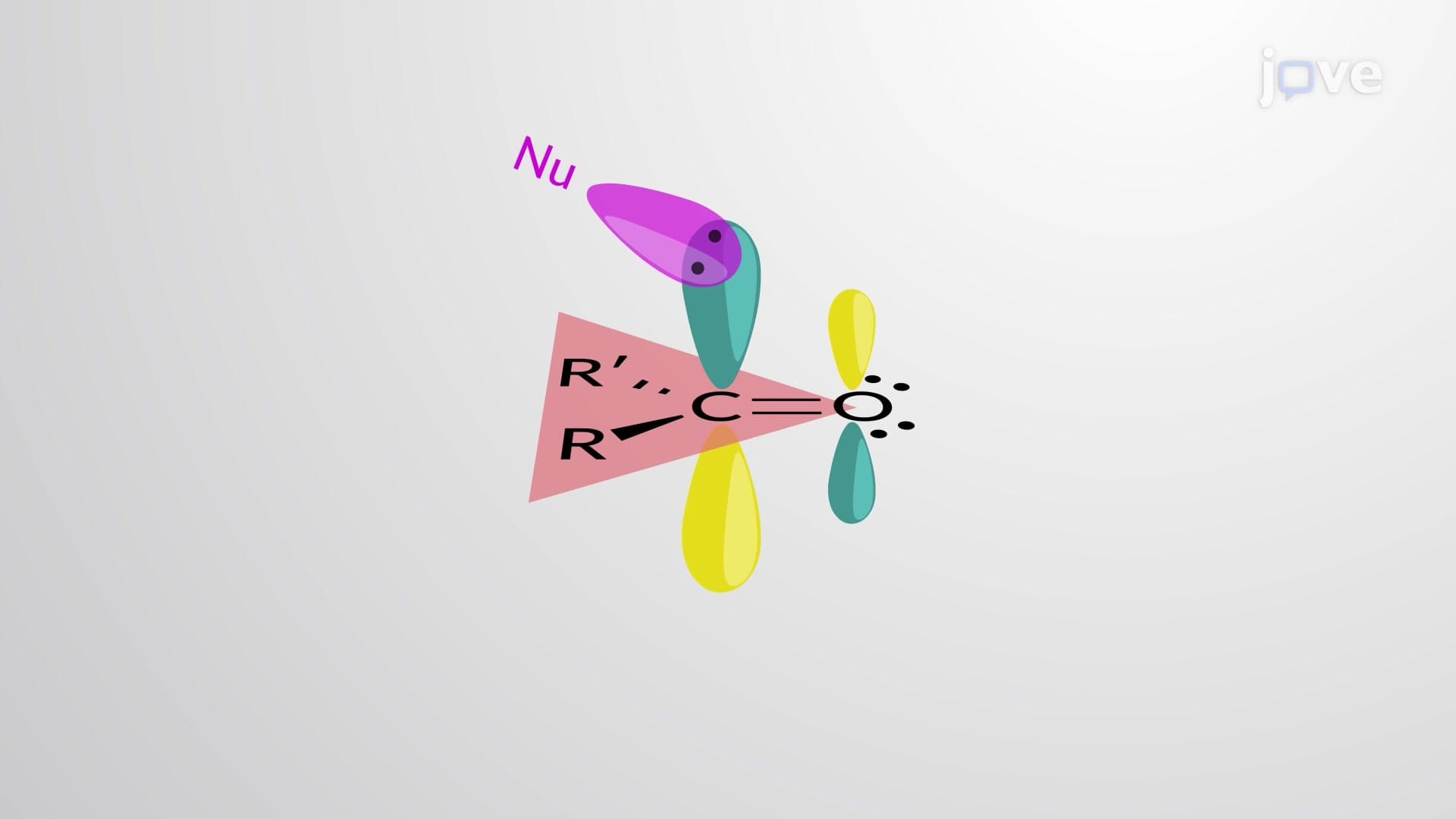
What is IR and UV-Vis spectroscopy of aldehydes and ketones includes understanding electronic transitions. Simple aldehydes and ketones exhibit two primary transition types: n-π* (nonbonding to antibonding π) and π-π* (bonding π to antibonding π). The π-π* transition, while intense, typically occurs below 200 nm, outside standard UV-Vis spectrometer ranges used in most college laboratories.
The n-π* transition appears as a weak absorption band around 280-290 nm. This weakness results from the perpendicular orientation between oxygen's nonbonding orbital and the π* antibonding orbital, making the transition "forbidden" by quantum mechanical selection rules. However, conjugation dramatically shifts π-π* absorptions into observable ranges (250-350 nm), making conjugated aldehydes and ketones easily detectable by UV-Vis spectroscopy.
Related Micro-courses