Loading subject page…


53,516 views

Video Summary: Cholinergic Antagonists Chemistry and Structure Explained
Did you know that the life-saving drug atropine used in US emergency rooms to treat poisoning shares structural similarities with the very neurotransmitter it blocks? Cholinergic antagonists chemistry structure reveals fascinating molecular design principles where small structural changes dramatically alter drug potency and selectivity. For instance, atropine's L-isomer is 100 times more potent than its D-isomer, explaining why pharmaceutical companies must carefully control drug stereochemistry. Understanding cholinergic antagonists chemistry and structure explained concepts helps explain how medications like scopolamine patches prevent motion sickness by blocking specific receptor subtypes. Watch the full video on JoVE Coach to master this concept with expert-led visuals and step-by-step explanations.
Cholinergic antagonists chemistry structure represents a cornerstone concept in pharmacology and medicinal chemistry courses across US colleges. These compounds, scientifically termed parasympatholytics, function by blocking acetylcholine (ACh) activity at both muscarinic and nicotinic receptor sites throughout the nervous system. The structural basis for this antagonistic activity lies in molecular mimicry, these drugs closely resemble acetylcholine's structure while lacking the ability to activate receptors.
Students preparing for the MCAT or advanced placement chemistry exams must understand that antimuscarinic agents specifically target muscarinic receptors, representing the most clinically relevant subset of cholinergic antagonists. This selectivity stems from precise molecular architecture that allows competitive inhibition at muscarinic sites while exhibiting reduced affinity for nicotinic receptors.
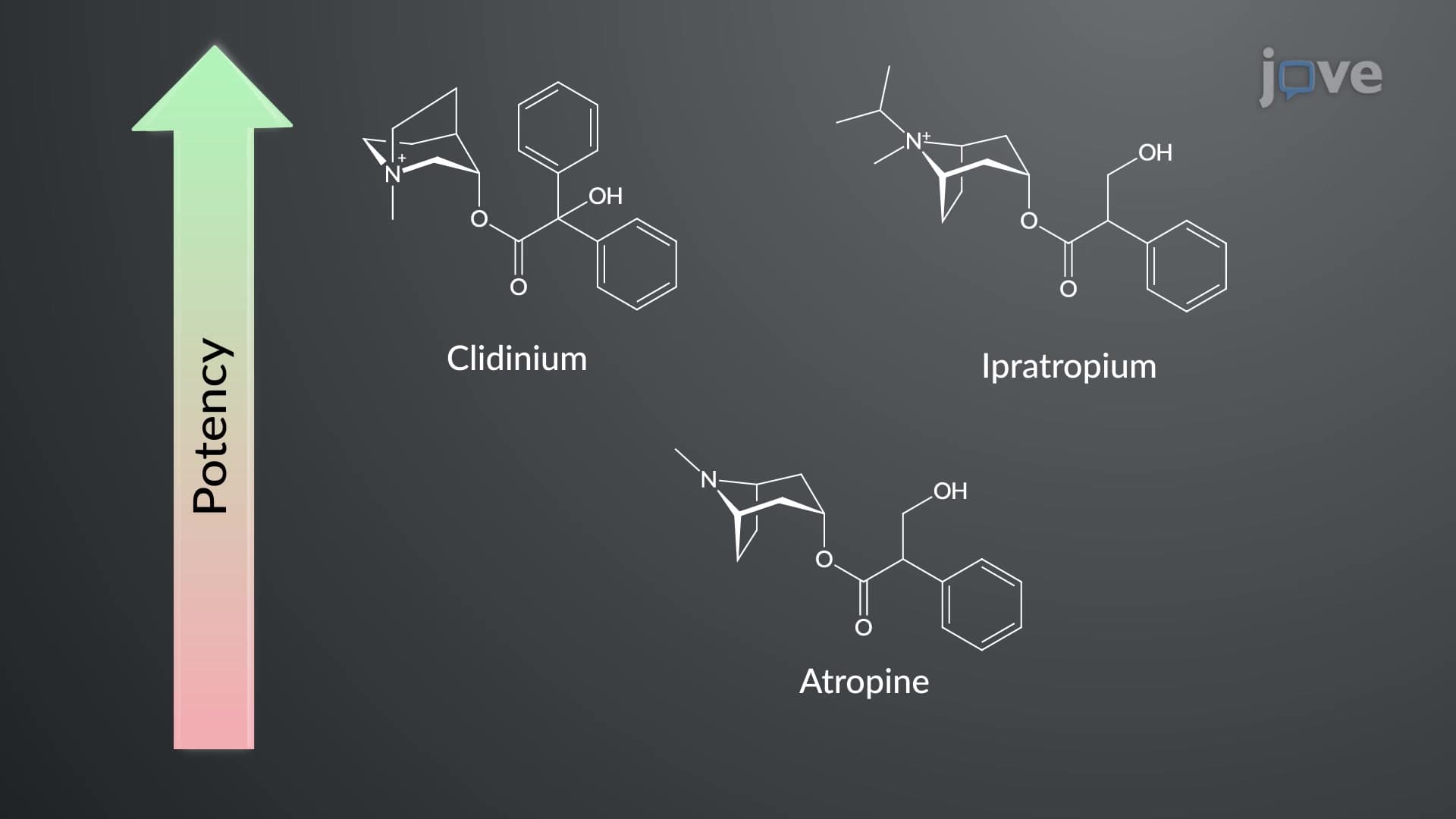
Atropine exemplifies perfect structure-activity relationships in medicinal chemistry. This naturally occurring alkaloid consists of tropine (a bicyclic amino alcohol) esterified to tropic acid (an aromatic carboxylic acid). The resulting molecular framework serves as a template for designing numerous therapeutic agents used in US hospitals, from pre-surgical medications to antidotes for organophosphate poisoning.
The structural similarity between atropine and acetylcholine explains the competitive inhibition mechanism. Both molecules contain a positively charged nitrogen center and an ester linkage, allowing atropine to bind muscarinic receptors without triggering cellular responses. This concept frequently appears on college organic chemistry exams and USMLE Step 1 questions.
Modern pharmaceutical development relies heavily on understanding how molecular modifications affect biological activity. Cholinergic antagonists chemistry and structure explained principles reveal that most effective antimuscarinics share common structural features: an ester functional group, a basic amine (typically tertiary or quaternary), and a two-to-four carbon spacer chain connecting these elements.
Research demonstrates that incorporating aromatic rings, cyclic structures, or hydroxyl groups in the acyl portion significantly enhances antimuscarinic potency. For example, scopolamine (used in motion sickness patches available at US pharmacies) contains additional ring structures that increase its central nervous system penetration compared to atropine.
The importance of molecular chirality becomes evident when examining atropine's stereoisomers. The naturally occurring L-(-) isomer exhibits 100-fold greater pharmacological activity than the D-(+) form, highlighting how three-dimensional molecular arrangement affects drug efficacy. However, since atropine racemizes rapidly in solution, pharmaceutical preparations contain equal mixtures of both isomers.
This stereochemical concept proves essential for students taking organic chemistry courses at institutions like UCLA, Stanford, or MIT, where understanding chirality's impact on biological systems represents a fundamental learning objective. The principle also appears prominently in pharmacy school curricula and medical school pharmacology courses across the United States.
Related Micro-courses