Loading subject page…


291,075 views


Video Summary: Units and Standards of Measurement Explained
Ever wonder why a GPS can pinpoint your location anywhere in the world with incredible precision? Units and standards of measurement make this possible by providing a universal language that connects scientists, engineers, and everyday technology users across the globe. Without standardized units, NASA's Mars rover missions would be impossible, and something as simple as buying gasoline would become chaotic. The International System of Units (SI) serves as this global foundation, built on seven base quantities that allow us to describe everything from the speed of a Formula 1 race car to the mass of a molecule. Watch the full video on JoVE Coach to master this concept with expert-led visuals and step-by-step explanations.
Units and standards of measurement form the backbone of scientific communication, engineering precision, and everyday commerce. A physical quantity represents any measurable aspect of the natural world-from the distance between atoms to the speed of light traveling through space. However, these quantities become meaningful only when expressed with standardized units that everyone understands and accepts.
Consider the catastrophic consequences when measurement standards fail. In 1999, NASA's Mars Climate Orbiter disintegrated in the Martian atmosphere because Lockheed Martin engineers used English units while NASA used metric units. This $125 million mistake highlights why the scientific community relies on the International System of Units (SI) as the global standard.
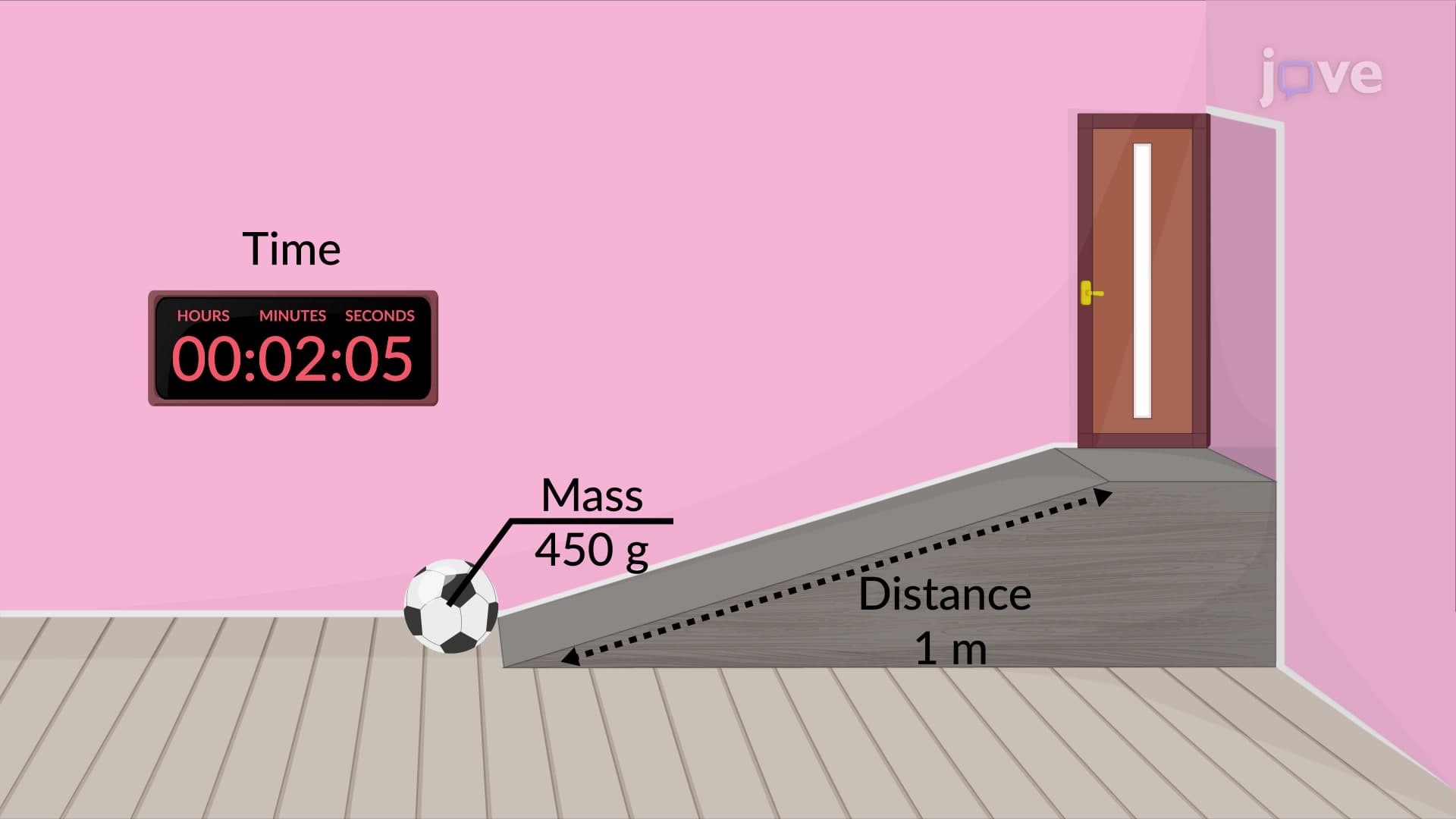
The International System of Units establishes seven fundamental base quantities that serve as building blocks for all other measurements. These include length (meter), mass (kilogram), time (second), electric current (ampere), temperature (kelvin), amount of substance (mole), and luminous intensity (candela). Each base unit undergoes precise definition using physical constants or reproducible phenomena, ensuring consistency across laboratories worldwide.
For example, the meter-originally defined as one ten-millionth of the distance from Earth's equator to the North Pole-now relies on the speed of light in a vacuum. This redefinition, implemented in 1983, provides unprecedented accuracy for applications ranging from GPS satellites to fiber-optic communications.
American industries depend heavily on standardized measurements for safety, quality control, and international trade. The pharmaceutical industry uses precise mass measurements in milligrams when manufacturing medications, where even tiny variations could prove dangerous. Construction companies rely on standardized length measurements to ensure bridges, skyscrapers, and tunnels meet safety specifications. The automotive industry uses standardized units for fuel efficiency ratings (miles per gallon), safety testing, and emissions standards.
High school students encounter measurement concepts in AP Physics, AP Chemistry, and standardized tests like the SAT Subject Tests. College undergraduates studying pre-med, engineering, or sciences must master unit conversions and dimensional analysis for the MCAT, where physics problems frequently test measurement understanding. Engineering students preparing for fundamentals exams (FE) need solid grounding in SI units and conversion factors to succeed in thermodynamics, mechanics, and electrical engineering problems.
Related Micro-courses