Loading subject page…


1,049 views


Video Summary: Sources of Self Esteem Ii Explained
Did you know that praising a student for solving a challenging calculus problem can boost their confidence far beyond mathematics? Sources of Self Esteem II reveals how performance feedback-both positive and negative-fundamentally shapes how we view ourselves. When a McDonald's employee successfully handles a difficult customer complaint, they're not just solving a workplace problem; they're building efficacy-based self-esteem that impacts their overall well-being. Watch the full video on JoVE Coach to master this concept with expert-led visuals and step-by-step explanations.
Sources of Self Esteem II centers on a fundamental psychological principle: our self-worth is significantly shaped by how we interpret feedback about our performance. Unlike basic self-esteem concepts that focus on general self-regard, this framework emphasizes the dynamic relationship between our actions, the feedback we receive, and our evolving sense of capability.
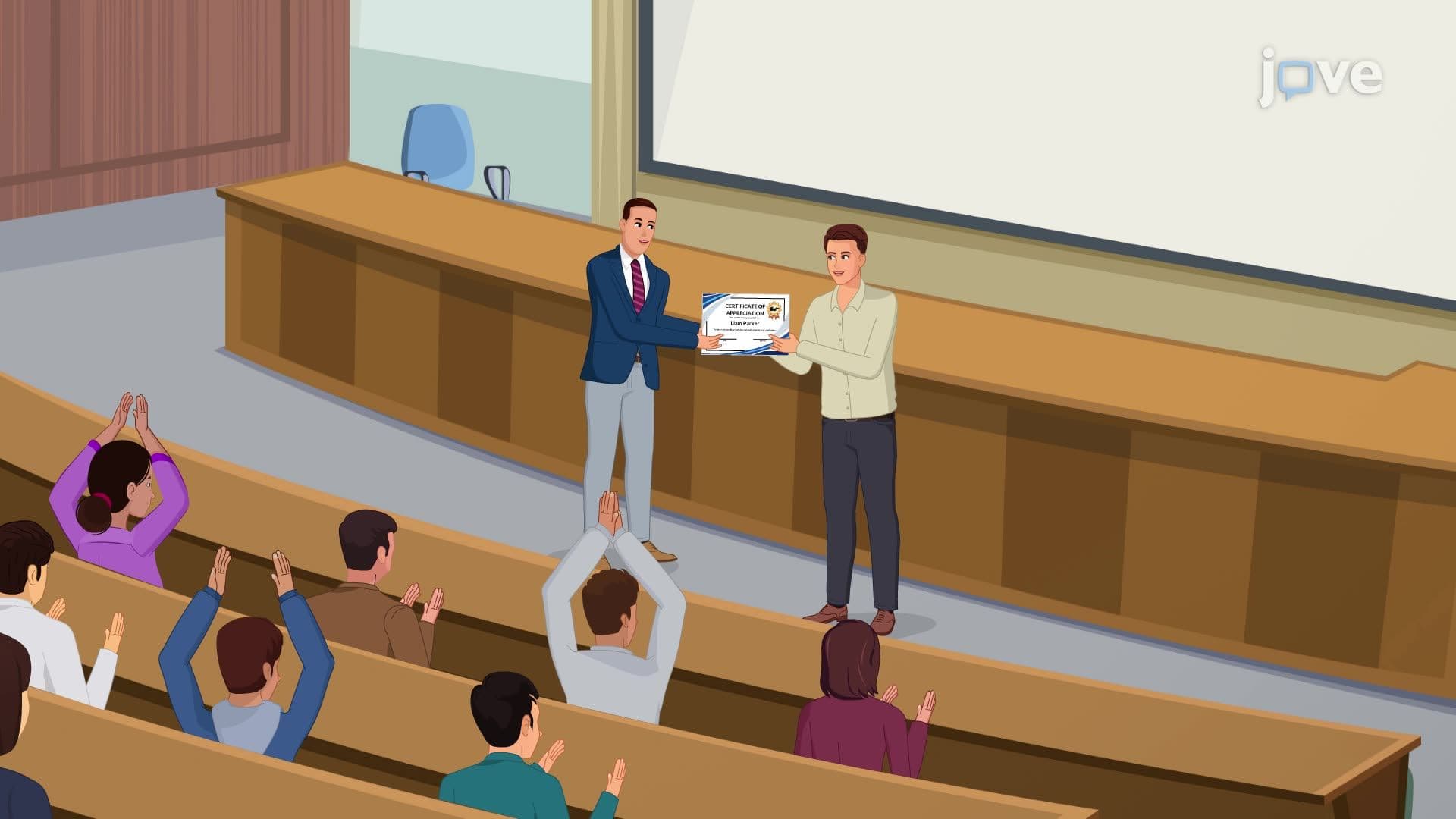
Performance feedback operates as a continuous loop in our psychological development. When students receive recognition for academic achievements-whether solving AP Calculus problems or presenting research in biology class-they internalize messages about their competence. This process extends beyond school environments into workplace settings, where employees who successfully navigate challenging situations, such as nurses managing complex patient care or retail workers resolving customer disputes, experience measurable increases in self-efficacy.
The relationship between efficacy and control represents a cornerstone of psychological well-being. Research consistently demonstrates that individuals who perceive themselves as capable agents-people who can successfully achieve goals and overcome obstacles-show better mental health outcomes and greater resilience to stress.
This principle appears frequently in standardized testing contexts. Students preparing for the SAT or ACT who experience incremental successes in practice sessions develop confidence that extends beyond test performance. Similarly, pre-med students tackling MCAT preparation often find that mastering challenging chemistry or biology concepts builds not just academic competence but overall self-assurance.
The neurological basis for this connection involves dopamine pathways that reinforce successful behaviors. When we accomplish tasks, our brains release chemicals that create positive associations with effort and achievement, establishing patterns that support future success.
Individuals in different social positions develop varying strategies for building self-esteem. Those in low-power positions-such as entry-level employees, students in competitive academic environments, or individuals from marginalized communities-often face limited opportunities for demonstrating competence in traditional ways.
However, research reveals remarkable adaptability in human psychology. These individuals frequently transform routine tasks into competence-building opportunities. A hospital orderly who organizes supplies efficiently, a fast-food worker who masters complex order systems, or a student who excels in extracurricular activities despite academic struggles-all demonstrate this adaptive capacity.
This adaptation strategy proves particularly relevant for students preparing for competitive programs. Pre-nursing students working toward NCLEX success, or those preparing for HESI A2 exams, often build confidence through mastering foundational skills before tackling more complex material.
Education serves as one of the most powerful mechanisms for developing lasting self-esteem. The structured nature of academic environments provides consistent opportunities for feedback, goal-setting, and competence development. Students who engage actively in learning-whether in high school AP courses or college-level psychology classes-develop metacognitive skills that support lifelong confidence.
The benefits extend beyond academic achievement. Educational experiences teach individuals how to process feedback constructively, set realistic goals, and persist through challenges. These skills prove invaluable in professional settings, relationships, and personal development throughout adulthood.
Related Micro-courses