Loading subject page…

- Social Psychology
- Self Interaction
- Self-Regulation
Micro-course: Self-Interaction
1,049 views
Learn key concepts and earn your certificate.











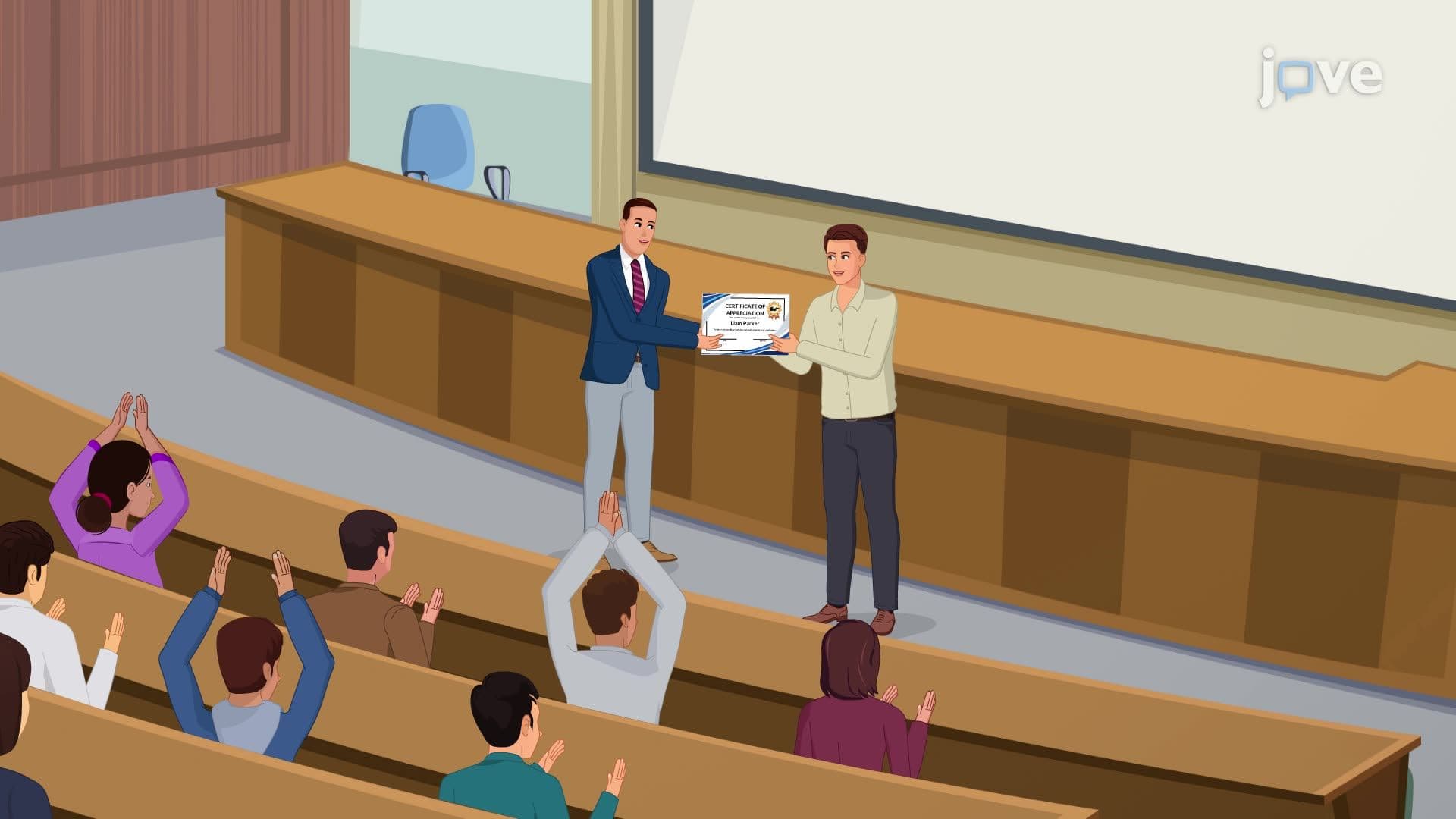

Self-Regulation


00:00
01:25
Video Summary: What Is Self Regulation
Ever wonder why you can resist checking your phone during an important AP exam but find yourself scrolling endlessly after a stressful day at school? Self regulation refers to our ability to control thoughts, emotions, and behaviors to achieve goals and maintain social standards. Research shows that willpower operates like a muscle-it can become fatigued from overuse, explaining why American students often struggle with late-night study sessions after a day of resisting distractions. Watch the full video on JoVE Coach to master this concept with expert-led visuals and step-by-step explanations.
- Understand what is self regulation and how it functions as a psychological mechanism for controlling thoughts, emotions, and behaviors
- Identify the key components of Muraven and Baumeister's self-control theory, including the limited resource model
- Analyze how self-regulation draws from a single mental reservoir that can become depleted through use
- Compare individuals who view willpower as unlimited versus those who see it as easily depleted
- Evaluate real-world examples of self-regulation in academic, social, and personal contexts
- Apply self-regulation principles to improve study habits and academic performance
- Recognize the muscle-like properties of willpower and strategies for recovery
- Explore the relationship between self-control exertion and subsequent behavioral choices
Understanding Self Regulation: The Foundation of Goal Achievement
Self regulation represents one of psychology's most crucial concepts for academic and personal success. This cognitive ability allows individuals to override immediate impulses in favor of long-term goals, whether that's studying for the SAT instead of watching Netflix or choosing a healthy lunch over fast food. The self regulation definition encompasses the conscious control of thoughts, emotions, and behaviors to align with personal values and societal expectations.
The Limited Resource Theory: Your Mental Battery
Muraven and Baumeister's groundbreaking research revealed that self-control operates as a finite resource. This self regulation concept suggests that all acts of willpower-from resisting the urge to text during class to forcing yourself to complete calculus homework-draw from the same mental reservoir. Students preparing for AP Psychology exams should understand this theory's two core principles: the common resource pool and the muscle-like depletion effect.
Consider a typical American high school student's day. After spending mental energy resisting social media during morning classes, they may find it harder to stick to their evening study schedule. This phenomenon, known as ego depletion, explains why many students experience afternoon motivation crashes despite maintaining strong morning discipline.
Practical Applications in Academic Settings
Understanding self regulation in detail proves invaluable for academic success. Students taking the MCAT or preparing for college entrance exams can apply these principles by strategically planning their study sessions. Rather than attempting marathon study sessions that deplete willpower reserves, successful students break challenging tasks into manageable segments with recovery periods.
Research from Stanford University demonstrates that students who understand willpower's renewable nature-viewing it as expandable rather than fixed-show better academic persistence. This mindset shift proves particularly beneficial for pre-med students facing rigorous course loads or nursing students preparing for the NCLEX examination.
Recovery and Restoration Strategies
The muscle metaphor extends to recovery mechanisms. Just as physical muscles require rest and nutrition, mental willpower benefits from restoration activities. American college students report improved self-regulation after adequate sleep, meditation, or engaging in enjoyable activities that don't require conscious control.
Frequently Asked Questions
Self regulation is the ability to control thoughts, emotions, and behaviors to achieve goals and maintain appropriate social conduct. It's crucial for academic success because it enables students to resist distractions, persist through challenging coursework, and maintain consistent study habits essential for exams like the SAT, AP tests, or college finals.
AP Psychology frequently tests self-regulation through multiple-choice questions about willpower theories and free-response questions requiring analysis of self-control scenarios. Students must understand Baumeister's research, ego depletion effects, and practical applications like study strategies. The concept often appears alongside topics like motivation, personality, and cognitive psychology.
MCAT preparation requires sustained self-control over months of intensive study, making ego depletion a significant challenge. Students often struggle with maintaining focus during long practice sessions, resisting social activities, and managing test anxiety. Understanding willpower as renewable helps pre-med students develop sustainable study schedules and stress management techniques.
Students can enhance academic performance by recognizing willpower limitations and planning accordingly. This includes scheduling difficult tasks when mental energy is highest, taking strategic breaks to restore self-control, and using implementation intentions like "If I feel like checking social media during study time, then I will put my phone in another room."
Self regulation concepts are highly accessible to high school students because they relate directly to everyday experiences like homework completion, social interactions, and goal pursuit. The basic principles require no advanced psychology background, making this topic ideal for introductory psychology courses and personal development applications.
Focus on understanding real-world applications and connecting theory to personal experiences. Create flashcards for key terms like ego depletion and implementation intentions. Practice explaining Baumeister's research using concrete examples. Review case studies showing self-regulation in academic, athletic, and social contexts relevant to American student life.
Students should investigate related concepts like intrinsic motivation, goal-setting theory, and cognitive behavioral strategies. Topics such as mindfulness, habit formation, and executive function provide deeper understanding of self-control mechanisms. These connections prove valuable for advanced psychology courses and professional applications in education or healthcare.
Related Micro-courses

6 Concepts

18 Concepts

25 Concepts