Loading subject page…

- Social Psychology
- Social Perception
- Halo Effect
Micro-course: Social Perception
1,741 views
Learn key concepts and earn your certificate.











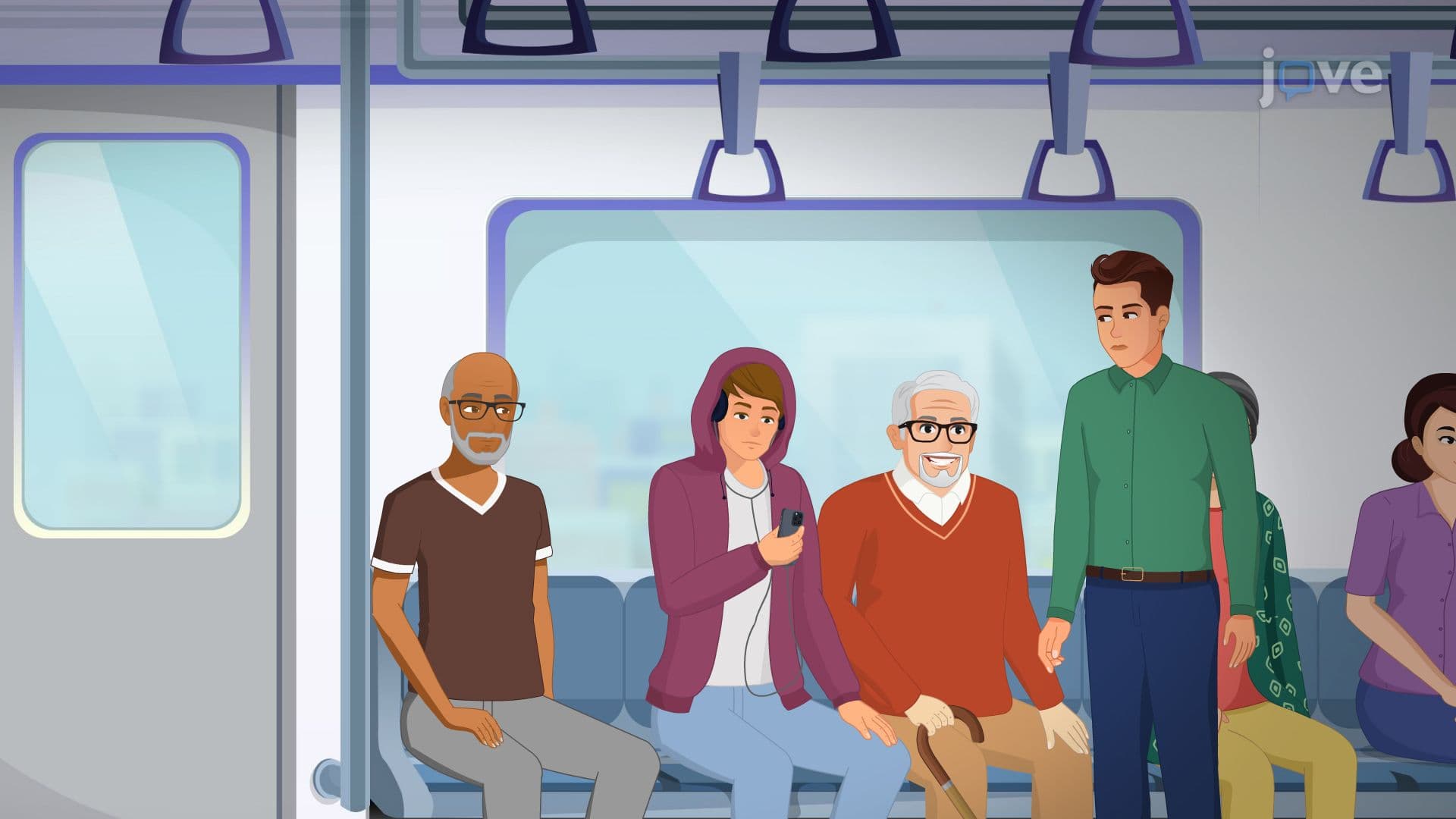


Halo Effect


00:00
01:27
Video Summary: What Is Halo Effect
Why do attractive people often seem more intelligent in job interviews? The halo effect creates this illusion by making one positive trait influence how we judge all other characteristics of a person. When hiring managers at Fortune 500 companies rate good-looking candidates as more competent without evidence, they're experiencing this powerful cognitive bias. Understanding what is halo effect reveals how first impressions can mislead us in academics, relationships, and professional settings. Watch the full video on JoVE Coach to master this concept with expert-led visuals and step-by-step explanations.
- Understand what is halo effect and how it creates systematic biases in human judgment across personal and professional contexts
- Identify real-world examples of halo effect in hiring decisions, academic evaluations, and social interactions
- Analyze the relationship between perceived warmth and competence in forming first impressions of others
- Compare how superficial traits like attractiveness influence deeper character assessments without supporting evidence
- Evaluate the impact of halo effect on fairness in educational grading, workplace promotions, and legal proceedings
- Apply strategies to recognize and minimize halo effect bias in your own decision-making processes
- Recognize how this cognitive bias affects academic performance evaluations and standardized test interpretations
- Explore connections between halo effect and other psychological phenomena like confirmation bias and stereotype formation
Understanding What is Halo Effect in Psychology
The halo effect definition describes a fundamental cognitive bias where our overall impression of someone dramatically influences how we evaluate their specific qualities. This psychological phenomenon occurs when positive feelings about one characteristic create a "halo" that brightens our perception of unrelated traits. Psychologist Edward Thorndike first identified this bias in 1920 while studying how military officers rated their subordinates, discovering that high ratings in one area consistently predicted high ratings across all other areas, regardless of actual performance.
The Science Behind Halo Effect Formation
Research in social psychology reveals that halo effect overview centers on two primary dimensions: warmth and competence. People make snap judgments about friendliness and trustworthiness (warmth) within milliseconds of meeting someone, then use these impressions to infer intelligence and ability (competence). Studies at Harvard Business School show that job candidates deemed "warm" during interviews receive 23% higher salary offers, even when qualifications remain identical. This halo effect concept explains why charismatic CEOs of failing companies often maintain investor confidence longer than their performance warrants.
Real-World Applications in American Institutions
The halo effect basics manifest prominently in educational settings across the United States. Teachers unconsciously grade essays more favorably when they believe the student is generally well-behaved, a phenomenon documented in studies across California school districts. Similarly, attractive defendants in US criminal courts receive lighter sentences than their less attractive counterparts, controlling for crime severity and criminal history. College admissions officers at prestigious universities like Stanford and Yale have reported that compelling personal statements influence their perception of academic transcripts, even when test scores remain constant.
Implications for Students and Future Professionals
Understanding what is halo effect in detail proves crucial for academic success and career advancement. On standardized tests like the SAT and AP Psychology exams, students encounter questions about cognitive biases and their social implications. Medical students preparing for the MCAT must recognize how physician bias affects patient care, while business students learn how halo effect distorts performance reviews and hiring decisions. This halo effect study guide knowledge helps future professionals make more objective evaluations and recognize when they might be influenced by irrelevant positive or negative impressions.
Frequently Asked Questions
The halo effect occurs when one positive trait influences our judgment of all other characteristics in a person. Unlike confirmation bias which seeks supporting evidence, halo effect automatically transfers positive feelings from one quality to unrelated areas without any logical connection.
AP Psychology frequently tests cognitive bias recognition through scenario-based questions. Students must identify when positive impressions inappropriately influence evaluations, such as teachers rating popular students higher academically. Understanding this concept helps distinguish it from similar biases like fundamental attribution error.
Yes, MCAT psychology sections commonly include halo effect scenarios in healthcare contexts. Test-takers analyze situations where patient attractiveness or charisma inappropriately influences diagnostic decisions or treatment quality, requiring recognition of bias in clinical judgment.
Tech companies like Google and Apple have documented cases where employees perceived as innovative receive higher performance ratings across all categories, including unrelated skills like teamwork or punctuality. This demonstrates how one standout quality creates an unrealistic positive impression of overall competence.
Not at all - halo effect builds on familiar experiences like celebrity endorsements and first impressions. High school students already notice how popular classmates seem to excel at everything, making this concept highly relatable and accessible for grades 9-12.
Create personal examples from your school or community where one positive trait influenced broader perceptions. Practice identifying halo effect in case studies by asking "Is this judgment based on relevant evidence or transferred positive feelings?" This active application strengthens retention better than rote memorization.
Halo effect links directly to social psychology concepts like impression formation, attribution theory, and stereotype development. It also connects to behavioral economics through consumer decision-making and organizational psychology via performance evaluation bias, creating rich connections for advanced study.
Yes, structured evaluation methods help minimize bias. Create specific criteria lists before making judgments, seek contradictory evidence about positive impressions, and delay important decisions when possible. These strategies prove especially valuable for college applications, job interviews, and leadership roles.
Related Micro-courses

25 Concepts

6 Concepts

9 Concepts