Loading video…


 8 Concepts
 59K views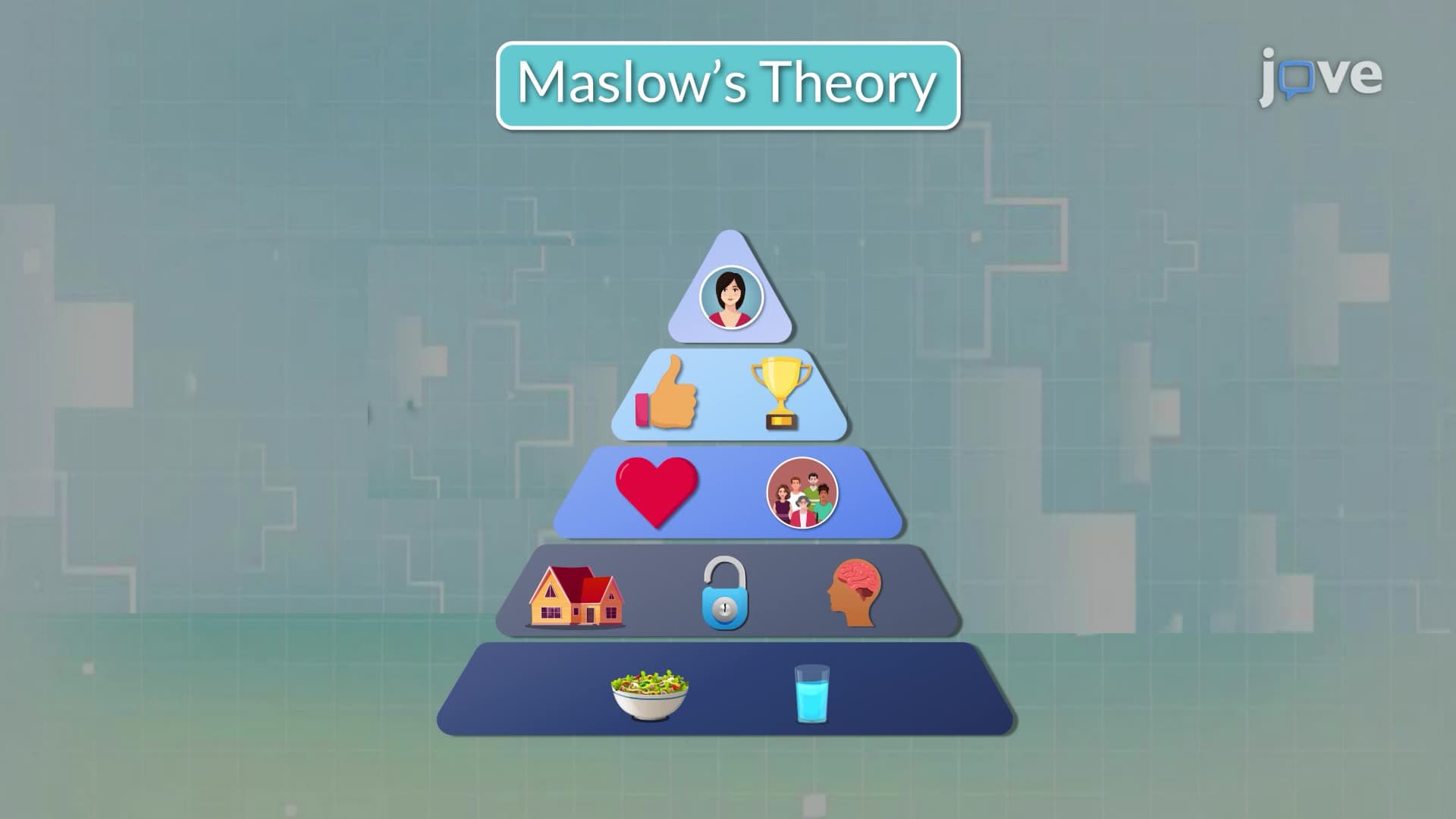

Video Summary: Maslows Theory of Basic Explained
Ever wonder why you can't focus on friendship goals when you're starving? Maslow's theory of basic needs explains this perfectly through its famous pyramid structure, where physiological needs like food and shelter must be met before pursuing higher aspirations. Consider how college students struggling financially often prioritize part-time jobs over social activities-this demonstrates the hierarchical nature of human motivation that Maslow's Theory of Basic Explained reveals. Watch the full video on JoVE Coach to master this concept with expert-led visuals and step-by-step explanations.
Maslow's Theory of Basic Explained provides a comprehensive framework for understanding human motivation through a five-tier pyramid of needs. Developed by psychologist Abraham Maslow in 1943, this theory suggests that people are motivated by increasingly complex needs, starting with basic survival requirements and progressing toward personal fulfillment and growth.
The foundation of Maslow's pyramid consists of physiological needs-the biological requirements for survival including food, water, shelter, sleep, and oxygen. These represent the most fundamental human drives. For instance, a homeless teenager in Los Angeles will prioritize finding food and shelter over joining school clubs or pursuing romantic relationships.
Safety and security needs form the second level, encompassing both physical safety (protection from violence, natural disasters) and emotional security (job security, financial stability, health insurance). Many American families experienced this acutely during the 2020 pandemic, when job security became paramount over social gatherings or personal hobbies.
The third tier addresses love and belonging needs-the human requirement for social connections, intimate relationships, family bonds, and community acceptance. This explains why college freshmen often join fraternities, sororities, or student organizations to fulfill their need for belonging in a new environment.
Esteem needs occupy the fourth level, divided into self-esteem (confidence, achievement, independence) and recognition from others (respect, status, reputation). High school students competing for valedictorian status or college athletes pursuing athletic scholarships exemplify this drive for achievement and recognition.
At the pyramid's apex lies self-actualization-the realization of one's full potential, creativity, and personal growth. Maslow believed only about 2% of people achieve this level, represented by individuals like innovators, artists, and humanitarian leaders who transcend personal limitations to contribute meaningfully to society.
Understanding maslow's theory of basic concepts proves invaluable for AP Psychology students, pre-med students studying for the MCAT, and nursing students preparing for the NCLEX. The theory frequently appears in multiple-choice questions asking students to identify which level of need drives specific behaviors or to analyze case studies through Maslow's framework. Business students also encounter this theory in organizational behavior courses when studying employee motivation and management strategies.
Related Micro-courses