Loading video…


 21 Concepts
 2M views

Video Summary: What Is Cohesion
Ever wonder why water beads up on a freshly waxed car instead of spreading out? This fascinating phenomenon demonstrates cohesion in biology and chemistry, the tendency for identical molecules to stick together through intermolecular forces. Water's unique polar structure allows it to form hydrogen bonds, creating the surface tension that lets insects walk on pond surfaces across American wetlands. Understanding molecular cohesion helps explain everything from dewdrop formation to how plants transport water from roots to leaves. Watch the full video on JoVE Coach to master this concept with expert-led visuals and step-by-step explanations.
Cohesion biology chemistry represents one of the fundamental intermolecular forces that shapes our physical world. At its core, cohesion describes the attractive forces between identical molecules that cause them to cluster together rather than disperse randomly. This phenomenon occurs because molecules with similar chemical properties and charge distributions experience mutual attraction through various intermolecular forces, including hydrogen bonding, van der Waals forces, and dipole-dipole interactions.
Water serves as the classic example for understanding molecular cohesion explained biology concepts. Each water molecule (H2O) possesses a bent molecular geometry that creates a dipole moment, the oxygen atom carries a partial negative charge while the hydrogen atoms carry partial positive charges. This polarity enables adjacent water molecules to form hydrogen bonds, with each molecule capable of forming up to four such bonds with its neighbors.
The most visible manifestation of water cohesion surface tension occurs at the interface between water and air. Surface molecules experience asymmetric attractive forces, they're pulled downward and sideways by neighboring water molecules but experience minimal attraction to gas molecules above. This creates an inward pull that generates surface tension, effectively creating an elastic-like "skin" on the water's surface.
This phenomenon explains why insects like water striders can walk across pond surfaces in ecosystems throughout the United States, from the Florida Everglades to Minnesota's Boundary Waters. The cohesive forces are strong enough to support small masses without breaking, demonstrating how like molecule cohesion creates measurable physical properties.
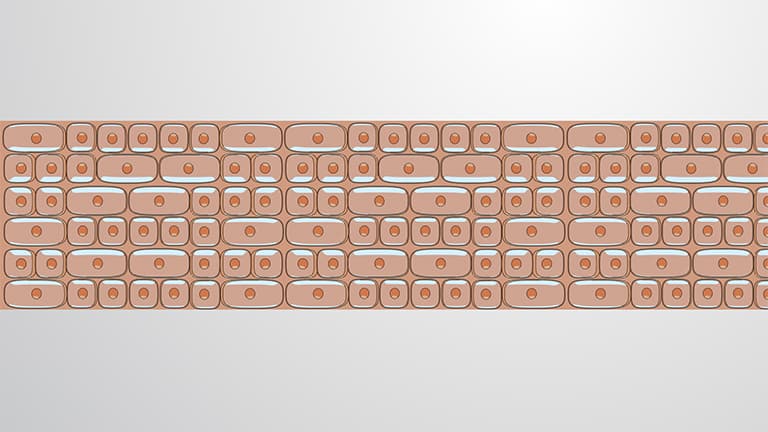
In biological systems, cohesion xylem transport represents a critical mechanism for plant survival. The cohesion-tension theory explains how water moves from roots to leaves in tall trees like California's giant sequoias or Georgia's towering pines. Water molecules in xylem vessels form continuous columns held together by hydrogen bonds. As transpiration removes water from leaves, the cohesive forces transmit tension downward, pulling water upward against gravity, sometimes over 100 meters high.
Students preparing for AP Biology, college general chemistry courses, or pre-medical programs encounter cohesion concepts regularly. The MCAT frequently tests understanding of intermolecular forces, while AP Chemistry exams include questions about hydrogen bonding and its effects on physical properties. Water droplet cohesion serves as a common laboratory observation in high school and undergraduate chemistry courses across American educational institutions.
Understanding cohesion also connects to broader themes in biochemistry and cell biology. Cell membrane integrity, protein folding, and DNA double helix stability all depend partially on cohesive intermolecular interactions that maintain structural organization within living systems.
Related Micro-courses