Loading subject page…

942,162 views
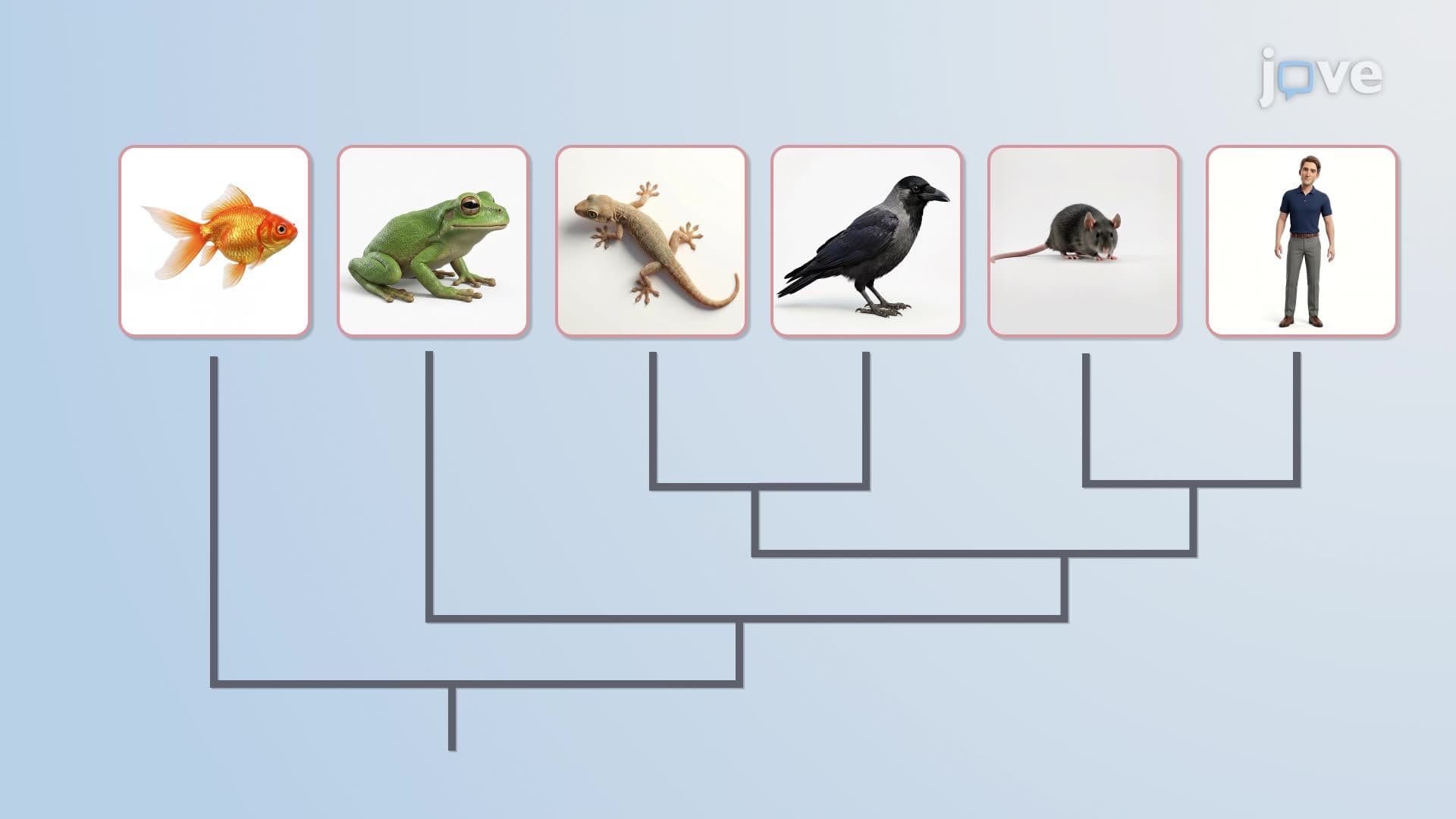

Video Summary: What Is Phylogeny
Did you know that humans share more DNA with bananas than you might expect? Phylogeny biology explained reveals how scientists trace these surprising evolutionary connections between all living organisms. From the California redwoods in Sequoia National Park to the microbes in your gut, what is phylogeny helps us understand how every species connects through shared ancestors. Evolutionary phylogeny explained through tree-like diagrams called phylogenetic trees, showing that even distantly related organisms share common evolutionary origins millions of years ago. Watch the full video on JoVE Coach to master this concept with expert-led visuals and step-by-step explanations.
Phylogeny biology explained centers on mapping the evolutionary history and relationships between organisms. Unlike traditional classification based on physical appearance, phylogeny reveals the true evolutionary story written in DNA, fossils, and shared characteristics. This field has revolutionized our understanding of life's diversity, from the smallest bacteria to the largest mammals roaming North American national parks.
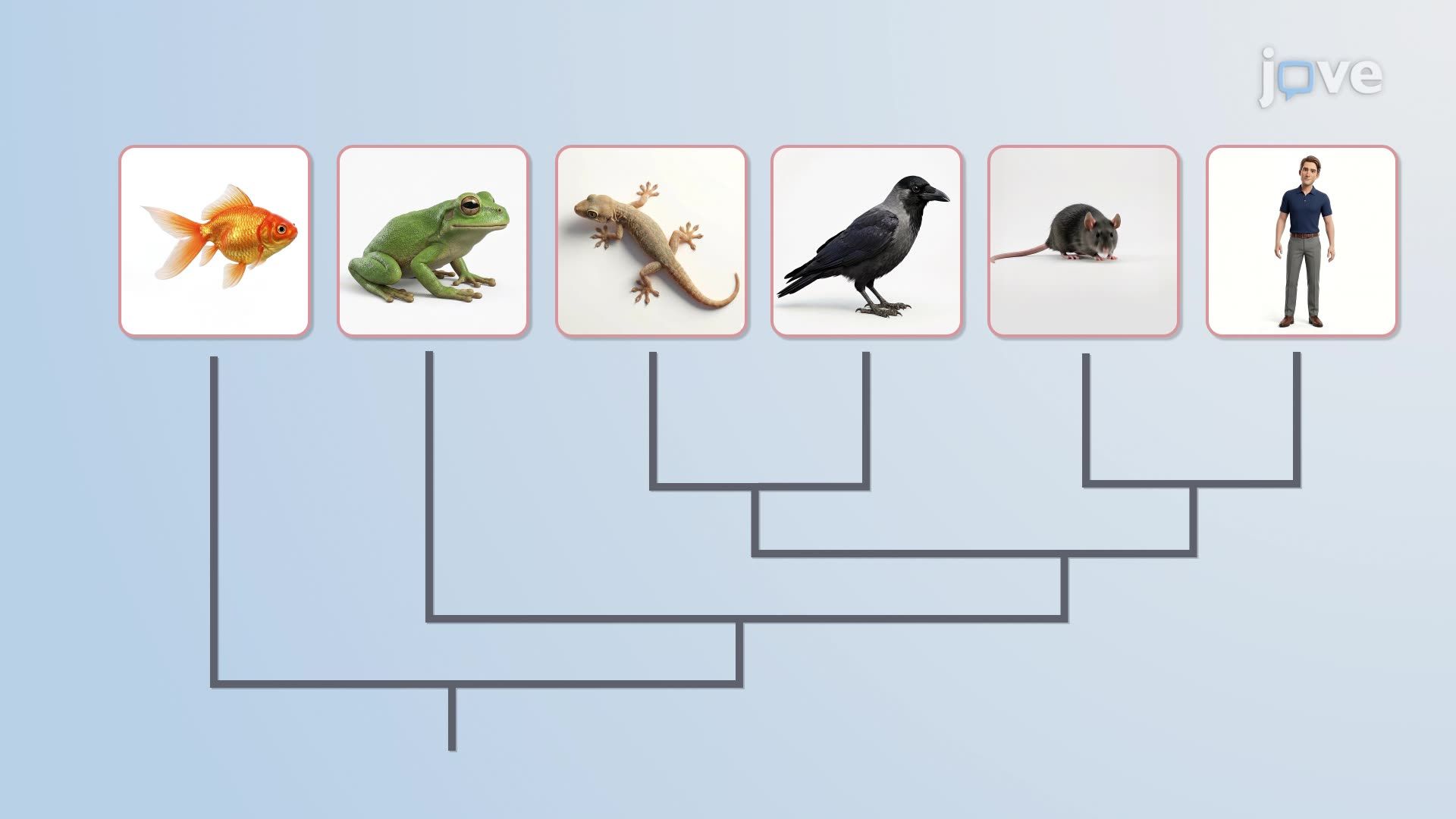
Evolutionary phylogeny explained through phylogenetic trees provides a visual roadmap of life's history. These branching diagrams contain specific components that tell different parts of the evolutionary story. The tips represent modern species or extinct taxa, while branches show evolutionary changes over time. Nodes mark crucial decision points where lineages split, representing common ancestors that gave rise to different evolutionary paths.
Consider the relationship between American robins and Tyrannosaurus rex-both share a common ancestor that possessed early feather-like structures. This connection, revealed through phylogenetic analysis, demonstrates how molecular phylogeny biology helps us understand surprising evolutionary relationships that physical appearance alone would never suggest.
What is phylogeny in biology becomes clearer when examining sister taxa-species that share immediate common ancestors. For example, genetic analysis reveals that hippopotamuses are the closest living relatives to whales, despite their vastly different lifestyles. This relationship exemplifies how clade monophyletic groups form natural evolutionary units.
Understanding sister taxa relationships proves crucial for students preparing for AP Biology exams, where questions often test the ability to interpret phylogenetic tree cladogram data. College students studying for MCAT biology sections frequently encounter questions requiring analysis of evolutionary relationships rather than memorization of taxonomic classifications.
Molecular phylogeny biology drives cutting-edge research in American universities and medical centers. Stanford University researchers use phylogenetic analysis to track virus evolution during outbreaks, while conservation biologists at the Smithsonian Institution apply these principles to protect endangered species in US national parks. Medical schools incorporate phylogenetic thinking into understanding antibiotic resistance patterns and vaccine development strategies.
Related Micro-courses