Loading subject page…


2,330 views

Video Summary: What are First Order Systems
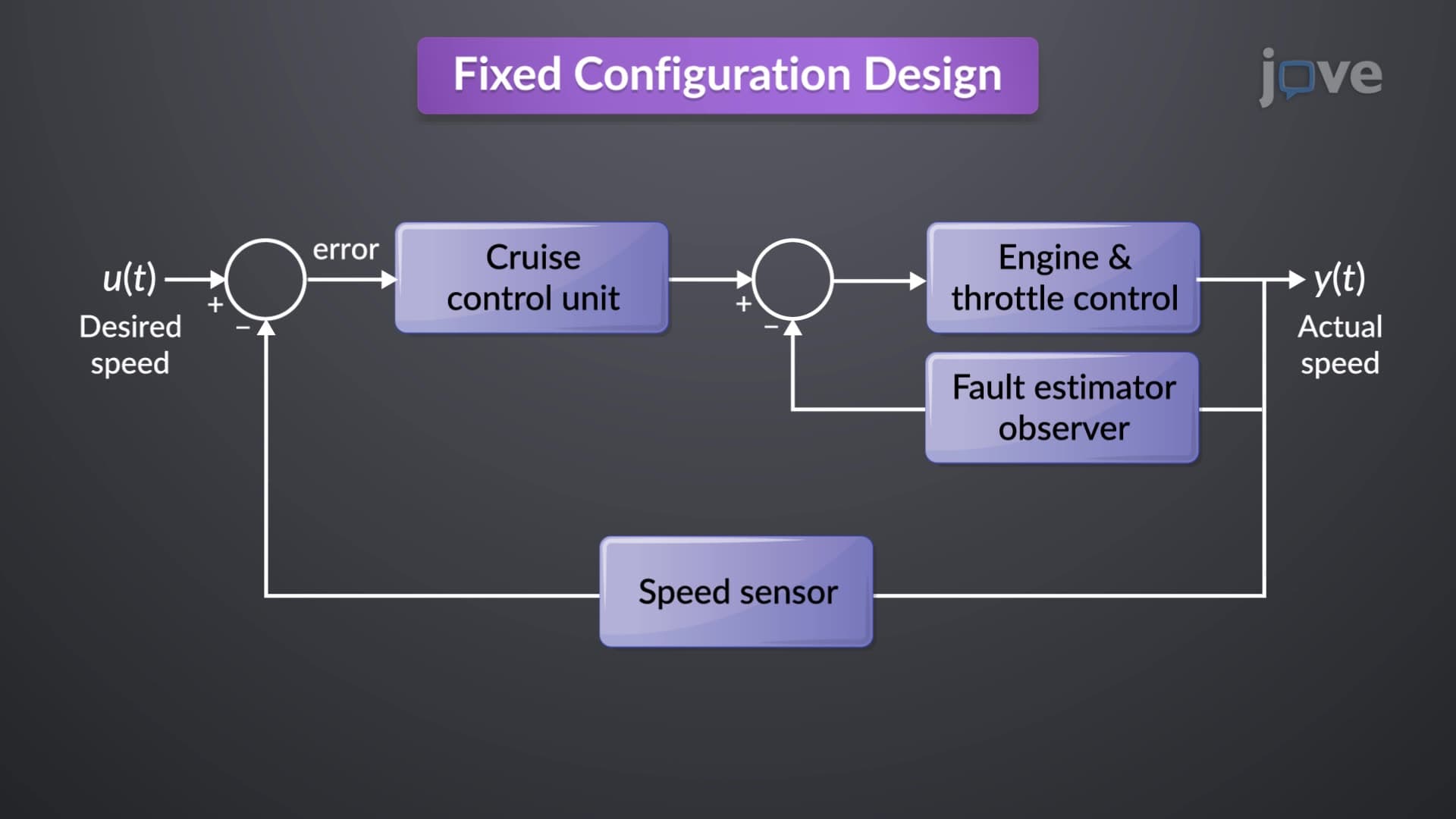
Ever wondered how your smartphone's battery charging follows a predictable curve, or why your car's cruise control responds smoothly to speed changes? Second order systems i, which build upon first-order system principles, govern these everyday technologies through mathematical relationships that determine system behavior. Unlike the simple exponential responses seen in basic RC circuits, What are First Order Systems reveals the foundation for understanding more complex system dynamics used in automotive control systems across Detroit's manufacturing plants. Watch the full video on JoVE Coach to master this concept with expert-led visuals and step-by-step explanations.
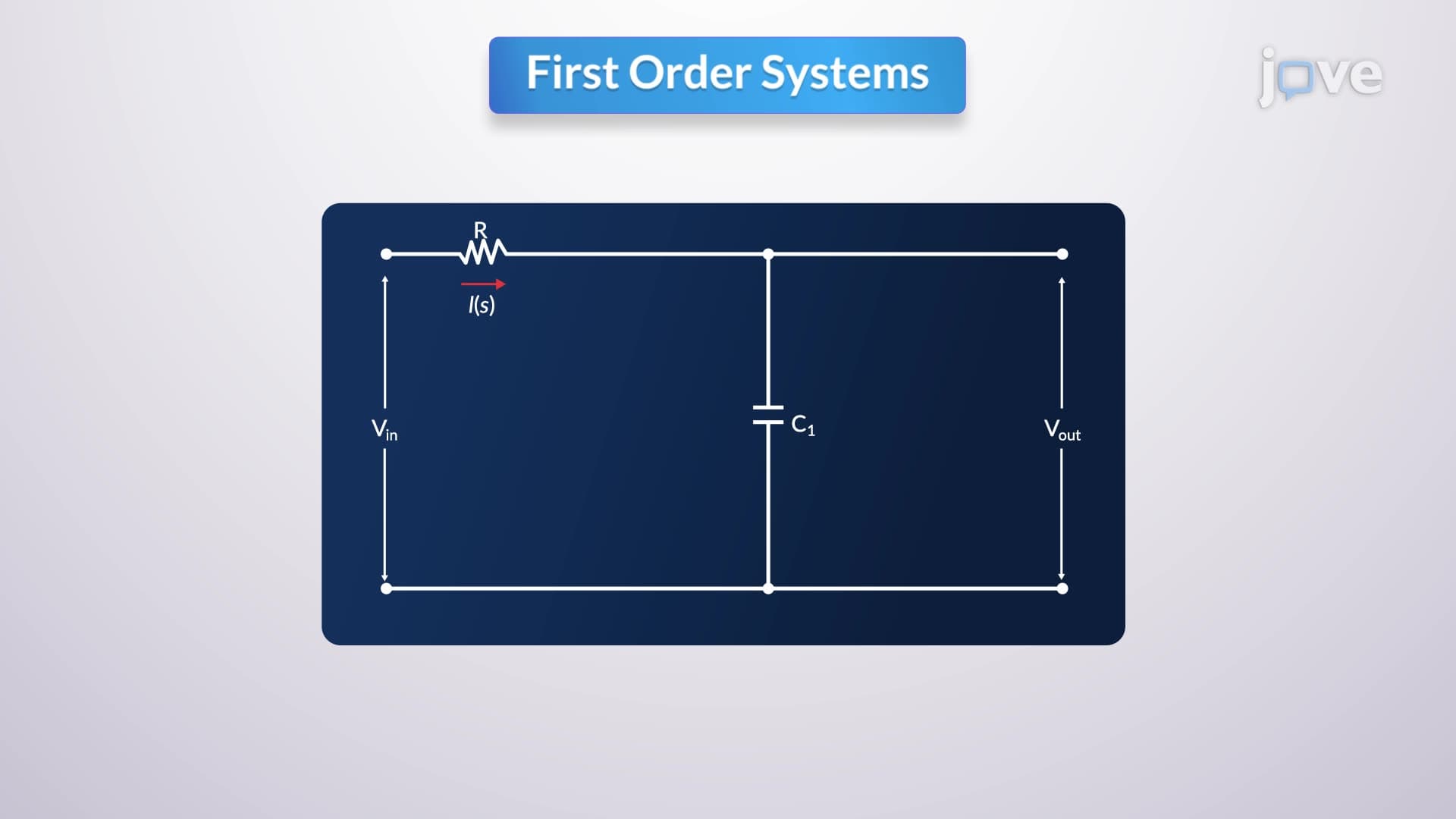
What are First Order Systems represents a fundamental class of linear time-invariant systems characterized by first-order differential equations. These systems exhibit exponential responses to standard inputs, making them essential building blocks for understanding more complex engineering systems. The mathematical representation involves a single energy storage element, such as a capacitor in an electrical circuit or thermal mass in a heating system.
The transfer function of a first-order system takes the standard form H(s) = K/(τs + 1), where K represents the system gain and τ denotes the time constant. This mathematical relationship appears frequently on AP Physics examinations and college-level control systems courses, particularly when analyzing RC circuits or thermal response problems.
The time constant τ serves as the most critical parameter defining first-order system behavior. When subjected to a unit-step input, the system reaches 63.2% of its final value at time t = τ. This percentage represents a mathematical constant (1 - 1/e) that appears consistently across different first-order systems, from electronic circuits in Silicon Valley semiconductor manufacturing to thermal control systems in NASA's Kennedy Space Center facilities.
Students preparing for SAT Subject Tests in Physics or college midterm examinations should memorize this 63.2% criterion, as it frequently appears in multiple-choice questions. The system achieves 95% of its final value at approximately 3τ and 99% at 5τ, providing practical benchmarks for engineering design specifications.
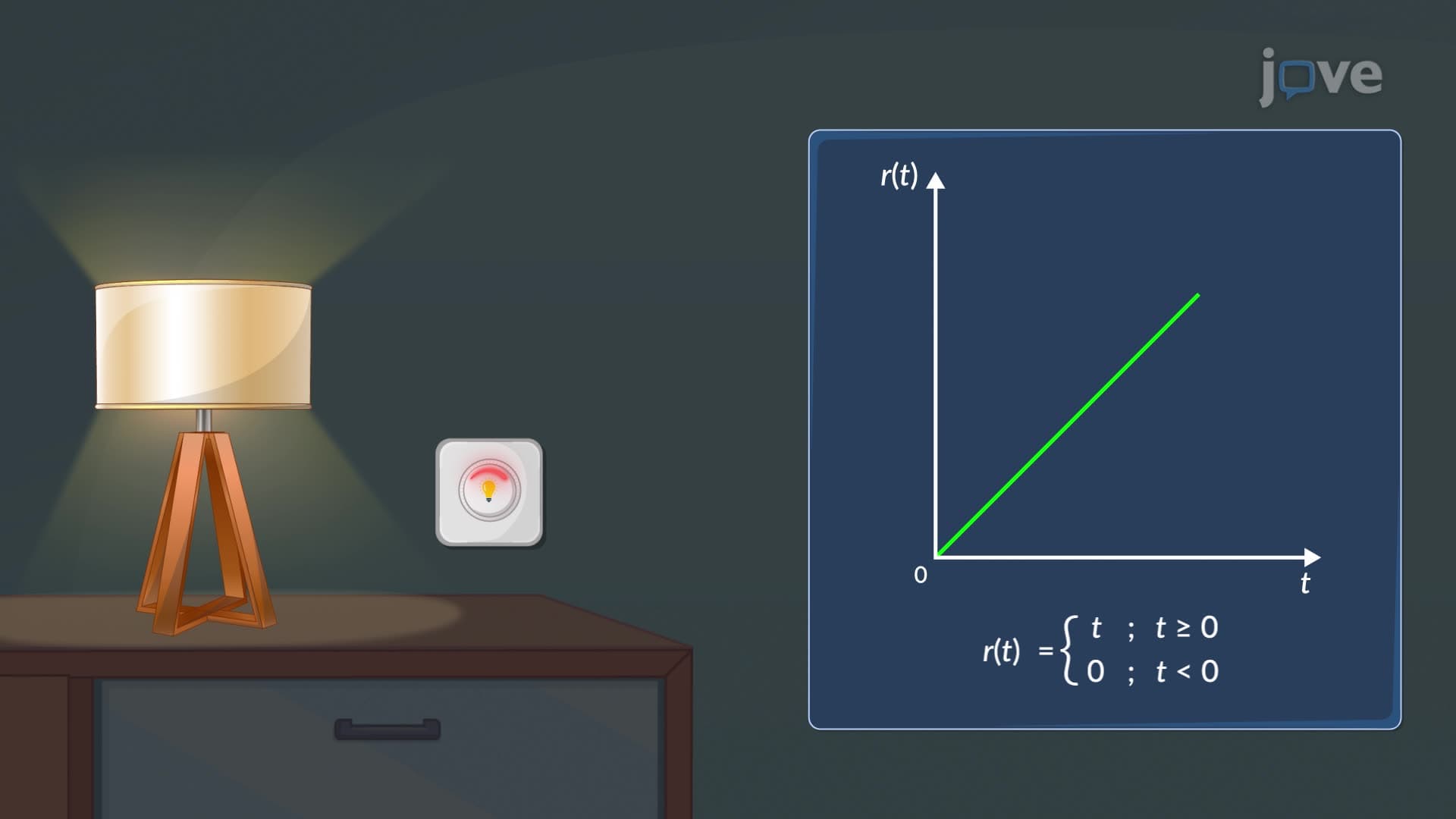
First-order systems respond predictably to three standard test inputs. For unit-step inputs, the output follows y(t) = K(1 - e^(-t/τ)), demonstrating the characteristic exponential approach to steady-state. Unit-ramp inputs produce both a tracking component and a steady-state error equal to the time constant, highlighting the fundamental limitation of first-order systems in following continuously changing inputs.
The unit-impulse response reveals the system's natural behavior as y(t) = (K/τ)e^(-t/τ). This exponential decay pattern appears in numerous real-world applications, from the discharge characteristics of automotive ignition capacitors manufactured by Delphi Technologies to the thermal cooling profiles of Intel processors during power management cycles.
First-order system principles find extensive application in American industrial and consumer technologies. Boeing's aircraft environmental control systems utilize first-order thermal dynamics for cabin temperature regulation. Similarly, General Electric's power grid stabilization systems employ first-order filtering to smooth voltage fluctuations across regional electrical networks.
Understanding these concepts prepares students for advanced coursework in control systems engineering, where first-order system analysis provides the foundation for designing proportional-integral-derivative (PID) controllers used throughout American manufacturing, from Ford's assembly lines in Dearborn, Michigan, to pharmaceutical production facilities operated by Pfizer in Groton, Connecticut.
Related Micro-courses