Loading video…


 19 Concepts
 17.1K views

Video Summary: What Is New Product Development Process
Companies that fail to innovate lose market share-78% of Fortune 500 revenue now comes from products launched in the last decade. The new product development process provides a systematic framework for transforming ideas into profitable market offerings. Apple's methodical approach to launching the iPhone exemplifies how structured NPD drives competitive advantage and revenue growth. Understanding What is New Product Development Process enables executives to minimize risk while maximizing innovation ROI. Watch the full video on JoVE Coach to master this concept with expert-led visuals and step-by-step explanations.
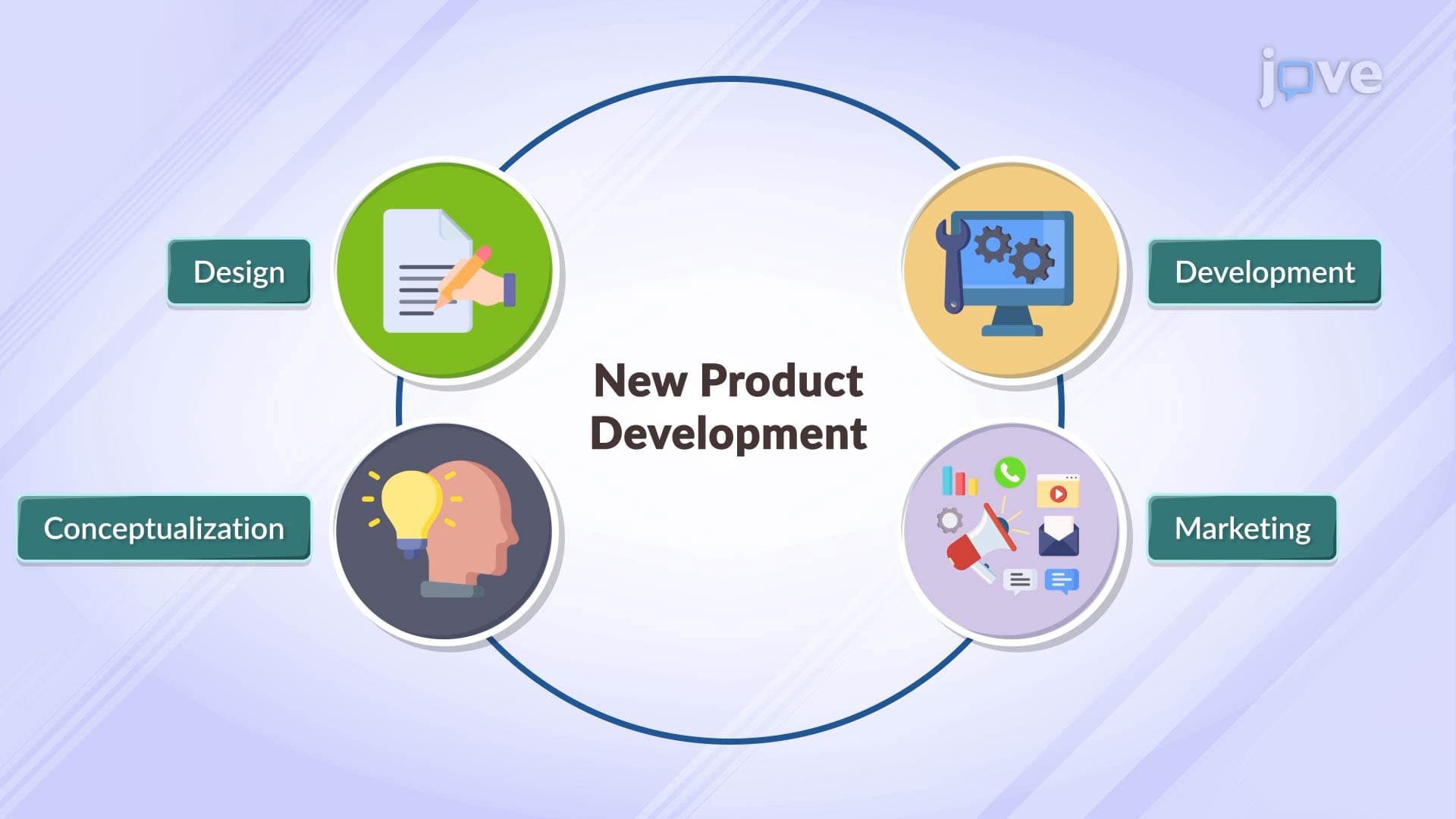
Every successful product launch begins with disciplined execution of the new product development process. This systematic approach transforms raw innovation into market-ready offerings while minimizing the 95% failure rate that plagues unstructured product launches. Senior executives rely on NPD frameworks to allocate R&D budgets, assess portfolio risk, and drive sustainable growth in competitive markets.
The NPD journey starts with systematic idea generation, where companies leverage both internal innovation labs and external market intelligence. Microsoft's approach exemplifies best practices-combining customer advisory boards, partner feedback, and competitive analysis to generate high-potential concepts. Professional idea screening follows rigorous criteria: market size, technical feasibility, strategic fit, and resource requirements.
Concept development transforms promising ideas into testable value propositions. Netflix's original content strategy demonstrates this phase's importance-extensive audience research and prototype testing before full production investment. Marketing strategy development runs parallel, establishing positioning frameworks, pricing models, and go-to-market plans that align with corporate objectives and competitive dynamics.
The business analysis phase separates professional NPD from amateur product launches. Finance teams conduct comprehensive feasibility studies including total addressable market (TAM) analysis, customer acquisition cost (CAC) modeling, and lifetime value (LTV) projections. Amazon's rigorous "working backwards" methodology exemplifies this analytical rigor-starting with press releases and FAQ documents before any development begins.
Development and test marketing phases validate assumptions through real market exposure. Tesla's limited regional rollouts for new features demonstrate how controlled testing reduces full-scale launch risks. The final commercialization phase coordinates manufacturing scale-up, distribution channel activation, and integrated marketing campaigns-requiring seamless cross-functional execution to achieve revenue and market share objectives.
Related Micro-courses