Loading subject page…


84,701 views

Video Summary: What Is Oxygen Transport
Every breath you take delivers life-sustaining oxygen to billions of cells throughout your body, but how does this vital gas actually travel from your lungs to tissues like your brain and muscles? Oxygen transport blood biology reveals an intricate system where 98% of oxygen hitches a ride on hemoglobin molecules within red blood cells, while specialized mechanisms ensure efficient delivery and release at target tissues. Consider how altitude training helps athletes like those preparing for competitions in Denver, Colorado-their bodies adapt by optimizing what is oxygen transport in the blood to maximize performance despite lower oxygen levels. Watch the full video on JoVE Coach to master this concept with expert-led visuals and step-by-step explanations.
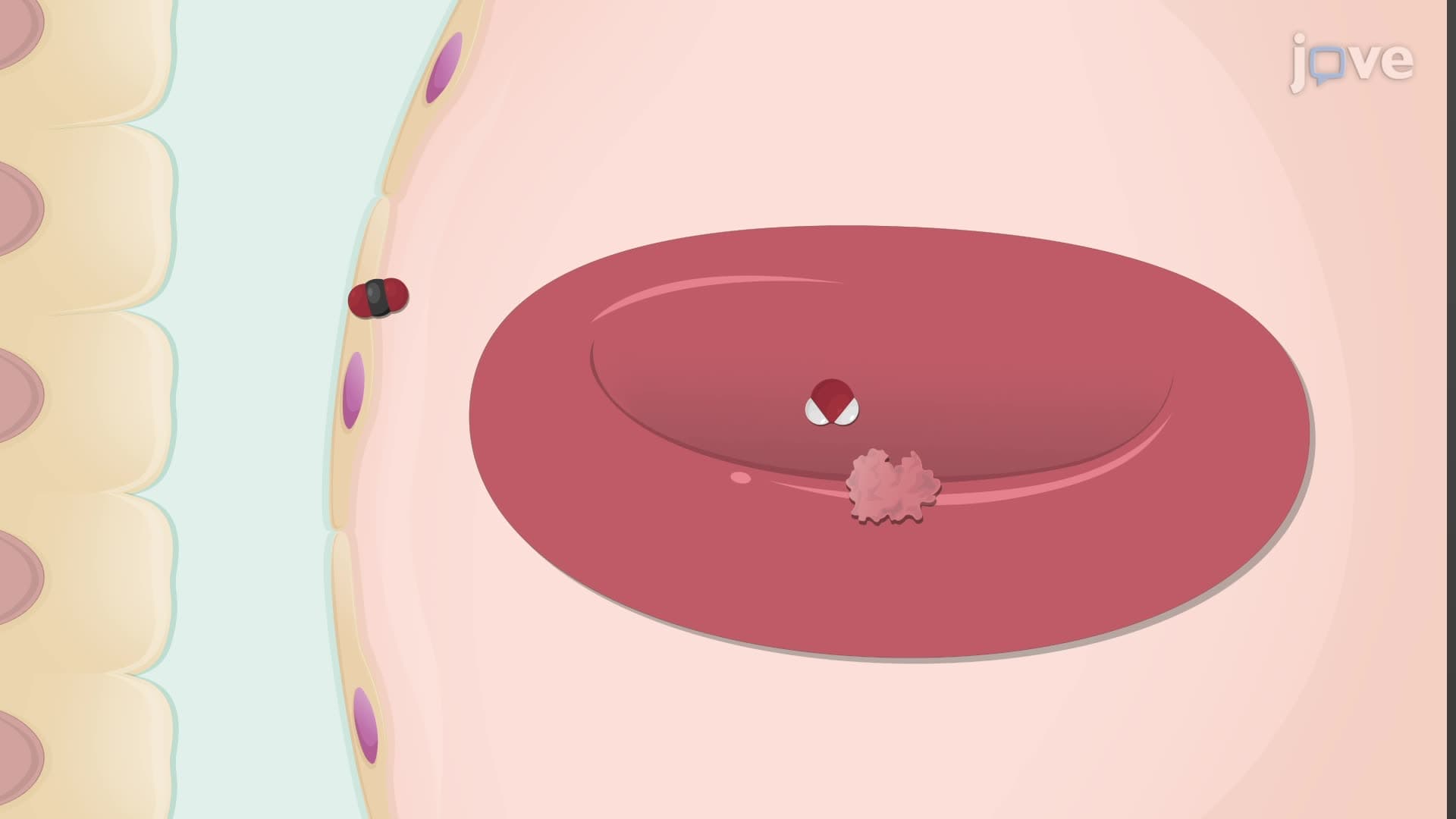
Oxygen transport blood biology forms the cornerstone of human physiology, enabling every cell in your body to perform essential metabolic functions. This sophisticated system primarily relies on hemoglobin-mediated transport, with approximately 98.5% of oxygen bound to hemoglobin molecules and only 1.5% dissolved directly in blood plasma. This distribution exists because oxygen exhibits remarkably low solubility in aqueous solutions-a critical limitation that evolution solved through the development of specialized oxygen-carrying proteins.
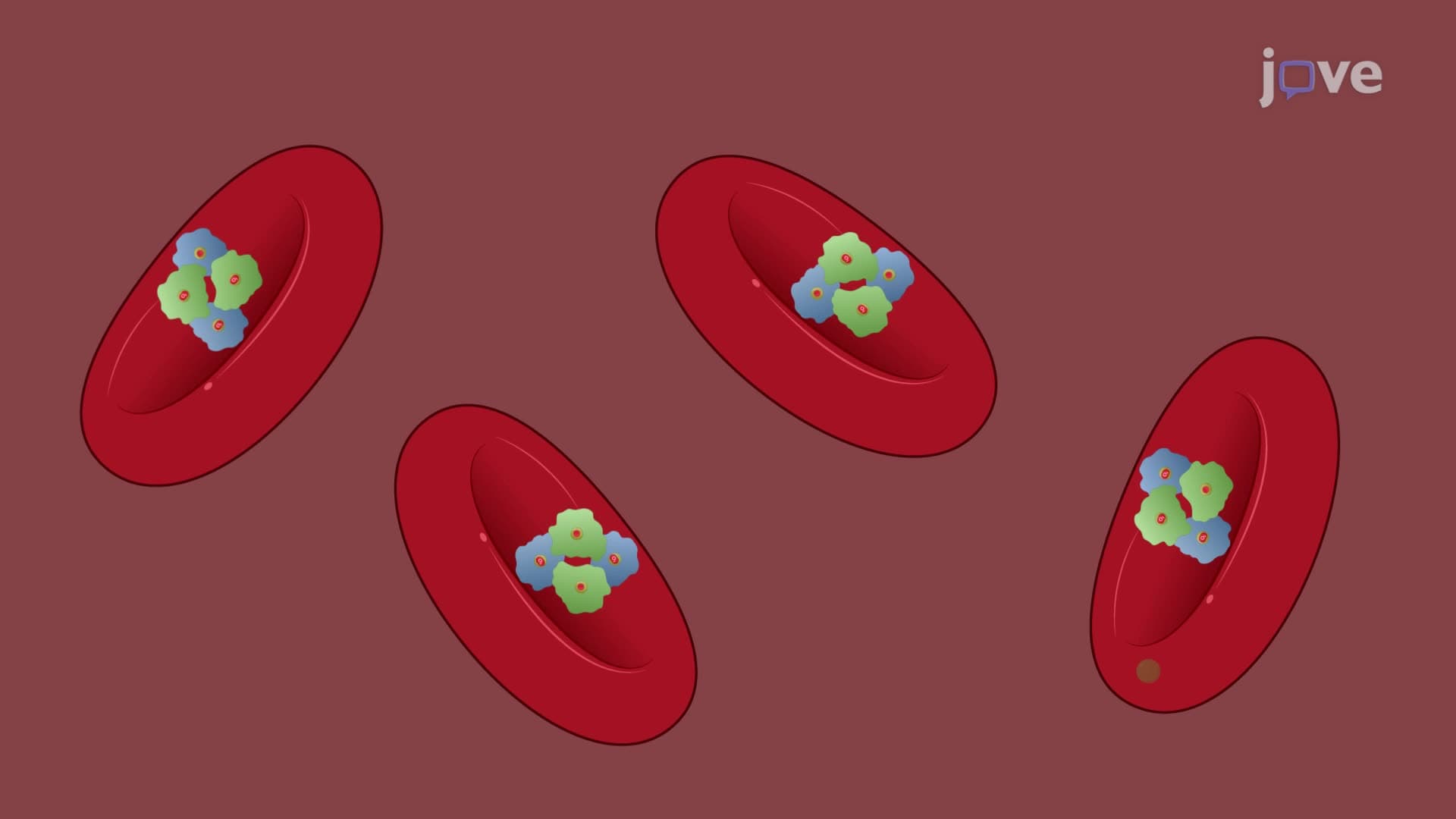
Hemoglobin's quaternary structure consists of four polypeptide chains (two alpha and two beta subunits), each containing an iron-rich heme group capable of reversibly binding one oxygen molecule. This cooperative binding mechanism means that hemoglobin oxygen saturation exhibits a sigmoidal curve rather than a linear relationship with partial pressure of oxygen (PO2). In healthy individuals at sea level, arterial blood achieves 98% oxygen saturation, while venous blood typically maintains 75% saturation-a difference that reflects efficient oxygen delivery to metabolically active tissues.
The oxyhemoglobin dissociation curve serves as a crucial tool for understanding how oxygen is transported in blood under various physiological conditions. Students preparing for the MCAT or AP Biology exam should focus on the curve's S-shaped appearance, which reflects hemoglobin's cooperative binding properties. The P50 value (partial pressure at 50% saturation) typically occurs around 26-27 mmHg under standard conditions, providing a reference point for clinical assessments.
Rightward shifts in this curve indicate decreased oxygen affinity, promoting oxygen release at tissues. The Bohr effect exemplifies this phenomenon: as metabolically active tissues produce CO2 and lower local pH, hemoglobin's affinity for oxygen decreases, facilitating oxygen unloading precisely where it's needed most. This mechanism proves especially relevant in clinical scenarios-emergency medicine physicians at institutions like Johns Hopkins Hospital routinely consider these principles when treating patients with respiratory distress or carbon monoxide poisoning.
Understanding PO2 oxygen transport relationships becomes crucial for healthcare professionals. For instance, pulse oximetry readings in US hospitals rely on these principles to non-invasively monitor patient oxygen saturation. During the COVID-19 pandemic, healthcare workers at facilities like Cleveland Clinic used oxygen saturation monitoring as a key indicator of disease severity, demonstrating the practical importance of these physiological concepts.
College students studying for nursing entrance exams like the HESI A2 or TEAS should pay particular attention to factors affecting the dissociation curve. Temperature increases (hyperthermia), elevated CO2 levels (hypercapnia), decreased pH (acidosis), and increased 2,3-bisphosphoglycerate concentrations all shift the curve rightward, enhancing oxygen release at peripheral tissues.
Related Micro-courses