Loading subject page…

2,001,369 views


Video Summary: What are Ionic Bonds
Ever wonder why table salt dissolves so easily in water but forms crystals when dry? Ionic bonds explained reveals the fascinating electrostatic forces between charged particles that create compounds like sodium chloride (NaCl). These noncovalent attractions hold oppositely charged ions together through electron transfer, where atoms like sodium donate electrons to atoms like chlorine. Understanding what are ionic bonds helps explain everything from the formation of road salt used on US highways to the behavior of electrolytes in sports drinks. Watch the full video on JoVE Coach to master this concept with expert-led visuals and step-by-step explanations.
Ionic bonds explained begins with understanding that these are electrostatic attractions between ions with opposite charges. Unlike covalent bonds where electrons are shared, ionic bonds form when one atom completely transfers electrons to another. This fundamental difference creates compounds with unique properties that students encounter on the AP Chemistry exam and in college general chemistry courses.
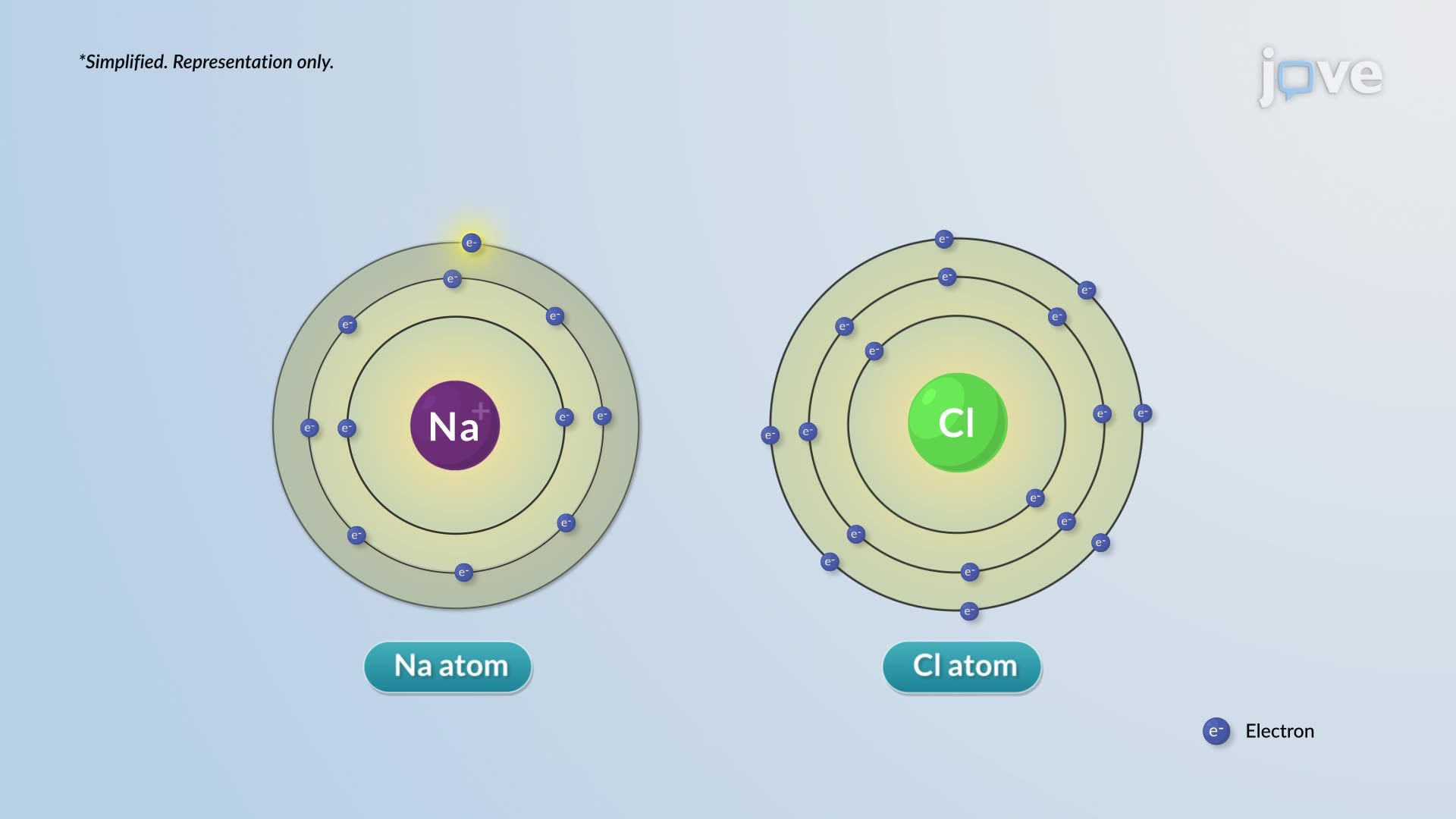
The ionic bond definition chemistry centers on electron transfer between metals and nonmetals. When sodium (Na) encounters chlorine (Cl), sodium's single valence electron transfers to chlorine's outer shell. This creates a sodium cation (Na+) and chloride anion (Cl-), both achieving stable electron configurations. The resulting cation anion ionic bond demonstrates how atoms seek the stable octet configuration, a concept frequently tested on the SAT Subject Test in Chemistry.
Ionic bond strength varies dramatically based on environmental conditions. In crystalline form, compounds like sodium chloride maintain strong electrostatic attractions, making them stable solids at room temperature. However, electrostatic attraction ionic forces weaken significantly in aqueous solutions. When dissolved in water, polar H2O molecules surround individual ions, effectively separating them and allowing ionic compounds to dissociate. This principle explains why salt dissolves in water but remains solid in dry conditions.
Ionic compound formation occurs throughout everyday American life. Road salt (sodium chloride) prevents ice formation on highways because dissolved ions lower water's freezing point. Sports drinks contain ionic compounds like sodium and potassium chloride to replace electrolytes lost through sweating. In medical settings, IV fluids use ionic solutions to maintain proper electrolyte balance in patients. Understanding these ionic bond examples chemistry helps students connect classroom learning to practical applications they encounter daily.
Students preparing for the MCAT or college chemistry courses should focus on predicting ionic compound formation using periodic trends. Practice identifying which elements form cations versus anions, and understand how ionic radius affects bond strength. Advanced topics include lattice energy calculations and the relationship between ionic character and electronegativity differences, concepts that frequently appear on standardized chemistry exams.
Related Micro-courses