Loading subject page…


2,001,377 views


Video Summary: What Is Adhesion
Ever wonder why water climbs up paper towels or how redwood trees transport water 300 feet high? Adhesion biology chemistry explains this fascinating phenomenon where different types of molecules attract each other through intermolecular forces. In California's Sequoia National Park, towering redwoods rely on adhesion between water molecules and cellulose fibers in their xylem vessels to defy gravity and transport nutrients from roots to canopy. Watch the full video on JoVE Coach to master this concept with expert-led visuals and step-by-step explanations.
Adhesion represents one of nature's most elegant solutions to overcoming physical barriers. Unlike cohesion, which describes attraction between identical molecules, adhesion occurs when different types of molecules experience mutual attraction through intermolecular forces. This fundamental concept bridges physics, chemistry, and biology, making it essential for students preparing for AP Chemistry, AP Biology, and college-level courses.
The strength of adhesive forces depends primarily on molecular polarity and the types of intermolecular forces involved. Hydrogen bonding creates particularly strong adhesive interactions, especially between polar molecules like water and hydroxyl-containing surfaces such as glass or cellulose.
Water glass adhesion provides the clearest demonstration of adhesion principles. When water contacts glass surfaces, polar water molecules form hydrogen bonds with the silanol groups on glass surfaces. These adhesive forces exceed the cohesive forces between water molecules, causing the liquid to "climb" glass walls and form a characteristic concave meniscus.
This phenomenon becomes dramatically apparent in narrow tubes, where capillary action adhesion allows water to rise several centimeters against gravity. The height reached depends on the tube's diameter-narrower tubes enable greater rise due to the increased surface-area-to-volume ratio of adhesive contact points.
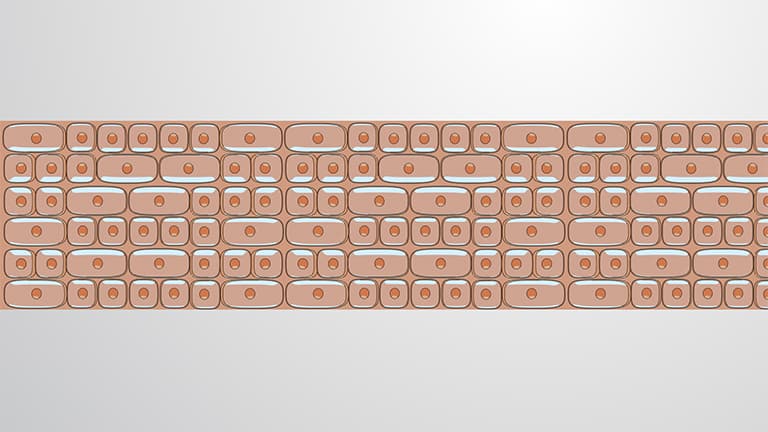
Surface adhesion biology explains critical life processes, particularly in plant physiology. American oak trees, pine forests throughout the Pacific Northwest, and desert cacti all rely on adhesion for survival. Plant xylem vessels, constructed from polar cellulose molecules, create ideal conditions for water transport through adhesive interactions.
The ingenious design of plant vascular systems demonstrates adhesion's power. Xylem diameter decreases toward tree tops, increasing adhesive surface area relative to water volume. This architectural adaptation enables California's coast redwoods to transport water over 350 feet vertically-a feat impossible without strong adhesion intermolecular force interactions.
For students tackling MCAT preparation, understanding adhesion proves crucial for biological passages involving plant transport, kidney function, and lung surfactant behavior. AP Chemistry students encounter adhesion in surface tension problems, while AP Biology emphasizes its role in plant water transport and cellular membrane interactions.
Engineers apply adhesion principles in developing medical devices, creating stronger adhesives, and designing microfluidic systems used in US biotech companies like Abbott and Thermo Fisher Scientific.
Related Micro-courses