Loading subject page…

Micro-course: Musculoskeletal System
665,900 views
Learn key concepts and earn your certificate.

Joints

00:00
01:26
Video Summary: What are Joints
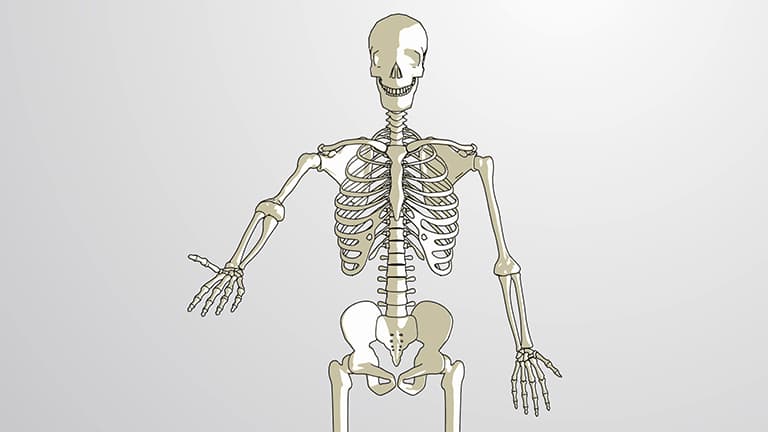
Ever wonder how your shoulder can throw a baseball in any direction while your skull bones stay completely rigid? Joints are the specialized connection points where bones meet in the human body, and they determine whether you can move freely or stay stable. From the immovable sutures protecting your brain to the ball-and-socket joint powering a pitcher's arm at Yankee Stadium, these structures are engineering marvels that balance mobility with stability. The three main types-fibrous, cartilaginous, and synovial joints-each serve unique functions in human movement and protection. Watch the full video on JoVE Coach to master this concept with expert-led visuals and step-by-step explanations.
- Understand what are joints and their fundamental role as articulation points between bones in the skeletal system
- Identify the three main categories of joints: fibrous, cartilaginous, and synovial joints
- Compare the mobility levels of different joint types, from immovable fibrous joints to highly mobile synovial joints
- Analyze the structural components of synovial joints, including articular cartilage, joint capsules, and synovial fluid
- Recognize real-world examples of each joint type, such as skull sutures, intervertebral discs, and shoulder joints
- Evaluate how joint structure directly relates to function in human movement and stability
- Apply knowledge of joint classifications to understand common injuries and medical conditions
- Explore the relationship between joints and surrounding supportive structures like ligaments and muscles
Understanding What are Joints: The Foundation of Human Movement
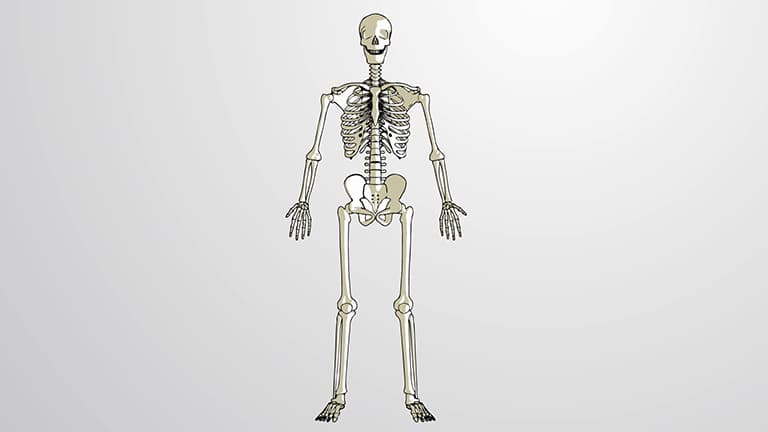
Joints represent one of the most ingenious solutions in human anatomy, serving as the critical interfaces where bones connect to create both stability and movement. These specialized structures have evolved to meet the diverse mechanical demands of the human body, from protecting vital organs to enabling complex athletic performances seen in major league sports across America.
Fibrous Joints: Built for Stability and Protection
Fibrous joints prioritize structural integrity over mobility, making them essential for protecting vital organs and maintaining skeletal framework stability. The most prominent examples are the cranial sutures that protect the brain-these joints use dense fibrous connective tissue to create virtually immovable connections between skull bones. This design proves crucial in contact sports like American football, where players' helmets must protect completely rigid skull structures. Understanding fibrous joints frequently appears on AP Biology exams, particularly when students analyze how structure determines function in biological systems.
Cartilaginous Joints: The Perfect Balance of Strength and Flexibility
Cartilaginous joints achieve remarkable engineering by combining strength with controlled flexibility through fibrocartilage connections. The intervertebral discs of the spine exemplify this design, allowing the back flexibility needed for activities like gymnastics while maintaining the structural support required for weightlifting. These joints prove especially relevant for students studying for the MCAT, as understanding spinal mechanics relates directly to clinical scenarios involving back injuries and treatments commonly discussed in medical school curricula.
Synovial Joints: Masters of Mobility and Precision
Synovial joints represent the pinnacle of joint evolution, enabling the complex movements that define human athleticism and daily activities. The glenohumeral joint of the shoulder demonstrates this sophisticated design through its ball-and-socket structure, where the humerus head articulates within the glenoid cavity. The surrounding joint capsule contains synovial fluid that provides lubrication, while supporting ligaments and rotator cuff muscles create stability during movement. This design enables everything from a tennis serve at the US Open to reaching for objects on high shelves, making synovial joint mechanics a frequent focus in college-level anatomy and physiology courses.
Frequently Asked Questions
A joint is a point of articulation where two or more bones meet and connect in the skeletal system. Joints serve as the mechanical interfaces that either allow movement between bones or hold them rigidly together for stability. The human body contains over 200 joints that work together to enable everything from walking and running to protecting vital organs like the brain and heart.
MCAT questions often focus on synovial joint mechanics, particularly how structure relates to function in clinical scenarios involving joint injuries or diseases like arthritis. AP Biology exams frequently test joint classification and the relationship between joint type and mobility level. Students should be prepared to analyze how fibrous joints provide stability while synovial joints enable complex movements, often through diagram interpretation and comparative analysis questions.
The knee joint (particularly ACL tears in football and basketball), shoulder joints (rotator cuff injuries in baseball), and ankle joints (sprains in soccer and basketball) represent the most frequent sports-related joint injuries in the US. These injuries often involve damage to the supporting structures around synovial joints, including ligaments, tendons, and cartilage. Understanding these injury patterns helps explain why joint stability and mobility must be carefully balanced.
No prior advanced anatomy knowledge is required to master joint classification concepts. High school biology students can successfully learn joint types by focusing on the basic principle that structure determines function. Starting with simple examples like immovable skull joints versus highly mobile shoulder joints provides an excellent foundation for understanding the more complex mechanisms of synovial joint lubrication and cartilaginous joint flexibility.
Focus on mastering synovial joint structure and function, as these appear most frequently on college midterms and finals. Pay particular attention to the roles of synovial fluid, articular cartilage, and joint capsules in enabling smooth movement. Understanding how ligaments and muscles support joint stability while allowing mobility will help you excel on both multiple-choice and essay questions that require explaining joint mechanics.
Joint disorders like arthritis, ACL tears, and rotator cuff injuries represent some of the most common conditions treated by physical therapists, orthopedic surgeons, and sports medicine physicians in the United States. Understanding normal joint function provides the foundation for recognizing pathological changes and developing treatment strategies. This knowledge proves essential for students pursuing healthcare careers and frequently appears on entrance exams like the HESI A2 and TEAS.
Consider studying joint biomechanics and movement analysis, which explores how forces act on joints during different activities. Investigate the relationship between joint health and exercise physiology, particularly how different types of physical activity affect joint maintenance and injury prevention. Students interested in sports medicine or orthopedics should also explore joint development and aging processes, which become increasingly relevant in clinical practice.
Related Micro-courses
6 Concepts
8 Concepts
8 Concepts