Loading…
Loading video…

220,901 views
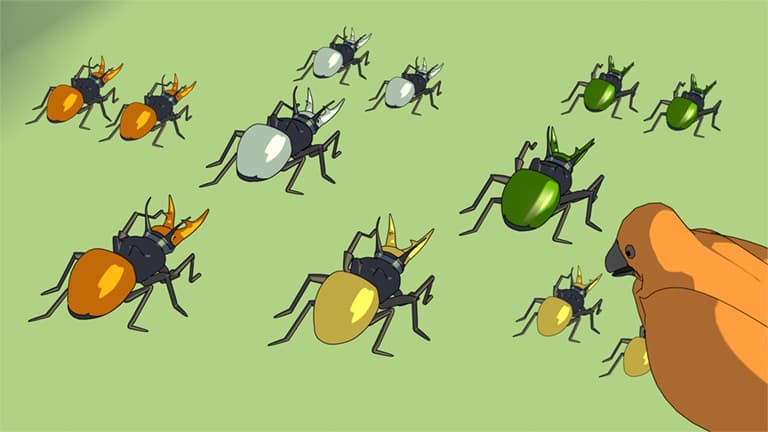
Why do Florida panthers have tan coats while Arctic foxes sport white fur? Natural selection drives these remarkable adaptations by favoring traits that boost survival in specific environments. This evolutionary process operates through three key conditions: genetic variation, heritability, and differential reproductive success. From camouflaged beetles to predator-prey relationships like coyotes hunting birds, natural selection explained reveals how organisms become perfectly matched to their surroundings over generations. Watch the full video on JoVE Coach to master this concept with expert-led visuals and step-by-step explanations.
Natural selection represents one of biology's most powerful explanatory frameworks, describing how environmental pressures shape the genetic composition of populations over time. Charles Darwin's groundbreaking theory explains the "fit" between organisms and their environments—why desert cacti store water, why deep-sea fish produce light, and why human populations at high altitudes have enhanced oxygen-carrying capacity.
For natural selection explained fully, three conditions must simultaneously exist. First, variation must occur within populations. In human populations, this includes differences in height, disease resistance, and metabolic efficiency. These variations arise from genetic mutations, sexual reproduction, and genetic recombination during meiosis.
Second, heritability ensures that advantageous traits pass from parents to offspring. The sickle cell trait in African American populations exemplifies this principle—individuals carrying one copy of the sickle cell allele show malaria resistance, a heritable advantage in malaria-endemic regions.
Third, differential reproductive success means some variants survive and reproduce more successfully than others. The peppered moth study in industrial England demonstrated this perfectly: dark-colored moths survived better on pollution-darkened trees, while light moths thrived in cleaner environments.
Modern examples illuminate what is natural selection in today's world. Antibiotic-resistant bacteria evolve rapidly in hospital settings, with resistant strains outcompeting susceptible ones. Climate change drives natural selection in bird populations—earlier-breeding individuals often produce more surviving offspring as spring arrives sooner.
In academic contexts, understanding natural selection proves crucial for AP Biology, college evolution courses, and MCAT preparation. Students must distinguish between natural selection and other evolutionary mechanisms like genetic drift, gene flow, and mutation. The concept frequently appears in multiple-choice questions testing scenario analysis and in free-response questions requiring mechanistic explanations.
Natural selection principles inform conservation biology, medicine, and agriculture. Wildlife managers use evolutionary thinking to predict how species might respond to habitat changes. Medical researchers study pathogen evolution to develop treatment strategies. Agricultural scientists apply selection principles to crop improvement and pest management strategies.
Frequently Asked Questions
Natural selection is evolution's "editing process" where organisms with advantageous traits survive and reproduce more successfully than others. Over time, beneficial traits become more common in populations while harmful traits become rarer. This process explains how species become well-suited to their environments.
AP Biology frequently tests natural selection through data analysis questions, requiring students to interpret graphs showing allele frequency changes over time. Expect questions about Hardy-Weinberg equilibrium violations, population bottlenecks, and adaptation scenarios. Practice identifying which evolutionary force is acting in given scenarios.
The MCAT treats natural selection as one mechanism of evolution, alongside genetic drift, gene flow, and mutation. Questions often require distinguishing between these mechanisms or explaining how they work together. Focus on understanding when each mechanism dominates in different population sizes and environmental contexts.
Urban bird populations across American cities demonstrate ongoing natural selection. City birds sing at higher frequencies than their rural counterparts because low-frequency songs get masked by traffic noise. Birds with naturally higher-pitched songs communicate more effectively and attract more mates in urban environments.
Natural selection concepts are very accessible when broken down into the three core requirements: variation, heritability, and differential success. Start with familiar examples like pet breeding or antibiotic resistance. The mathematical aspects can be challenging, but the fundamental logic is intuitive once you grasp these basic principles.
Create concept maps linking natural selection to related topics like population genetics, speciation, and molecular evolution. Practice working through scenarios step-by-step: identify the variation, confirm heritability, determine which variants have advantages. Use active recall with flashcards for key terminology and mechanisms.
Build on natural selection by exploring genetic drift, gene flow, and mutation as additional evolutionary forces. Study population genetics mathematics, including Hardy-Weinberg calculations. Investigate speciation mechanisms and phylogenetic analysis to understand how natural selection drives larger evolutionary patterns.
Hospital environments create intense selection pressure favoring bacteria with antibiotic resistance genes. Susceptible bacteria die when exposed to antibiotics, while resistant strains survive and multiply rapidly. This demonstrates natural selection occurring in real-time, with generation times measured in minutes rather than years.
Related Micro-courses
Related Subjects