Loading subject page…

- Cell Biology
- Analyzing Cells and Proteins
- Peptide Identification Using Tandem Mass Spectrometry
Micro-course: Analyzing Cells and Proteins
222,112 views
Learn key concepts and earn your certificate.










Peptide Identification Using Tandem Mass Spectrometry


00:00
01:33
Video Summary: Peptide Identification Using Tandem Mass Spectrometry Explained
Ever wondered how researchers at Johns Hopkins identified the specific proteins causing Alzheimer's disease in brain tissue samples? Peptide identification using tandem mass spectrometry makes this breakthrough possible by determining exact amino acid sequences from complex biological mixtures. This powerful analytical technique uses two mass analyzers in series, separated by a collision cell, to fragment and analyze peptide ions with remarkable precision. Watch the full video on JoVE Coach to master this concept with expert-led visuals and step-by-step explanations.
- Understand how peptide identification using tandem mass spectrometry employs dual mass analyzers to sequence amino acids from complex biological samples
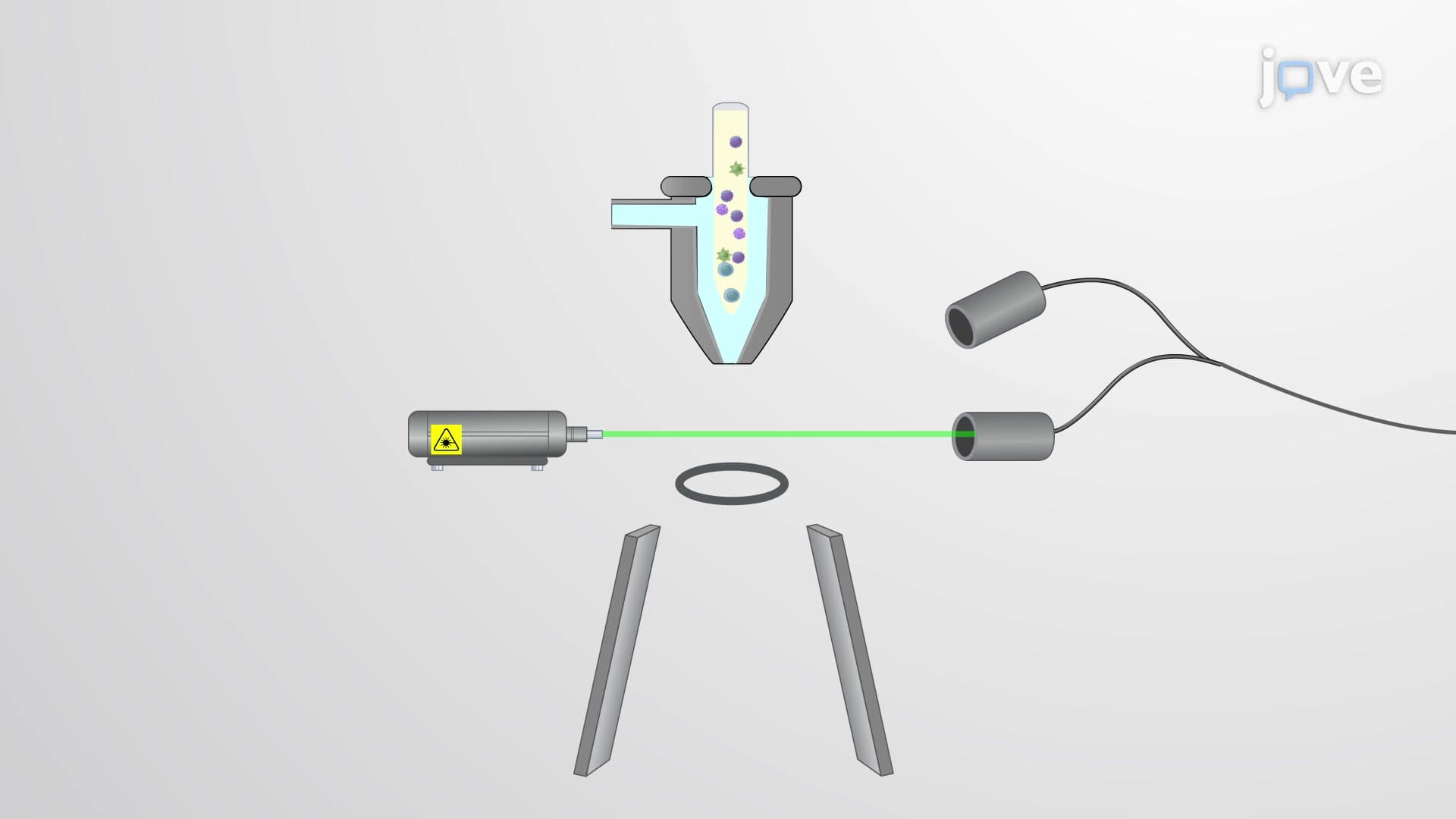
- Identify the key components of MS/MS instrumentation, including electrospray ionizers, quadrupole mass filters, collision cells, and time-of-flight analyzers
- Analyze the fragmentation process where precursor ions break at peptide bonds to generate characteristic product-ion spectra
- Compare tandem mass spectrometry advantages over single-stage techniques like MALDI-TOF for detailed peptide analysis
- Evaluate how liquid chromatography integration enhances continuous peptide separation and identification workflows
- Apply MS/MS principles to real-world applications including biomarker detection, protein modification analysis, and lipid characterization
- Recognize the role of mass-to-charge ratios in both precursor ion selection and product ion separation
- Explore how collision-induced dissociation generates interpretable fragmentation patterns for sequence determination
Understanding Peptide Identification Using Tandem Mass Spectrometry Fundamentals
Peptide identification using tandem mass spectrometry represents a quantum leap in analytical biochemistry, enabling researchers to decode the molecular signatures of life itself. Unlike traditional single-stage mass spectrometry, MS/MS provides definitive structural information by fragmenting specific peptide ions and analyzing the resulting pieces. This technique has revolutionized proteomics research at institutions like MIT and Stanford, where scientists routinely identify thousands of proteins from single cell samples.
Instrumental Architecture and Ion Processing
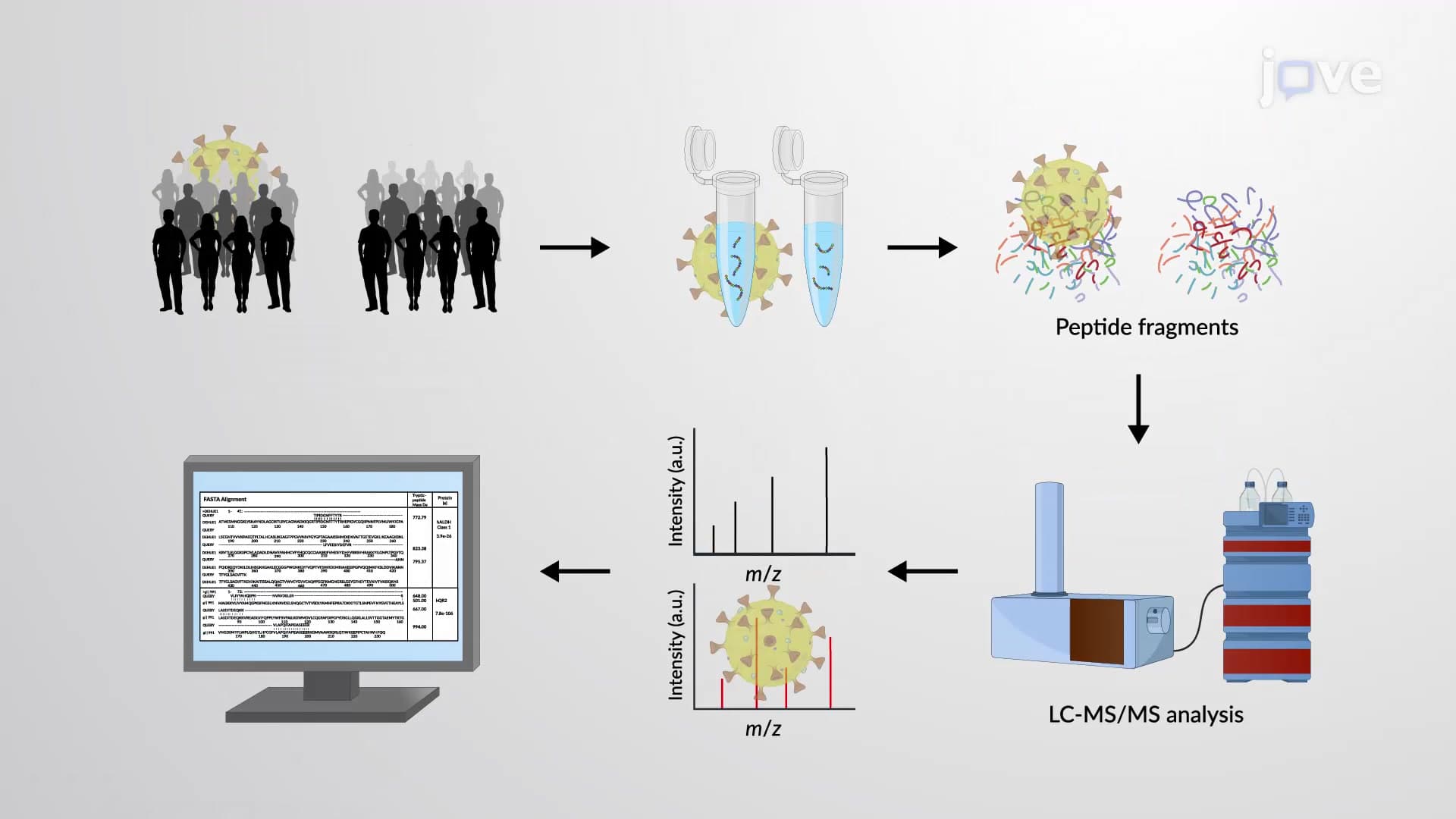
The MS/MS system operates through a sophisticated three-stage process. Initially, electrospray ionization converts peptide molecules into charged ions, accelerating them toward the first mass analyzer-typically a quadrupole that functions as a highly selective mass filter. This analyzer isolates a single precursor ion based on its unique mass-to-charge ratio, effectively removing all other ions from the analysis stream.
The selected precursor ion then enters the collision cell, where it encounters inert gas molecules (usually argon or nitrogen). These high-energy collisions preferentially break peptide bonds, generating a characteristic fragmentation pattern. The resulting product ions carry crucial structural information, as each break reveals specific amino acid sequences.
Advanced Analytical Applications
Contemporary MS/MS applications extend far beyond basic peptide sequencing. At the Mayo Clinic, researchers use tandem mass spectrometry to identify disease-specific biomarkers in patient blood samples, detecting protein modifications that indicate early-stage cancers. The technique's sensitivity allows detection of femtomole quantities-equivalent to finding a single drop of water in an Olympic swimming pool.
Coupling MS/MS with liquid chromatography creates a powerful analytical platform capable of processing complex biological matrices. This LC-MS/MS combination separates peptides temporally before mass analysis, dramatically increasing the number of identifiable compounds in a single experiment. Students preparing for the MCAT or AP Chemistry exams should understand that this temporal separation prevents ion suppression effects that could mask important analytical signals.
The technique also excels at characterizing post-translational modifications-chemical changes that occur after protein synthesis. These modifications, including phosphorylation and glycosylation, critically regulate protein function and are frequently altered in disease states, making MS/MS indispensable for clinical research and drug development efforts across US pharmaceutical companies.
Frequently Asked Questions
Peptide identification using tandem mass spectrometry is an analytical technique that determines amino acid sequences by fragmenting specific peptide ions using two mass analyzers in series. The first analyzer selects a target ion, which then fragments in a collision cell, and the second analyzer separates the resulting pieces by mass-to-charge ratio. This fragmentation pattern reveals the peptide's amino acid sequence through characteristic breaking points.
Tandem mass spectrometry frequently appears on MCAT biochemistry sections, particularly in experimental analysis passages. Understanding MS/MS principles helps you interpret protein identification experiments and analytical data presentations. Focus on recognizing how fragmentation patterns relate to amino acid sequences and how this technique differs from other analytical methods like gel electrophoresis.
AP Chemistry exams typically test MS/MS concepts through data interpretation problems and conceptual questions about molecular analysis techniques. You might encounter questions asking you to predict fragmentation patterns, explain why certain bonds break preferentially, or compare MS/MS sensitivity to other analytical methods. Understanding mass-to-charge ratios and ionization processes is essential for these questions.
Major medical centers like Cleveland Clinic use MS/MS to identify disease biomarkers in patient samples, monitor therapeutic drug levels, and detect protein modifications associated with specific conditions. For example, cardiac labs use MS/MS to measure troponin levels for heart attack diagnosis, while oncology departments identify cancer-specific protein signatures for personalized treatment selection.
Basic understanding of atomic structure, chemical bonding, and protein chemistry provides sufficient background for learning MS/MS concepts. High school chemistry courses covering molecular structure and introductory biochemistry prepare you well for this topic. The key is understanding how peptide bonds break and how mass-to-charge ratios determine ion behavior in electric fields.
Create flowcharts showing the step-by-step MS/MS process from sample introduction through data interpretation. Practice interpreting actual mass spectra and fragmentation patterns, focusing on how specific amino acid sequences produce characteristic breaking points. Connect MS/MS principles to protein structure concepts you've already learned, and work through practice problems involving data analysis and experimental design.
Mastering MS/MS fundamentals provides the foundation for advanced proteomics techniques including quantitative proteomics, protein-protein interaction studies, and systems biology approaches. Graduate programs and research positions at US universities increasingly require MS/MS literacy, as this technique underpins most modern protein analysis workflows in both academic and pharmaceutical industry settings.
Related Micro-courses

17 Concepts

11 Concepts

17 Concepts