Loading video…


 14 Concepts
 674.6K views


Video Summary: What Is the Born Haber Cycle
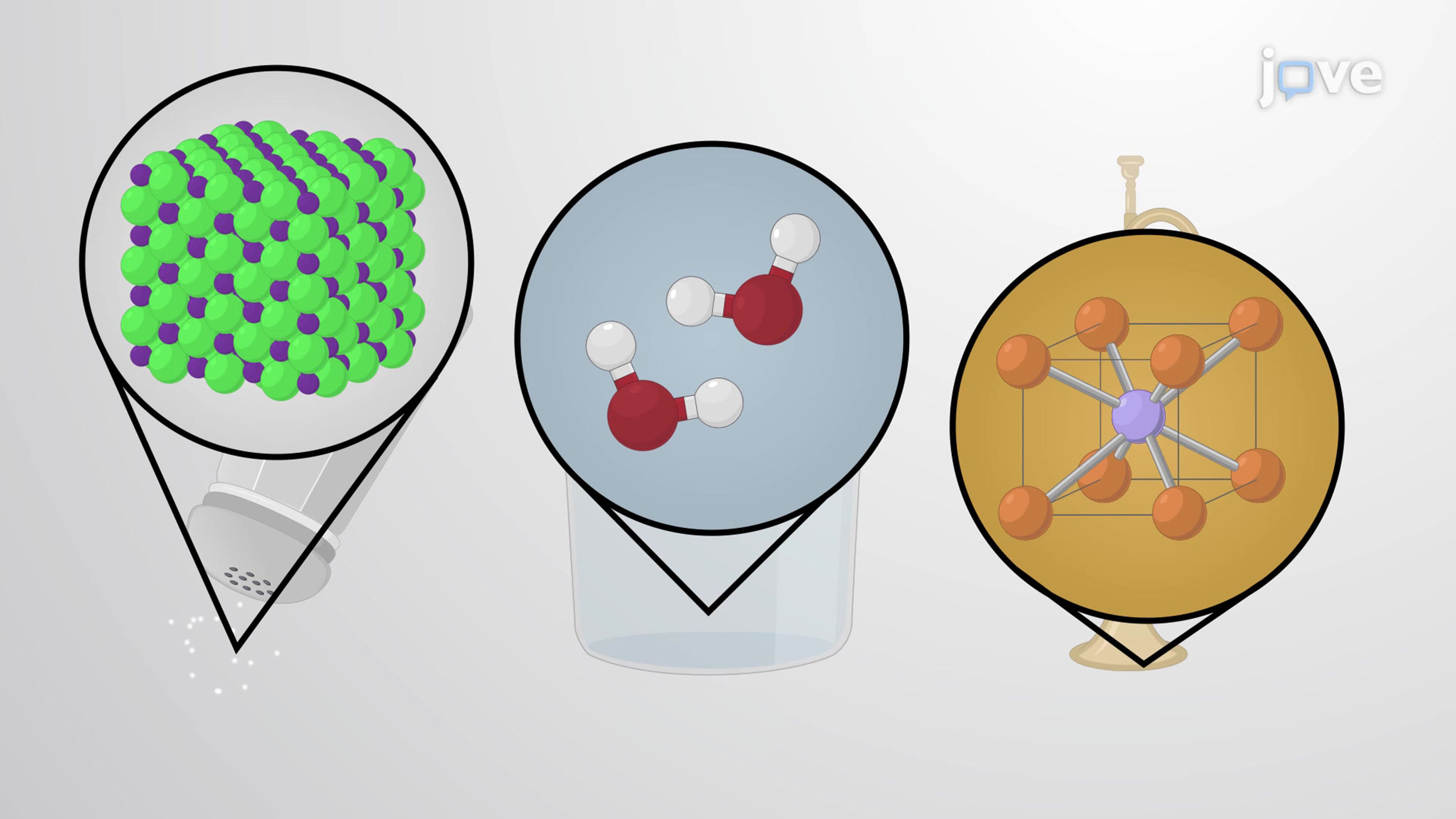
Why does throwing metallic sodium into water create a violent explosion, yet sodium chloride (table salt) forms so readily? The Born Haber cycle explains this paradox by revealing how energy changes drive ionic compound formation. This thermochemical framework, essential for understanding ionic bonding in compounds like the sodium fluoride added to US municipal water supplies, breaks down complex lattice energy calculations into manageable steps using Hess's law. Watch the full video on JoVE Coach to master this concept with expert-led visuals and step-by-step explanations.
The Born Haber cycle represents one of chemistry's most elegant problem-solving approaches, transforming the complex process of ionic compound formation into a series of measurable steps. Named after German physicists Max Born and Fritz Haber, this thermochemical cycle serves as the cornerstone for understanding why certain ionic compounds form readily while others remain unstable. For students preparing for AP Chemistry or college-level physical chemistry courses, mastering this concept provides crucial insight into predicting compound stability and understanding periodic trends.
Each Born Haber cycle follows a systematic five-step process. First, sublimation converts solid metal atoms to gaseous form-for sodium, this requires 108 kJ/mol. Second, bond dissociation breaks diatomic molecules into individual atoms; chlorine gas needs 243 kJ/mol for this step. Third, ionization energy removes electrons from metal atoms-sodium's first ionization energy is 496 kJ/mol. Fourth, electron affinity accounts for energy changes when nonmetals gain electrons-chlorine releases 349 kJ/mol. Finally, lattice formation brings gaseous ions together into a crystal structure, releasing substantial energy that drives the overall process.
Understanding the Born Haber cycle proves essential for predicting which ionic compounds will form in industrial processes. For instance, US salt manufacturers rely on these principles when producing specialty salts for food processing or chemical manufacturing. The cycle explains why lithium fluoride requires extreme conditions to form, while sodium chloride crystallizes readily from simple evaporation of seawater. Students encountering this topic on the MCAT or in undergraduate physical chemistry will find these calculations frequently appear in thermodynamics problems.
When solving Born Haber cycle problems, successful students learn to organize data systematically and apply Hess's law methodically. The key insight involves recognizing that lattice energy-typically the unknown variable-represents the energy difference between the direct formation route and the sum of all individual steps. Practice problems often feature compounds like magnesium oxide or calcium chloride, where students must calculate missing energy values using provided thermodynamic data. This analytical approach strengthens problem-solving skills essential for advanced chemistry coursework and standardized testing.
Related Micro-courses