Loading subject page…

Micro-course: Gases
410,818 views
Learn key concepts and earn your certificate.


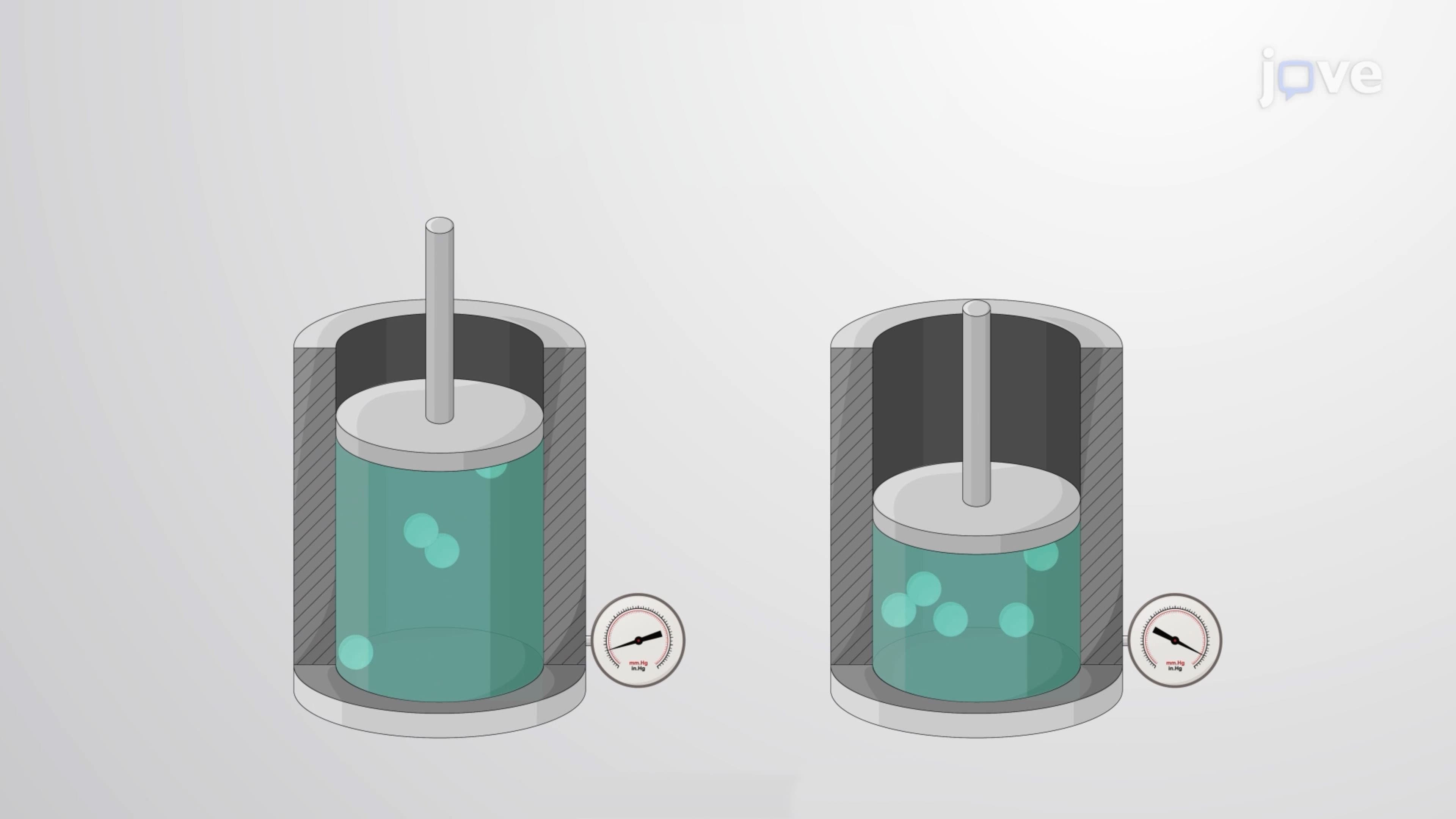


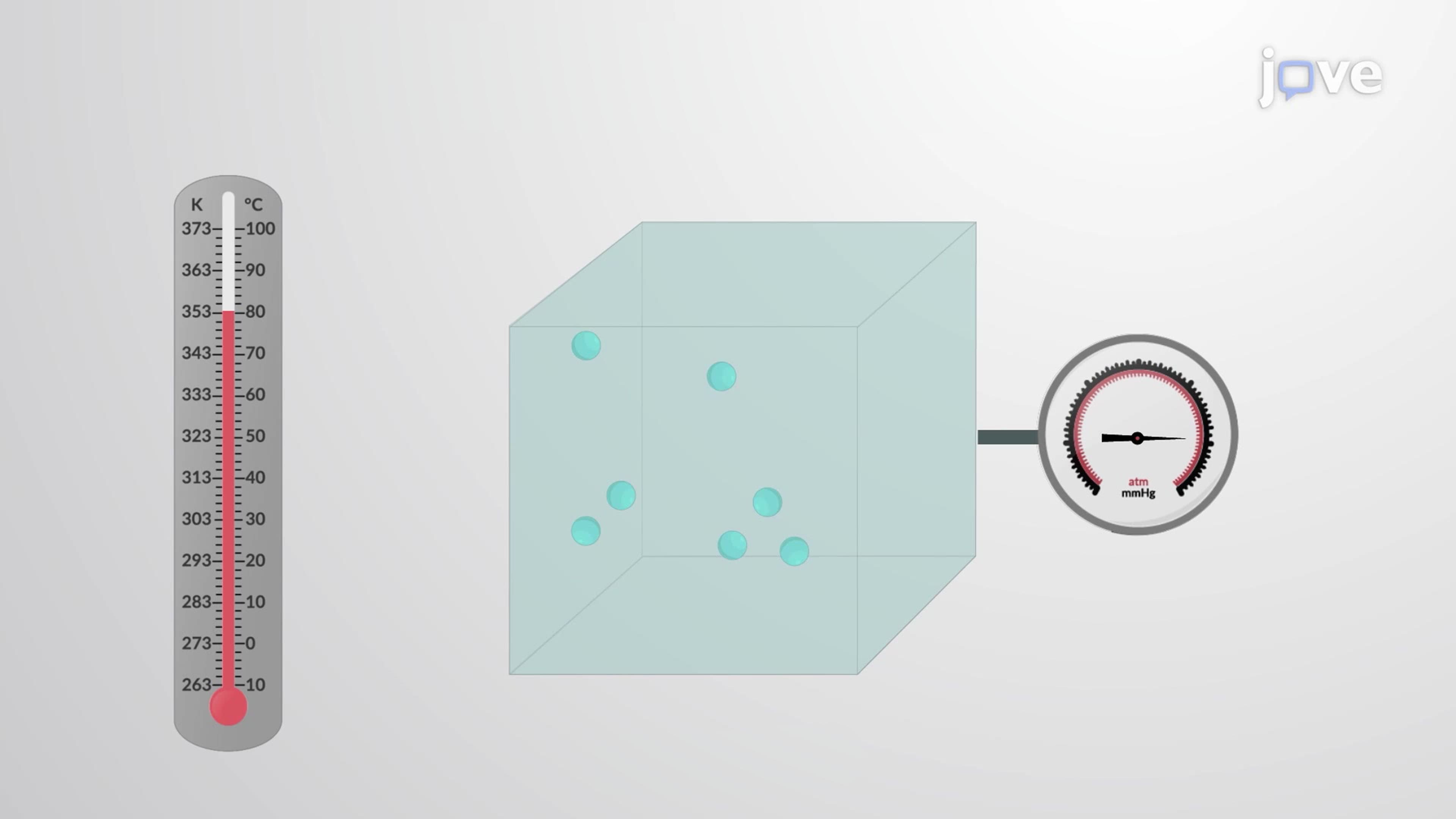


Behavior of Gas Molecules: Molecular Diffusion, Mean Free Path, and Effusion


00:00
03:48
Video Summary: Behavior of Gas Molecules Molecular Explained
Why does a single drop of perfume fill an entire room in minutes? The behavior of gas molecules molecular motion drives this everyday phenomenon through constant, random collisions and movement. From medical oxygen tanks in US hospitals to helium balloons at birthday parties, understanding molecular behavior explains how gases naturally spread from areas of high concentration to low concentration through diffusion and effusion processes. Watch the full video on JoVE Coach to master this concept with expert-led visuals and step-by-step explanations.
- Understand the fundamental principles of behavior of gas molecules molecular motion and how random collisions drive diffusion processes
- Identify the key factors affecting molecular mean free path, including particle density and pressure relationships
- Analyze the relationship between molar mass and diffusion rates using root-mean-square (RMS) speed calculations
- Compare diffusion and effusion processes, recognizing their distinct mechanisms and real-world applications
- Evaluate Graham's law of effusion to predict relative rates of gas movement through small openings
- Apply molecular behavior concepts to explain everyday phenomena like balloon deflation and perfume spreading
- Recognize how concentration gradients drive spontaneous molecular mixing in closed and open systems
- Explore the inverse relationship between molecular mass and movement speed in gas phase reactions
Understanding Behavior of Gas Molecules Molecular Motion
The behavior of gas molecules molecular foundation rests on kinetic molecular theory, which describes gases as collections of particles in constant, random motion. This concept appears frequently on AP Chemistry exams and college general chemistry courses, where students must connect molecular-level behavior to macroscopic observations. Unlike liquids or solids, gas molecules move independently with minimal intermolecular forces, creating the dynamic systems we observe in laboratories and everyday life.
Diffusion: From Concentration Gradients to Equilibrium
Molecular diffusion occurs when gas molecules spontaneously spread from high-concentration regions to low-concentration areas. This process drives critical applications in US medical settings, such as oxygen therapy delivery and anesthesia gas distribution in operating rooms. The rate depends on molecular mass-lighter molecules like hydrogen diffuse faster than heavier ones like carbon dioxide. Students preparing for the MCAT encounter diffusion calculations involving Fick's laws, which quantify how concentration differences drive molecular movement across membranes.
Mean Free Path and Collision Dynamics
The mean free path represents the average distance a gas molecule travels between collisions. In high-pressure systems like scuba diving tanks used by US recreational divers, molecules have shorter mean free paths due to increased particle density. Conversely, at high altitudes where atmospheric pressure decreases, molecules travel greater distances between collisions. This concept connects to pressure-volume relationships tested on SAT Subject Tests and college physics exams, where students calculate molecular behavior under varying conditions.
Graham's Law and Effusion Applications
Effusion differs from diffusion by involving molecular movement through tiny openings smaller than the mean free path. Graham's law states that effusion rates are inversely proportional to the square root of molar mass, explaining why helium balloons purchased at US amusement parks deflate faster than those filled with heavier gases. This principle has practical applications in uranium enrichment processes and gas separation technologies used in American chemical industries. Students often encounter Graham's law problems on AP Chemistry free-response sections, requiring both conceptual understanding and mathematical calculations.
Frequently Asked Questions
The behavior of gas molecules molecular motion describes how gas particles move randomly and collide continuously, creating the foundation for understanding diffusion, pressure, and temperature relationships. This concept explains everything from how perfumes spread through rooms to how oxygen moves through your lungs. It's fundamental to chemistry, physics, and biology courses at the high school and college levels.
AP Chemistry frequently tests molecular behavior through diffusion rate calculations, Graham's law problems, and kinetic molecular theory applications. Students encounter multiple-choice questions about mean free path relationships and free-response problems requiring effusion rate comparisons between different gases. The concept often connects to thermodynamics and equilibrium topics in later exam sections.
The MCAT tests gas molecule behavior in General Chemistry and Physics sections through diffusion across biological membranes, respiratory gas exchange, and pressure-volume work calculations. Understanding molecular motion helps with osmosis problems, lung function questions, and pharmacokinetics scenarios. These concepts also appear in passage-based questions about medical devices and physiological processes.
US hospitals rely on gas molecule behavior for oxygen therapy delivery, anesthesia gas mixing, and ventilator operations in ICUs. Emergency medical technicians use this knowledge when administering oxygen to patients, while respiratory therapists apply diffusion principles in nebulizer treatments. Understanding molecular behavior helps medical professionals optimize gas delivery systems and monitor patient responses.
Gas molecule behavior builds naturally on basic chemistry concepts like atoms and molecules that students already know from earlier courses. The mathematical components use algebra and simple square root calculations typically covered in pre-calculus classes. Starting with familiar examples like perfume spreading or balloon deflation makes the abstract molecular motion easier to visualize and understand.
Focus on connecting molecular-level explanations to observable phenomena you can relate to personally, like cooking smells spreading through kitchens. Practice Graham's law calculations with different gas pairs, and create concept maps linking diffusion, effusion, molecular mass, and temperature relationships. Use dimensional analysis for rate calculations and memorize that lighter gases always move faster than heavier ones.
After understanding molecular behavior, explore thermodynamics to learn how temperature affects molecular motion, then study chemical kinetics to see how molecular collisions drive reaction rates. Advanced topics include statistical mechanics for molecular energy distributions and physical chemistry applications in materials science. These concepts prepare students for upper-level chemistry courses and engineering programs.
College general chemistry courses dive deeper into kinetic molecular theory mathematics, including Maxwell-Boltzmann distributions and collision theory calculations. Physical chemistry classes explore statistical mechanics behind molecular motion, while analytical chemistry applies these principles to chromatography and mass spectrometry techniques. Engineering programs use molecular behavior for process design and optimization in chemical manufacturing industries.
Related Micro-courses

12 Concepts
15 Concepts
8 Concepts