Loading subject page…

Micro-course: Gases
410,818 views
Learn key concepts and earn your certificate.


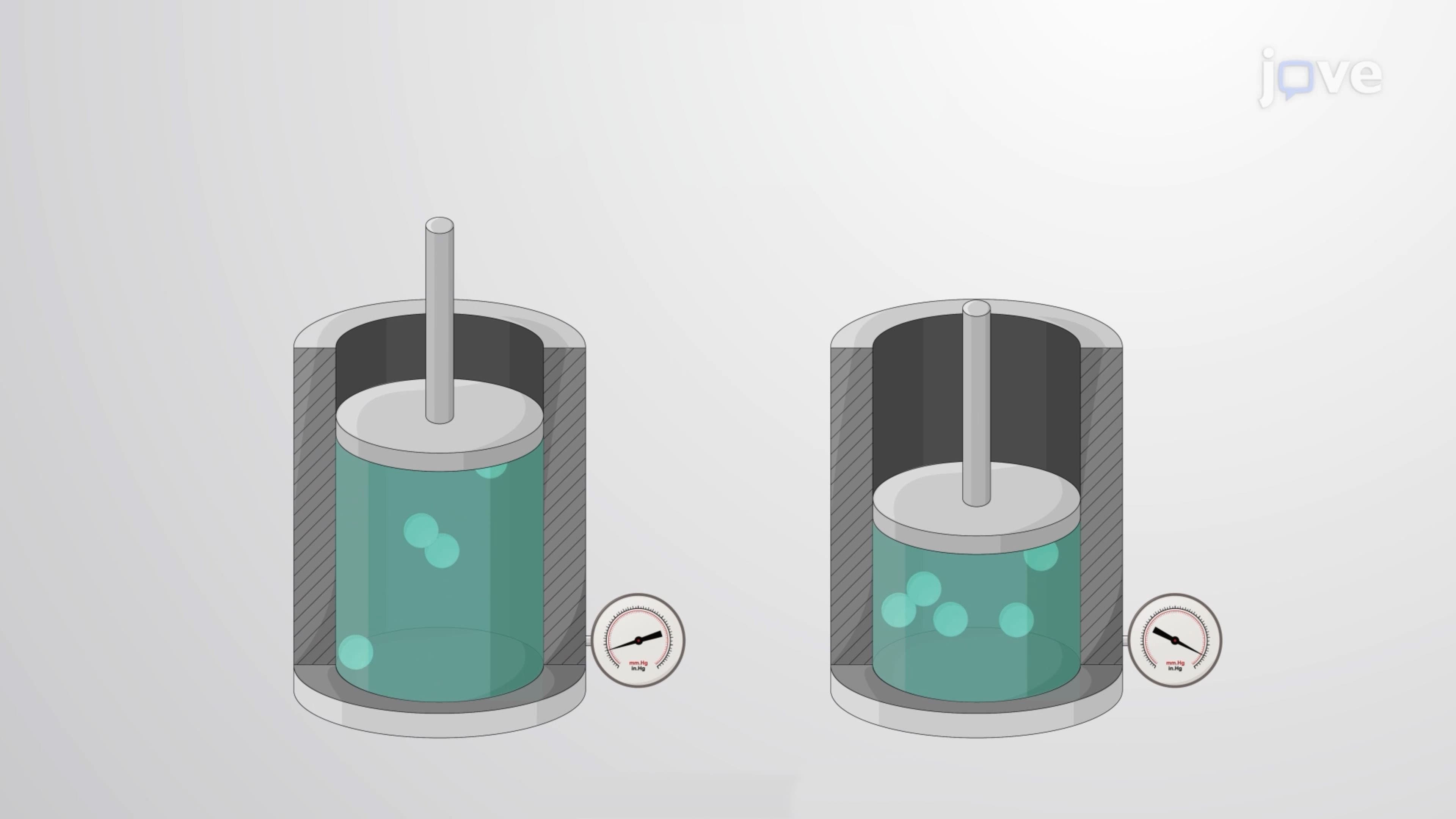


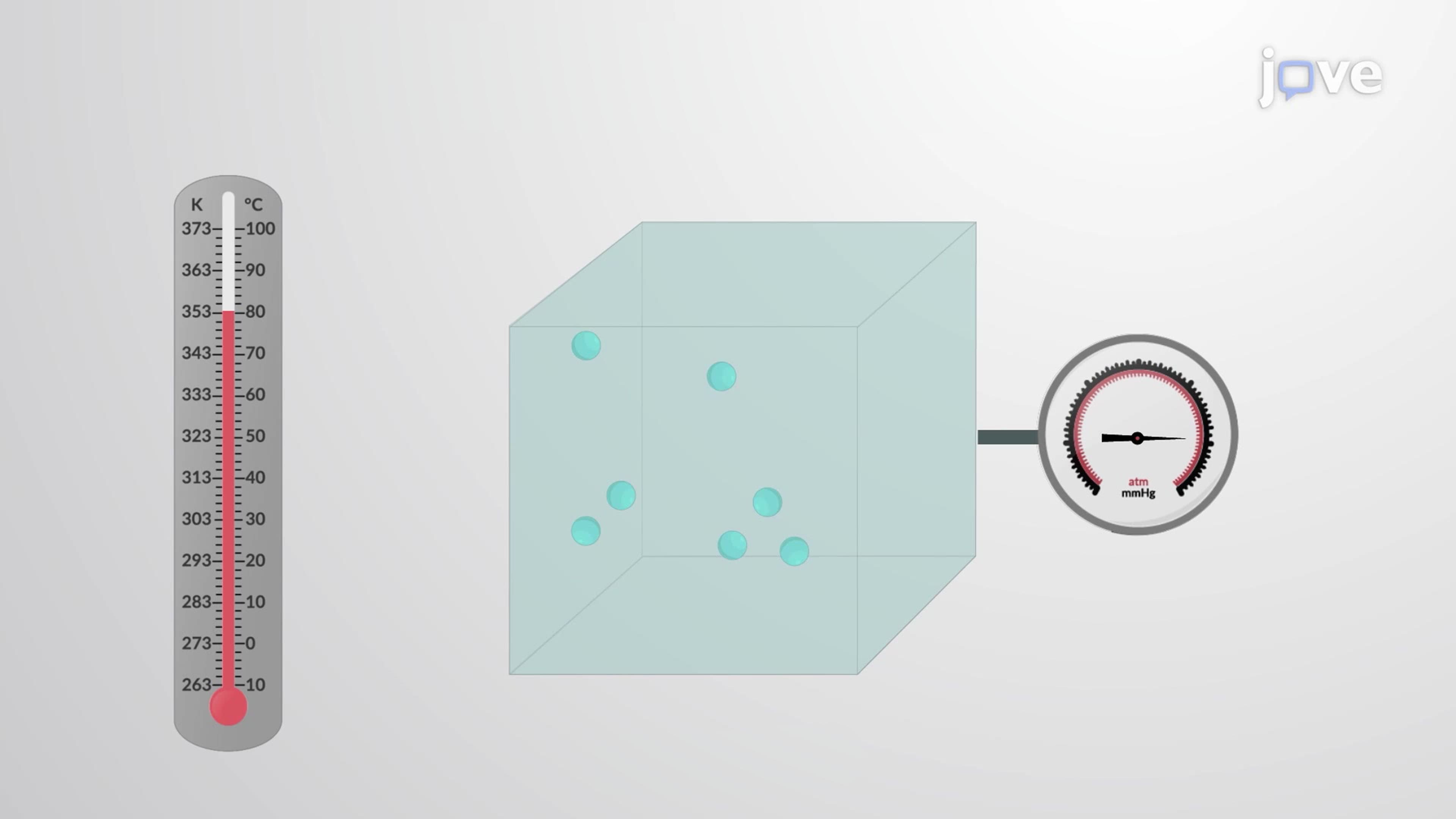



Chemical Stoichiometry and Gases: Using Ideal Gas Law to Determine Moles


00:00
03:12
Video Summary: Chemical Stoichiometry and Gases Using Explained
Ever wonder how NASA calculates the exact amount of rocket fuel needed for a space mission? Chemical stoichiometry and gases using principles help engineers determine precise gas volumes and masses in reactions under varying conditions. By combining the ideal gas law with stoichiometric ratios, chemists can predict how much lithium metal will produce a specific volume of hydrogen gas, or calculate the exact oxygen requirements for combustion reactions in jet engines. Watch the full video on JoVE Coach to master this concept with expert-led visuals and step-by-step explanations.
- Understand how chemical stoichiometry and gases using integrates molar relationships with gas law principles to solve complex reaction problems
- Apply the ideal gas law (PV = nRT) to convert between gas volumes and moles in stoichiometric calculations
- Analyze chemical reactions involving gaseous reactants and products using balanced equations and conversion factors
- Evaluate problems at standard temperature and pressure (STP) using the molar volume constant of 22.4 L/mol
- Recognize the relationship between gas volume, temperature, pressure, and stoichiometric coefficients in real reactions
- Compare calculation methods for gases at STP versus non-standard conditions
- Identify appropriate conversion pathways from mass to moles to gas volume in multi-step problems
- Explore real-world applications in industrial processes, environmental monitoring, and laboratory synthesis
Understanding Chemical Stoichiometry And Gases Using Fundamentals
Chemical stoichiometry with gases represents a critical intersection of quantitative chemistry concepts that students encounter throughout high school AP Chemistry and college general chemistry courses. Unlike solid or liquid reactants with fixed densities, gases expand to fill available space, making volume measurements more practical than mass determinations in many laboratory and industrial settings.
The Ideal Gas Law Connection in Stoichiometric Calculations
The ideal gas law (PV = nRT) serves as the bridge between measurable gas properties and molar quantities needed for stoichiometric calculations. When working with gaseous reactions, students must master the conversion pathway: gas volume → moles → stoichiometric ratio → product moles → desired quantity. This process appears frequently on standardized exams like the MCAT and AP Chemistry, where students analyze reactions such as methane combustion in natural gas heating systems or hydrogen production in fuel cell technologies.
For example, in the Haber process used by companies like CF Industries to produce ammonia fertilizer, precise gas volume calculations determine production efficiency. The reaction N₂ + 3H₂ → 2NH₃ requires exact stoichiometric control to maximize yield while minimizing waste in industrial reactors operating at high pressures and temperatures.
Standard Temperature and Pressure (STP) Simplifications
At STP conditions (0°C and 1 atm), the molar volume constant of 22.4 L/mol dramatically simplifies calculations. This relationship proves invaluable in laboratory exercises and exam problems where students analyze gas collection experiments or theoretical yield calculations. Many college chemistry courses use STP problems to build confidence before introducing variable temperature and pressure conditions.
Real-World Applications in American Industries
Environmental monitoring agencies like the EPA rely on gas stoichiometry to calculate pollutant emissions from power plants and automotive sources. For instance, determining sulfur dioxide production from coal combustion requires combining stoichiometric ratios with gas law principles to establish emission standards and compliance measurements. Similarly, pharmaceutical companies use these concepts during drug synthesis involving volatile reactants, ensuring proper ventilation systems and safety protocols in manufacturing facilities across states like New Jersey and California.
Frequently Asked Questions
Chemical stoichiometry and gases using combines balanced equation ratios with gas law principles to calculate volumes, masses, and moles in reactions involving gaseous substances. It's essential for predicting reaction outcomes when gases are reactants or products. This concept bridges theoretical chemistry with practical laboratory and industrial applications.
AP Chemistry frequently tests gas stoichiometry through multi-step calculation problems worth 4-7 points on the free response section. Students typically encounter scenarios involving gas collection over water, industrial synthesis reactions, or environmental chemistry applications. The exam emphasizes both STP conditions and variable temperature/pressure situations requiring ideal gas law applications.
MCAT questions often combine gas stoichiometry with biological contexts like cellular respiration or drug delivery systems. Students must quickly identify relevant information, apply appropriate conversion factors, and manage complex unit analysis under time pressure. The key is recognizing the underlying stoichiometric relationships despite unfamiliar biological terminology.
Petroleum refineries like those in Texas and Louisiana rely on gas stoichiometry to optimize cracking processes, where large hydrocarbon molecules break into smaller, more valuable products. Engineers calculate precise gas flow rates, reactor volumes, and product distributions to maximize gasoline and diesel yields while minimizing waste and environmental impact.
Gas stoichiometry primarily requires solid algebra skills and dimensional analysis rather than advanced calculus. Students comfortable with proportions, unit conversions, and basic equation manipulation typically succeed with consistent practice. The mathematical complexity rarely exceeds what's covered in high school chemistry and algebra courses.
Focus on mastering the step-by-step conversion pathway: identify given information, write balanced equations, apply appropriate gas laws, use stoichiometric ratios, and check units throughout. Practice with diverse problem types from textbooks like Zumdahl or Brown/LeMay, emphasizing both STP and non-standard conditions to build confidence and speed.
Gas stoichiometry provides the foundation for physical chemistry topics like reaction kinetics, thermodynamics, and equilibrium calculations. Students also encounter these principles in advanced courses covering atmospheric chemistry, materials science, and chemical engineering unit operations. Mastering this concept opens doors to understanding industrial process optimization and environmental chemistry applications.
Related Micro-courses

12 Concepts
15 Concepts
8 Concepts