Loading subject page…

- Chemistry
- Introduction: Matter and Measurement
- Classifying Matter by Composition
Micro-course: Introduction: Matter and Measurement
958,822 views
Learn key concepts and earn your certificate.


Classifying Matter by Composition


00:00
03:35
Video Summary: What Is Classifying Matter by Composition
Did you know that the water in your glass and the helium in party balloons represent two completely different types of pure substances? Understanding classifying matter by composition reveals why some materials like table salt dissolve uniformly in water while others like oil and vinegar separate into distinct layers. This fundamental chemistry concept explains how all matter around us-from the aluminum in soda cans to the carbon dioxide we exhale-can be systematically organized based on its atomic and molecular makeup. Watch the full video on JoVE Coach to master this concept with expert-led visuals and step-by-step explanations.
- Understand what is classifying matter by composition and distinguish between pure substances and mixtures based on their atomic structure
- Identify elements as pure substances that cannot be chemically broken down, such as gold, oxygen, and carbon
- Analyze compounds as pure substances formed from two or more elements chemically bonded together, like water and sodium chloride
- Compare homogeneous mixtures (solutions) with heterogeneous mixtures based on visual uniformity and composition consistency
- Evaluate separation methods for different types of matter, including physical separation for mixtures and chemical decomposition for compounds
- Apply classification principles to everyday materials like air, seawater, and pharmaceutical preparations
- Recognize the relationship between atomic composition and macroscopic properties of materials
- Explore how matter classification connects to stoichiometry, chemical reactions, and laboratory analysis techniques
Understanding Classifying Matter By Composition Fundamentals
Classifying matter by composition serves as the foundation for understanding all chemical behavior and reactions. This systematic approach divides all matter into two primary categories: pure substances and mixtures, based on whether the material consists of one type of particle or multiple types combined together.
The classification system begins at the atomic level, where atoms-the fundamental building blocks-either exist independently or combine with other atoms to form molecules. This atomic perspective explains why materials behave differently: pure gold conducts electricity uniformly throughout, while a gold-copper alloy's properties depend on the specific ratio of metals present.
Pure Substances: Elements and Compounds
Pure substances maintain consistent composition throughout, meaning every sample contains identical particles. Elements like helium, used in medical imaging and welding applications across the US, represent the simplest pure substances. These cannot be chemically decomposed into simpler materials-you cannot break down pure iron from Pittsburgh steel mills into anything simpler than iron atoms.
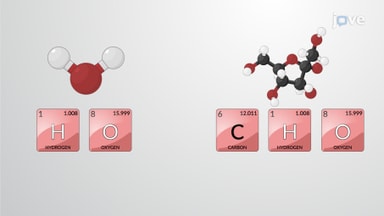
Compounds, though also pure substances, consist of two or more elements chemically bonded in fixed ratios. Water exemplifies this perfectly: whether from Lake Michigan or the Colorado River, pure water always contains hydrogen and oxygen in a 2:1 atomic ratio. Pharmaceutical compounds like aspirin (C9H8O4) demonstrate how precise atomic composition determines biological activity-changing even one atom fundamentally alters the compound's medicinal properties.
Mixtures: Homogeneous and Heterogeneous Classifications
Mixtures combine multiple substances while maintaining each component's individual identity. The distinction between homogeneous and heterogeneous mixtures becomes crucial in fields like environmental science and industrial processing.
Homogeneous mixtures, or solutions, appear uniform throughout. Ocean water near California beaches contains dissolved sodium chloride, but every droplet maintains identical salt concentration. This uniformity enables precise oceanographic measurements and desalination processes used throughout coastal US cities.
Heterogeneous mixtures show visible boundaries between components. Concrete used in highway construction across America exemplifies this: cement, sand, gravel, and water maintain distinct identities while creating a composite material stronger than individual components.
Practical Applications in US Academic and Professional Contexts
This classification system appears extensively in standardized testing. AP Chemistry exams frequently test students' ability to classify unknown substances, while MCAT questions often require applying these principles to biological systems like blood (a complex mixture) or cellular proteins (large compounds).
In pharmaceutical manufacturing-a major US industry-matter classification guides drug development. Companies must ensure active compounds remain pure while controlling how they mix with inactive ingredients to create effective medications with consistent potency.
Frequently Asked Questions
Classifying matter by composition is a systematic method of organizing all materials based on their atomic and molecular makeup into pure substances (elements and compounds) and mixtures (homogeneous and heterogeneous). This classification predicts how substances behave during chemical reactions, determines appropriate separation methods, and forms the foundation for understanding chemical properties and pharmaceutical development.
AP Chemistry extensively tests matter classification through multiple-choice questions about identifying substance types and free-response problems involving separation techniques. Mastering these concepts enables students to predict reaction outcomes, calculate composition percentages, and design laboratory procedures. Strong classification skills typically improve AP scores by 15-20 points since these principles appear across all exam sections.
Compounds consist of elements chemically bonded in fixed ratios that require chemical reactions to separate, while mixtures contain substances physically combined in variable proportions that separate through physical methods. For example, water (H2O) always contains hydrogen and oxygen in a 2:1 ratio and needs electrolysis to separate, whereas saltwater can have varying salt concentrations and separates by evaporation.
US pharmaceutical companies rely on matter classification to ensure drug purity, design controlled-release formulations, and meet FDA regulations. They must classify active ingredients as pure compounds, understand how they form homogeneous solutions with carriers, and control heterogeneous mixtures in tablets to ensure consistent dosing across millions of patients nationwide.
Matter classification builds naturally from everyday observations, making it accessible to chemistry beginners. Students already understand that sugar dissolves uniformly in coffee (homogeneous mixture) while oil floats on water (heterogeneous mixture). The key is connecting these familiar experiences to atomic-level explanations, which typically takes 2-3 weeks of practice with guided examples.
Create comparison charts listing properties of elements, compounds, and mixture types, then practice with everyday examples like air (homogeneous mixture), granite (heterogeneous mixture), and table salt (compound). Use flashcards for separation methods and work through practice problems that require identifying substance types from experimental data. Focus on connecting macroscopic observations to atomic explanations.
Matter classification provides the foundation for stoichiometry, chemical bonding theories, and solution chemistry. Students should next explore atomic structure and periodic trends to understand why elements combine in specific ratios, followed by chemical equations and reaction types. This progression naturally leads to thermodynamics and kinetics in advanced courses.
Environmental scientists use matter classification to analyze pollution sources, design remediation strategies, and monitor ecosystem health. They classify atmospheric pollutants as compounds or mixtures, determine separation methods for contaminated groundwater, and assess how different substance types interact in natural systems. This knowledge guides policy decisions affecting air quality standards and water treatment regulations across American communities.
Related Micro-courses

7 Concepts
10 Concepts

13 Concepts