Loading subject page…

- Chemistry
- Chemical Bonding: Molecular Geometry and Bonding Theories
- VSEPR Theory and the Basic Shapes
Micro-course: Chemical Bonding: Molecular Geometry and Bonding Theories
436,009 views
Learn key concepts and earn your certificate.





VSEPR Theory and the Basic Shapes

00:00
02:52
Video Summary: Vsepr Theory and the Basic Shapes Explained
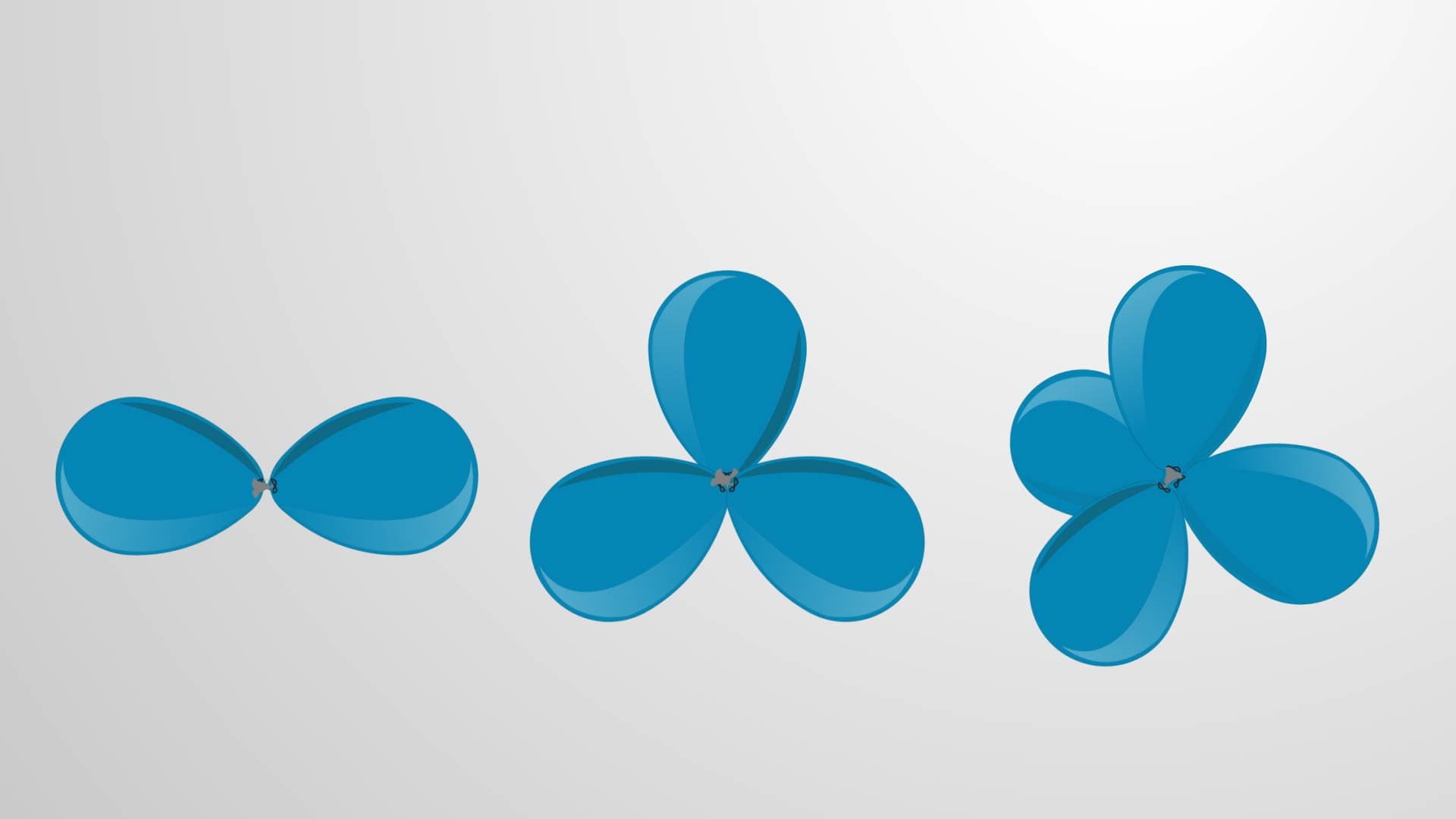
Ever wonder why water molecules bend while carbon dioxide stays straight? VSEPR theory and the basic shapes explains how electron pairs around atoms create predictable molecular geometries by minimizing repulsions. Just like balloons tied together naturally space apart, electron groups arrange themselves for maximum separation. This fundamental concept helps predict everything from the tetrahedral shape of methane in natural gas to the octahedral geometry of sulfur hexafluoride used in electrical equipment. Watch the full video on JoVE Coach to master this concept with expert-led visuals and step-by-step explanations.
- Understand how VSEPR theory and the basic shapes predict molecular geometry based on electron-pair repulsion principles
- Identify the five fundamental molecular shapes: linear, trigonal planar, tetrahedral, trigonal bipyramidal, and octahedral
- Analyze how electron group arrangements around central atoms determine bond angles and three-dimensional structures
- Apply VSEPR principles to predict molecular geometries for compounds with 2-6 electron groups
- Compare different molecular shapes and explain why specific bond angles minimize electron repulsion
- Recognize the relationship between electron group count and resulting molecular geometry
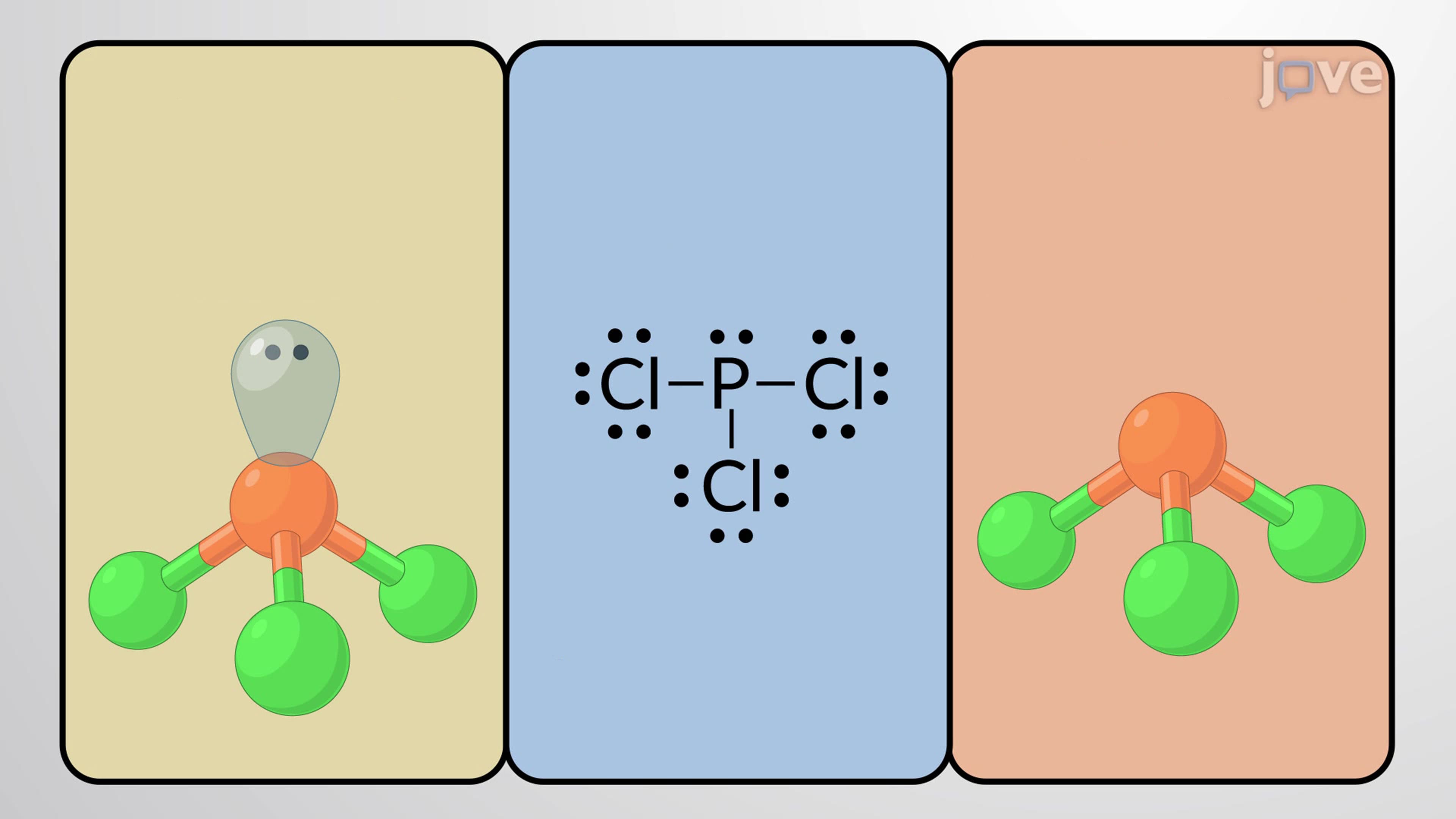
- Evaluate how lone pairs and bonding pairs influence overall molecular shape
- Explore real-world applications of VSEPR theory in understanding chemical behavior and properties
Understanding VSEPR Theory and the Basic Shapes Framework
VSEPR theory and the basic shapes provides a systematic approach to predicting molecular geometry based on a simple premise: electron pairs repel each other and arrange themselves to minimize this repulsion. This fundamental principle, developed by Ronald Gillespie and Ronald Nyholm, revolutionized how chemists visualize and understand molecular structures.
The theory treats all electron groups-whether single bonds, multiple bonds, or lone pairs-as regions of electron density that occupy space around a central atom. These regions naturally position themselves as far apart as possible, creating predictable geometric patterns that form the basis for understanding chemical behavior and properties.
The Five Basic Molecular Geometries
Linear geometry emerges when two electron groups surround a central atom, creating a 180° bond angle. Beryllium fluoride exemplifies this arrangement, commonly encountered in high-temperature industrial processes. Carbon dioxide, essential in photosynthesis and cellular respiration, also adopts this linear structure despite having double bonds.
Trigonal planar geometry occurs with three electron groups, producing 120° bond angles. Boron trifluoride demonstrates this shape, while formaldehyde (used in US laboratory preservation) shows how this geometry applies to molecules with different bond types. This arrangement is crucial for understanding organic chemistry mechanisms taught in AP Chemistry courses.
Tetrahedral geometry, perhaps the most important for biological systems, results from four electron groups with 109.5° bond angles. Methane represents the perfect tetrahedral molecule, while more complex examples include carbon tetrachloride (formerly used in dry cleaning) and the phosphate groups in DNA. This geometry is fundamental to understanding organic chemistry and biochemistry in college-level courses.
Advanced Geometries and Real-World Applications
Trigonal bipyramidal geometry accommodates five electron groups, creating a more complex three-dimensional arrangement. The equatorial positions maintain 120° angles, while axial positions create 90° angles with the equatorial plane. Phosphorus pentachloride, used in pharmaceutical synthesis, exemplifies this geometry.
Octahedral geometry handles six electron groups with all 90° bond angles, creating a highly symmetrical structure. Sulfur hexafluoride, used as an insulating gas in high-voltage electrical equipment across the United States, perfectly demonstrates this arrangement. Understanding octahedral geometry is essential for advanced inorganic chemistry courses and appears frequently on the MCAT.
These geometric principles directly impact molecular properties including polarity, reactivity, and biological activity. For students preparing for standardized tests like the AP Chemistry exam or college placement tests, mastering VSEPR theory provides the foundation for predicting and explaining chemical behavior in both academic and real-world contexts.
Frequently Asked Questions
VSEPR theory predicts molecular geometry by assuming electron groups around a central atom repel each other and arrange themselves for maximum separation. This creates five basic shapes: linear (2 groups), trigonal planar (3 groups), tetrahedral (4 groups), trigonal bipyramidal (5 groups), and octahedral (6 groups). The theory works because electron pairs, whether in bonds or as lone pairs, occupy space and naturally minimize repulsion.
Yes, VSEPR theory is a core topic on the AP Chemistry exam, typically appearing in multiple-choice questions about molecular geometry and free-response questions requiring predictions of shapes and bond angles. Students must be able to draw Lewis structures, count electron groups, and predict three-dimensional molecular shapes. Practice with molecules having different numbers of electron groups is essential for exam success.
VSEPR theory appears frequently on the MCAT, particularly in general chemistry and organic chemistry passages. The exam tests your ability to predict molecular shapes, understand how geometry affects polarity and intermolecular forces, and explain biological molecule behavior. Strong VSEPR knowledge helps with amino acid structures, enzyme active sites, and drug-receptor interactions commonly featured in MCAT questions.
VSEPR theory guides pharmaceutical design, where drug molecules must fit precisely into biological receptors-like how the tetrahedral geometry of certain HIV drugs allows them to block viral enzymes. Environmental scientists use VSEPR to understand pollutant behavior, while materials engineers apply these principles designing everything from semiconductor materials in Silicon Valley to specialized polymers used in aerospace applications.
VSEPR theory is actually quite accessible because it relies on simple visualization rather than complex mathematics. The balloon analogy helps students understand electron repulsion intuitively. With practice drawing Lewis structures and counting electron groups, most high school students master the basic concepts. Start with simple molecules like water and methane before progressing to more complex examples.
Create a systematic approach: first master Lewis structures, then practice counting electron groups, and finally memorize the five basic shapes with their bond angles. Use molecular model kits or online visualization tools to see three-dimensional structures. Practice predicting shapes for 20-30 different molecules, focusing on examples that commonly appear on standardized tests like the SAT Subject Test in Chemistry.
Build on VSEPR by studying molecular polarity, which depends on molecular geometry, then progress to intermolecular forces and their effects on physical properties. This leads naturally to organic chemistry, where VSEPR helps explain reaction mechanisms and stereochemistry. Advanced students can explore molecular orbital theory, which provides a more sophisticated explanation of chemical bonding and molecular shapes.
Lone pairs occupy more space than bonding pairs because they're attracted to only one nucleus, causing slight compression of bond angles in the actual molecule compared to ideal VSEPR predictions. For example, water has a bent shape with approximately 104.5° bond angle instead of the ideal tetrahedral 109.5° because two lone pairs on oxygen repel the bonding pairs more strongly than bonding pairs repel each other.
Related Micro-courses
21 Concepts

13 Concepts
12 Concepts