Loading subject page…


436,009 views

Video Summary: What Is Molecular Orbital Theory Ii
Ever wondered why some molecules like hydrogen gas exist while others like dihelium don't? Molecular orbital theory II explains how electrons behave in molecules by creating energy diagrams that predict molecular stability. This advanced concept helps explain why medications like aspirin have specific molecular structures that make them effective. Understanding what is molecular orbital theory II reveals how atomic orbitals combine to form molecular orbitals with distinct energy levels. Watch the full video on JoVE Coach to master this concept with expert-led visuals and step-by-step explanations.
Molecular orbital theory II extends beyond basic orbital formation to explain sophisticated molecular behaviors that Lewis structures cannot adequately describe. This advanced framework reveals why certain molecules exist while others remain theoretically impossible, providing crucial insights for understanding chemical bonding in complex systems.
The cornerstone of molecular orbital theory II lies in bond order determination, calculated as (bonding electrons - antibonding electrons) ÷ 2. This mathematical relationship predicts molecular existence: hydrogen gas (H₂) achieves a bond order of 1, confirming its stability, while hypothetical dihelium (He₂) yields a bond order of zero, explaining its non-existence. Students preparing for AP Chemistry exams frequently encounter these calculations, as they demonstrate quantitative approaches to chemical bonding.
Period 2 elements introduce complexity through s-p orbital mixing, particularly evident in boron, carbon, and nitrogen molecules. Unlike simple energy ordering where 2s orbitals remain lower than 2p orbitals, orbital mixing can invert this relationship, placing certain 2p molecular orbitals below 2p molecular orbitals. This phenomenon appears regularly on MCAT practice exams, testing students' ability to interpret molecular orbital energy diagrams.
When different atoms combine, such as in lithium hydride (LiH), electronegativity differences create asymmetric molecular orbital energy distributions. The more electronegative atom's orbitals contribute more heavily to bonding molecular orbitals, while less electronegative atom's orbitals dominate antibonding molecular orbitals. Understanding these principles proves essential for students pursuing careers in pharmaceutical chemistry, where drug-target interactions depend on precise molecular orbital characteristics.
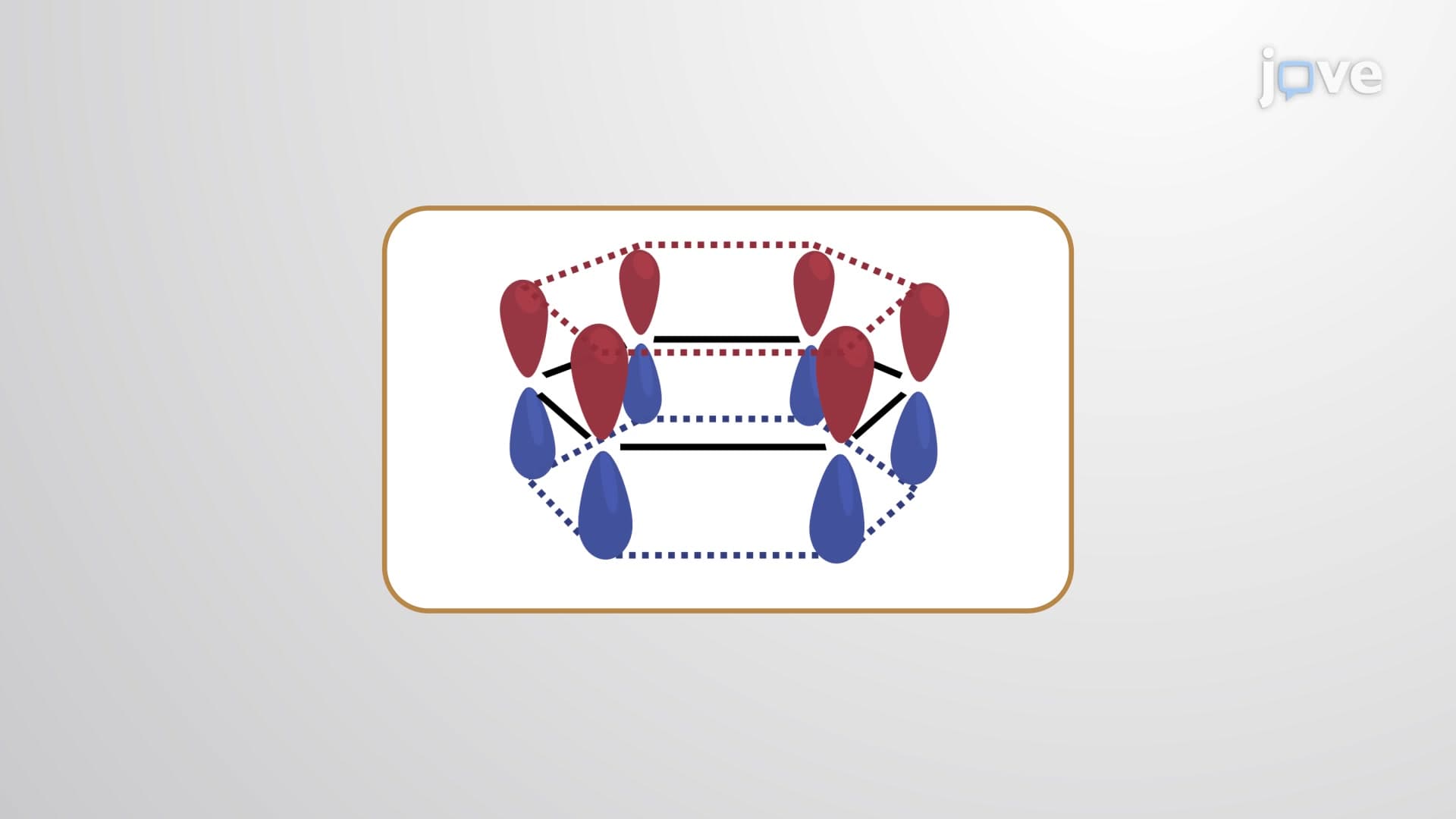
Molecular orbital theory II excels in explaining delocalized electron systems like benzene's aromatic ring. While Lewis structures inadequately represent benzene's equivalent carbon-carbon bonds, molecular orbital theory reveals three delocalized bonding molecular orbitals spanning the entire ring structure. This concept appears prominently in organic chemistry courses at universities like MIT and Stanford, where students learn to correlate molecular stability with electron delocalization patterns.
Related Micro-courses